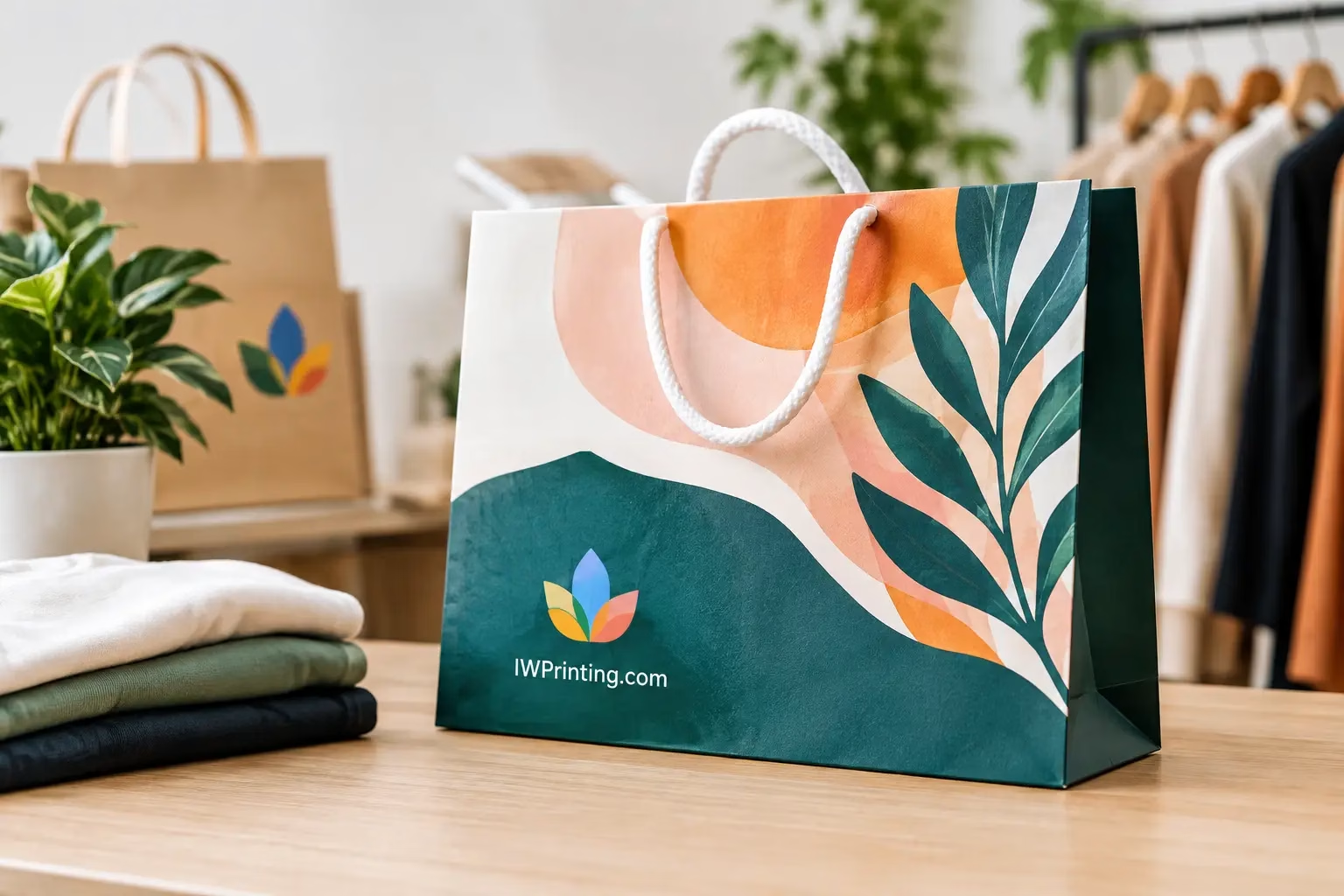
Shopping Bag Printing That Builds Brand Recall
Shopping bag Printing turns every purchase into brand exposure. Choose materials, sizes, finishes, and artwork that fit your product, budget, and customers.


A storefront sign that arrives one inch too narrow, a wall graphic with the wrong finish, or an event display delivered after setup day can turn a good campaign into an expensive problem. A proper signage supplier review should look beyond the first quotation. The right supplier protects your timeline, brand standards, budget, and customer-facing image from the first proof to final installation.
For a small business, that may mean getting a clean set of window stickers and a reception sign without repeated revisions. For a retailer, hotel, developer, or event organizer, it can mean coordinating dozens of signs across multiple locations. The scale changes, but the buying questions stay surprisingly consistent.

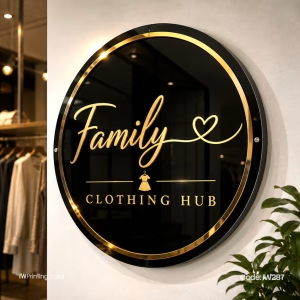

“Signage” is not one product category. A printed foam board for a three-day event has very different requirements from illuminated 3D letters installed outdoors for years. Before comparing prices, explain where the sign will be used, how long it needs to last, who will see it, and whether it needs to meet safety, property, or brand guidelines.
A capable supplier should ask useful questions instead of immediately sending a generic price. They should help identify whether acrylic, aluminum composite panel, PVC, vinyl, fabric, wood, LED, or another material suits the project. If the sign will face direct sun, heat, wind, moisture, or frequent cleaning, material selection matters even more.
Low-cost material can be the smart choice for short-term promotions. It becomes a poor choice when it fades, warps, or peels before a long-term campaign is finished. Ask the supplier to explain the trade-off clearly, including expected use, finish, and maintenance needs.
Product photos can make nearly any sign look premium. Samples reveal what a customer will actually see and touch. Request examples of similar finished work, especially when ordering acrylic signs, dimensional letters, wall graphics, vehicle graphics, backlit displays, or large-format outdoor panels.
Look closely at color consistency, cut edges, lamination, mounting details, alignment, and readability from the intended viewing distance. A sign can use accurate brand colors and still fail because the letters are too thin, the contrast is weak, or reflections make the message difficult to read.
For printed signage, ask about print resolution and protective finishing. Lamination can add durability and help resist scratches, moisture, and fading, but the choice between gloss, matte, and textured finishes affects visibility. Gloss can make colors appear vibrant, while matte often works better where glare is a concern. There is no universal best option. The location decides it.
A supplier that produces signs well but handles artwork casually can still create costly delays. Your artwork should be checked before production for size, bleed, resolution, fonts, spelling, color setup, and safe margins. For fabricated or installed signage, the proof should also show dimensions, materials, mounting method, and placement where relevant.
Ask who is responsible for final artwork approval. A written proof gives buyers a clear checkpoint before printing begins. It is especially valuable when the project includes multiple branches, bilingual text, changing campaign information, or strict corporate branding.
A good supplier will flag files that may not print well rather than silently proceeding. This is not unnecessary friction. It is quality control. At the same time, the process should remain practical: revision requests need to be clear, approvals should be easy to track, and the production schedule should begin only after the final version is confirmed.
The lowest quoted price is not always the lowest project cost. Two estimates may look similar while covering very different scopes. One might include design checks, durable materials, delivery, installation hardware, and site coordination. Another may only cover printing the sign itself.
When conducting a signage supplier review, compare each quotation line by line. Confirm the dimensions, quantity, material thickness, print type, finishing, fixing method, packaging, delivery, installation, and any applicable design or site-visit fees. For illuminated signage, clarify whether electrical components, transformers, cabling, and installation are included.
Pricing should be transparent enough to support a confident decision. If a supplier recommends a higher-spec material, ask why and request an alternative where appropriate. A reliable partner should help you balance cost and performance rather than push every project toward the most expensive option.
Signage projects often fail at the handoff points. Production may finish on time, but delivery misses the venue access window. The sign may arrive correctly, but no one has confirmed wall conditions, power availability, permits, or installation access.
For straightforward printed signs, fast and reliable delivery may be all you need. For retail fit-outs, office branding, exhibitions, and outdoor signs, ask whether the supplier manages measurement, site surveys, installation, and post-install checks. One point of contact can reduce confusion when design, manufacturing, logistics, and installation need to work together.
Turnaround promises should be specific. “Fast” is helpful only when it comes with a realistic production date and delivery plan. Share your deadline early, including event setup times or store-opening schedules. Also ask what happens if artwork approval is delayed or a job requires a last-minute change.
The way a supplier handles an initial inquiry usually reflects how they will handle a larger project. Are specifications answered directly? Is the quotation easy to understand? Do they respond with practical recommendations? Can they explain what is included without passing you through several departments?
This matters when you need repeat orders. Businesses frequently need new directional signs, updated window graphics, replacement panels, campaign displays, or branded materials for another branch. Easy ordering and reordering save time, particularly when brand artwork and specifications have already been approved.
For multi-item orders, request a simple project schedule. It should identify the approval date, production stage, delivery date, installation date if required, and the person responsible for updates. Reliable communication is a service feature, not an extra.
A supplier may produce one attractive sample but struggle with repeatability across a full rollout. Ask about quality checks, color matching, packaging, and how replacements are handled if a product arrives damaged or differs from an approved proof.
After-sales support is particularly important for signs that are installed, illuminated, or used in high-traffic areas. Find out whether the supplier can help with repairs, replacement graphics, additional panels, or future expansion. This does not mean every supplier must offer every service. It means their responsibility should be clear before the order is confirmed.
For organizations managing varied branding needs, a supplier with printing, signage, exhibition, packaging, and installation capabilities can simplify procurement. IWPrinting.com supports this kind of end-to-end coordination, from artwork and production through delivery and installation, while still allowing customers to order standard products efficiently.

Before you approve a quotation, make sure you can answer these questions: What material and finish are being supplied? Has the final artwork and size been approved in writing? What is included in the quoted price? When will the order be ready? Who handles delivery or installation? What is the process if an item is damaged, incorrect, or needs replacement?
These questions are simple, but they prevent many of the issues that create avoidable cost and stress. They also make it easier to compare suppliers fairly, even when one proposal appears cheaper at first glance.
The best signage partner is not simply the one that prints a sign. It is the supplier that makes the decision easy, delivers the right specification on time, and helps your brand look consistent wherever customers encounter it.
Shopping bag Printing turns every purchase into brand exposure. Choose materials, sizes, finishes, and artwork that fit your product, budget, and customers.
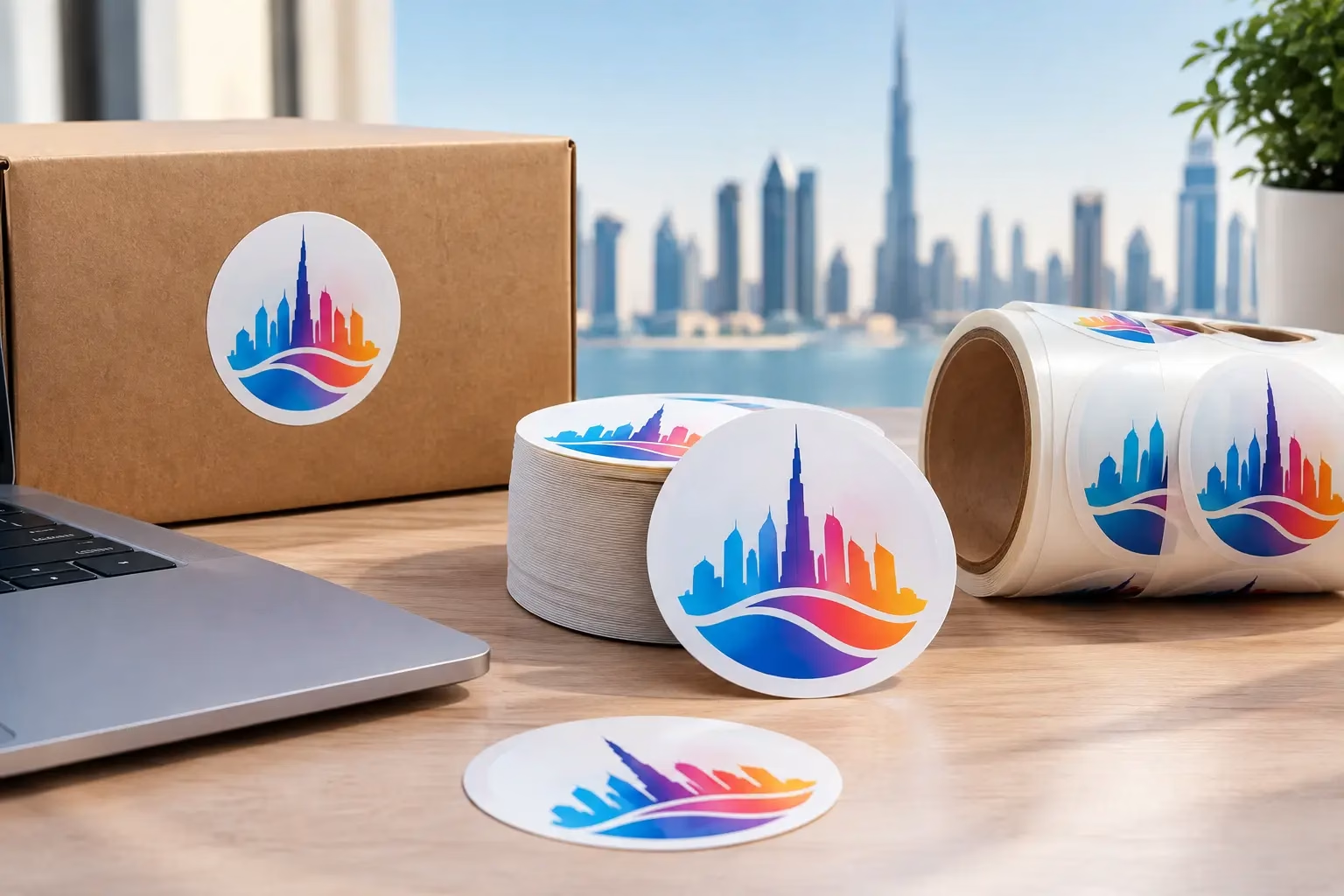
Get Round Sticker Printing in Dubai for product labels, events, and promotions. Choose durable materials, sharp color, custom sizes, and fast delivery.