

How to Plan Exhibition Signage That Gets Seen
Learn how to plan exhibition signage that guides visitors, elevates your brand, and fits your booth, budget, timeline, and event goals with confidence.
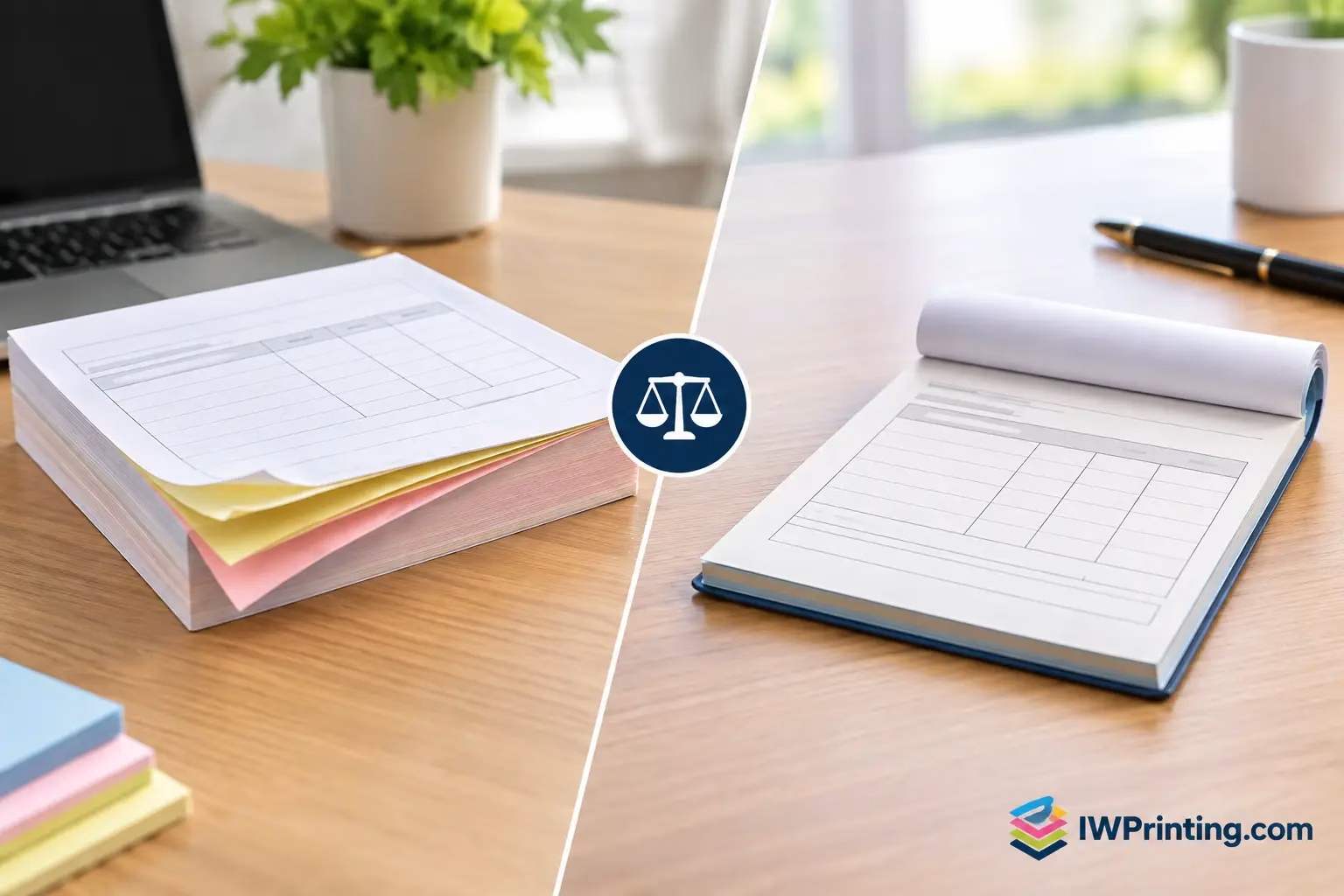
A customer has paid, a delivery has left, or a job has been approved. The paperwork needs to be clear before the next transaction begins. That is why the choice between NCR versus receipt books matters more than it may first appear. Both support daily recordkeeping, but they are not automatically the same product. The right option depends on who needs a copy, how many departments handle the transaction, and whether each page must be completed by hand.
For businesses that still take orders, collect payments, issue delivery confirmations, or create service records on the spot, printed books remain practical. They are fast to use, easy to store, and professional when designed with your logo and business details. More importantly, they create a dependable paper trail when a customer, driver, finance team, or warehouse needs to check what was agreed.
An NCR book is defined by its paper system. NCR stands for no carbon required. When you write on the top sheet with enough pressure, the writing transfers to the sheets below without using a separate carbon sheet. This makes it ideal when one transaction needs two or more identical copies.
A receipt book is defined by its purpose. It is used to acknowledge payment received, usually with fields for the date, customer name, amount, payment method, and signature. A receipt book can be printed as a single-sheet pad, but it can also be produced using NCR paper in duplicate or triplicate sets.
In other words, NCR and receipt books are not always competing choices. A receipt book can be an NCR receipt book. The useful question is not simply which product is better. It is whether your receipt process requires duplicate records.
A café that gives one handwritten receipt to a customer may only need a standard receipt pad. A maintenance company collecting payment at a customer site will often benefit from a duplicate NCR receipt book, keeping one copy for its accounts team and giving the other to the customer. A supplier handling deliveries, warehouse receiving, and invoicing may need triplicate forms so the customer, driver, and office each retain a record.
NCR books work best when the same information has to move through your business without being written again. Rewriting details takes time and creates room for mismatched quantities, incorrect prices, or missing references. One completed top sheet produces matching copies for every relevant party.
They are widely used for invoices, purchase orders, delivery notes, job cards, work orders, quotation forms, sales orders, inspection reports, and payment receipts. Field teams, logistics providers, repair services, contractors, retailers, clinics, schools, and event operators all use NCR forms because they support work that happens away from a desk or before a system is updated.
The most common setup is duplicate, with an original white sheet and one colored copy. Triplicate books add a third copy, often in another color. For example, a delivery note can give the white original to the customer, leave the yellow copy with the driver, and send the pink copy to the office. Color coding makes filing quicker and reduces confusion later.
NCR paper is especially valuable when proof matters. A signed copy of a completed form can help settle questions about delivery, approval, quantities, or payment. It does not replace a digital accounting system, but it gives teams a practical bridge between the transaction and the system entry.
A standard receipt book is the simpler, more economical choice when you only need one written record per transaction. It is suitable for low-volume counters, donation collections, internal cash acknowledgments, admissions, small services, or situations where the customer does not need a duplicate paper receipt.
Single-sheet receipt pads can also be useful where the business already sends digital invoices or payment confirmations by email or text. In that case, the printed receipt serves as a temporary confirmation or internal note rather than the main accounting record.
There is a trade-off. A single-sheet receipt book may cost less initially, but it can create an avoidable problem if a customer asks for a copy later and no duplicate exists. Some teams solve this by photographing completed receipts, but that process relies on consistent staff habits and organized file storage. A duplicate NCR book gives both parties a copy immediately.
For busy businesses, the real cost is not only the price of the book. It is the time spent retrieving information, resolving a dispute, or recreating a transaction that was recorded poorly. If two parties routinely need the same document, NCR is usually the more efficient choice.
Copy count should follow your workflow, not just a standard template. Duplicate sets are appropriate when a customer and your business each need a copy. Triplicate sets are better when the transaction also passes through a driver, supervisor, warehouse, finance team, or service technician.
More copies are not always better. A four-part form may sound thorough, but it can make books bulkier and add copies that no one files or uses. Start by tracing one transaction from first signature to final filing. Identify every person or department that genuinely needs a paper copy. That will reveal whether you need two, three, or more sheets.
Consider the sequence as well. The original sheet should go to the person who needs the cleanest version, usually the customer. The remaining sheets should be assigned by color and printed with clear copy labels such as Customer Copy, Office Copy, Driver Copy, or Accounts Copy. Small details like these reduce errors during a busy shift.
The usefulness of a receipt or NCR book often comes down to its layout. A form should guide staff through the transaction without forcing them to squeeze details into tiny spaces. Leave enough room for names, addresses, descriptions, quantities, amounts, notes, and signatures. If staff write in vehicles, at a counter, or on a job site, large fields are more valuable than decorative design.
Numbering is one of the most helpful features. Sequential numbers allow your team to track issued forms, identify missing pages, and match paperwork to accounting entries. Perforated pages make originals easy to remove cleanly, while a remaining stub helps the book stay organized. Covers can carry your company name, contact details, and instructions for storing or returning completed books.
Paper size should suit the task. Compact receipt books are convenient for mobile teams and cash collection. A4 forms give more room for detailed orders, technical job reports, or delivery documentation. A5 is a practical middle ground for many service and retail businesses.
Your branding should be clear but functional. Include the logo, legal business name, phone number, email address, tax information where applicable, and any terms that customers need to see. For delivery notes, this may include a statement that goods were received in good condition. For service reports, include approval fields and space for observations. A professionally printed form helps your team look prepared while making the document more useful after it leaves the customer’s hands.
The most attractive form can still fail if it is difficult to complete. Before printing a large quantity, test the layout with the people who will use it every day. Ask them to fill out a sample during a realistic transaction. Are the fields in the right order? Is there space for a signature? Can the form accommodate long item descriptions? Does the writing transfer clearly through every NCR sheet?
This test is particularly valuable for customized forms. A construction business may need project and site fields. A clinic may need patient and practitioner details. A retailer may need payment method and return information. A delivery company may need vehicle, route, consignee, and proof-of-delivery fields. One generic template rarely works perfectly across different operations.
It also helps to standardize formats across your business. If your quotation, order, invoice, and delivery books use similar customer fields and reference numbers, staff can work faster and customers see a more organized brand. Consistency makes reordering easier too, because the approved artwork and specifications are already established.
Digital tools have changed how businesses manage records, but they have not removed the need for reliable paper documents at counters, sites, warehouses, and events. A well-planned book is a working business tool, not just stationery. It protects information, supports accountability, and presents your company professionally at the point where service is delivered.
If you need one record only, a standard receipt book may be all you need. If a transaction must be shared, signed, filed, and checked by more than one party, choose an NCR format with the right number of copies. IWPrinting.com can help businesses prepare customized receipt and NCR books with clear layouts, branded covers, numbering, and production specifications built around how their teams actually work.
The best form is the one your staff can complete accurately in seconds and your business can retrieve with confidence weeks later.
Learn how to plan exhibition signage that guides visitors, elevates your brand, and fits your booth, budget, timeline, and event goals with confidence.
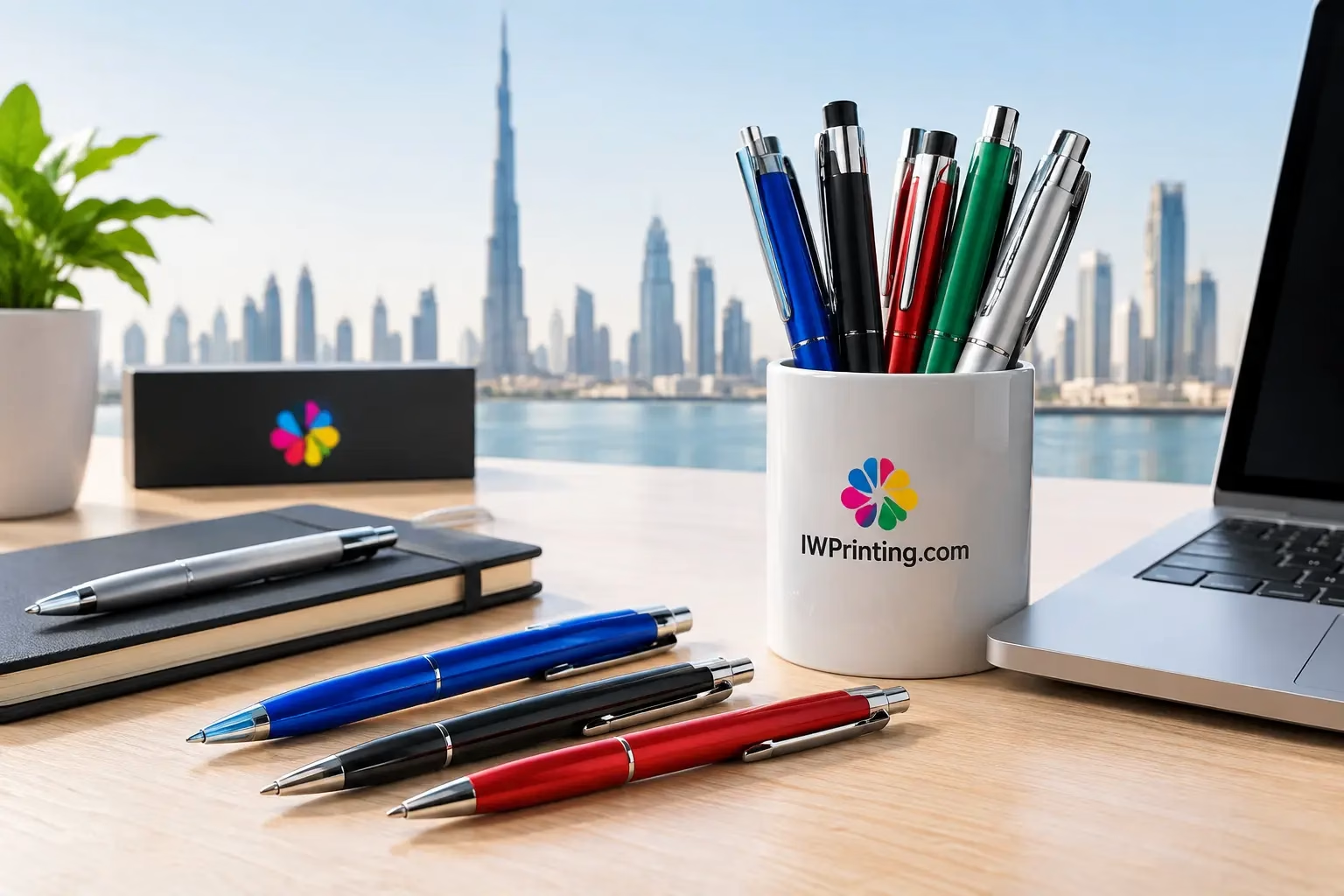
Choose promotional pen printing in Dubai for branded giveaways that look professional, suit your budget, and arrive ready for events, offices, and campaigns.
WhatsApp us
Printing, corporate gifts and signage — tell us what you need and let AI help you find it.
Ask naturally. IWPrint AI can understand your product, quantity, budget and requirement.