
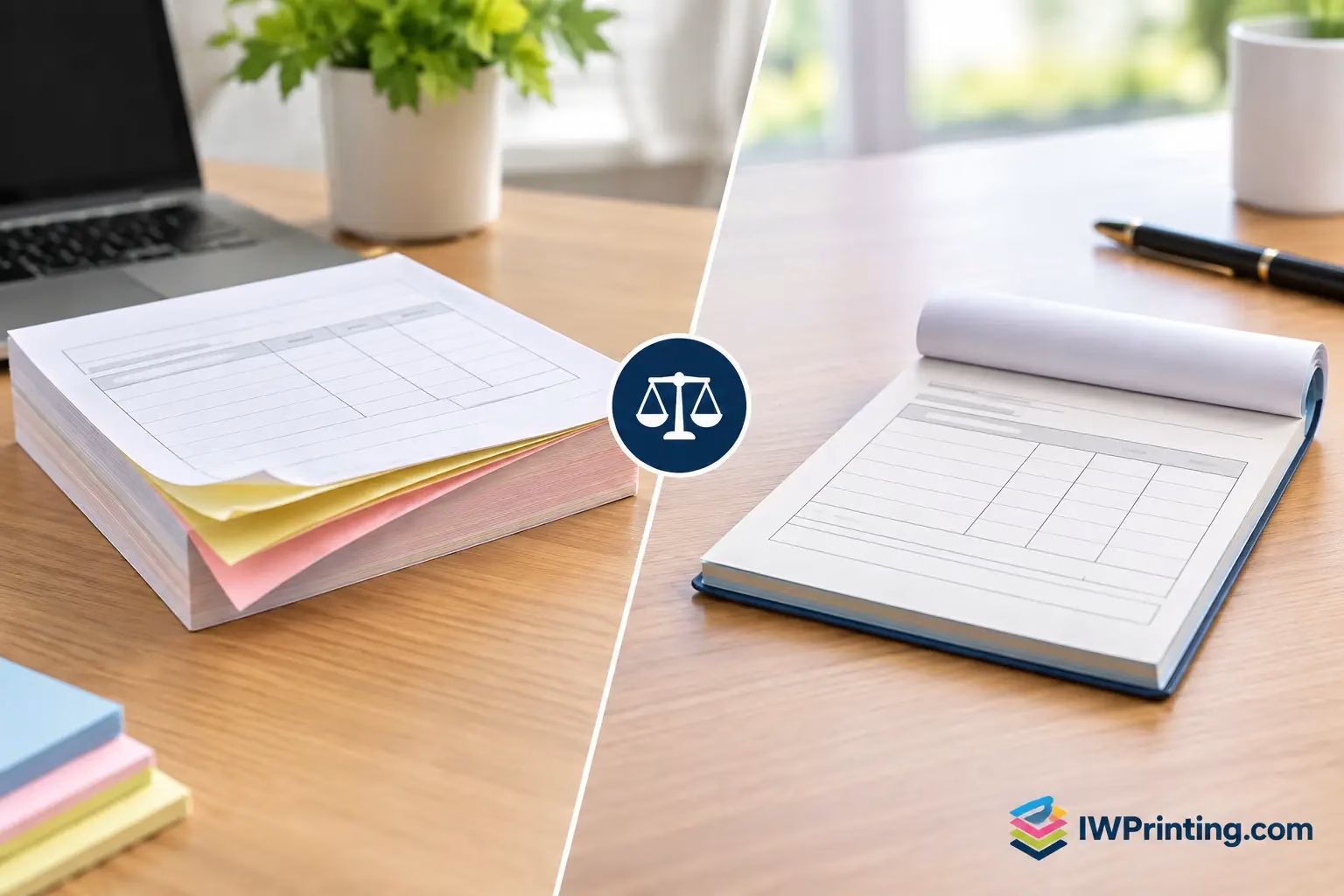
NCR Versus Receipt Books: Which Fits Your Business?
Compare NCR versus receipt books for invoices, orders, and payments. Choose the right format, copy count, and finish for clear daily business records.
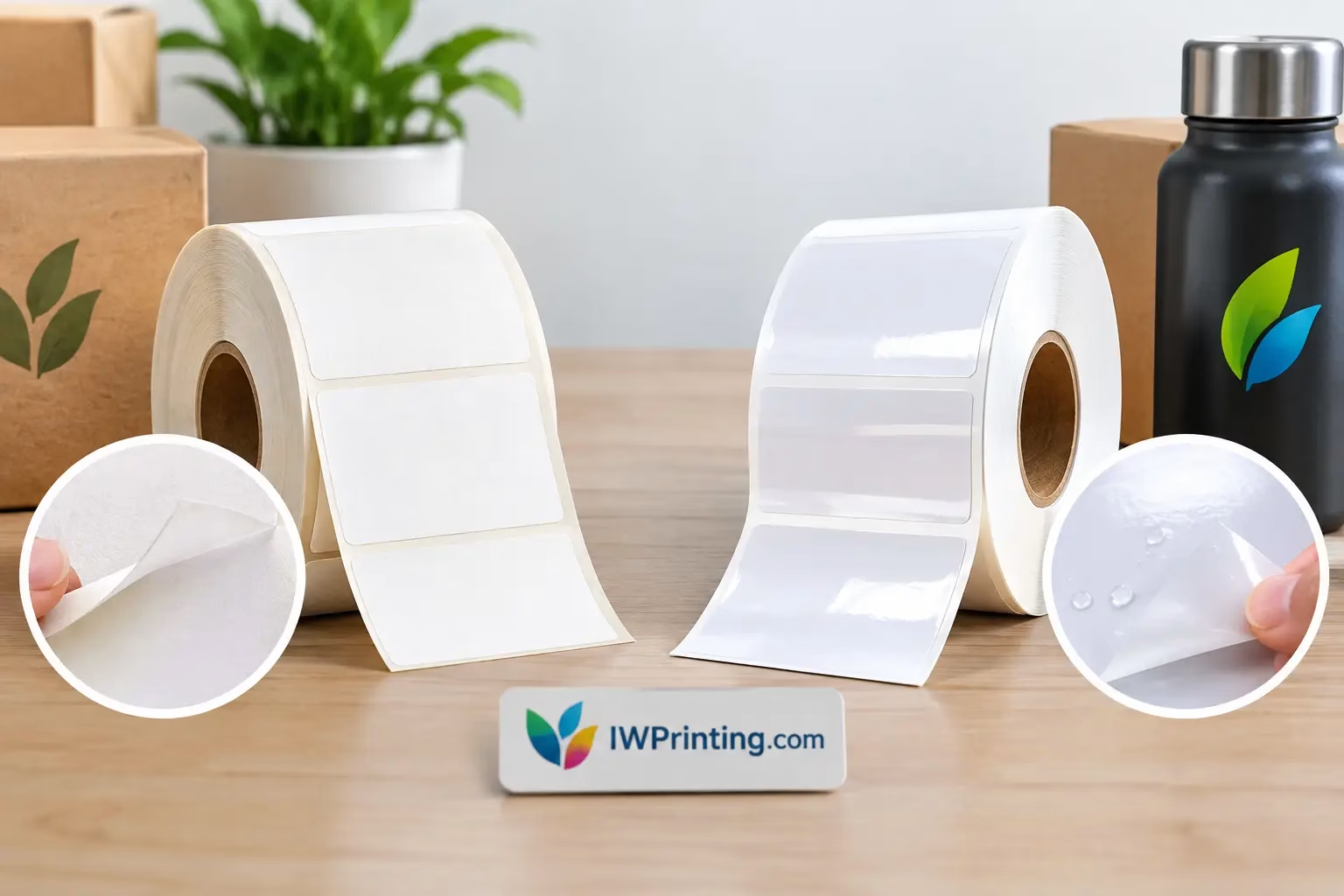
A label can be the smallest part of your packaging and still carry the biggest workload. It identifies the product, supports your brand, communicates instructions, and has to look professional from the shelf to the customer’s hands. When comparing paper labels versus vinyl labels, the right choice comes down to where the label will be used, how long it needs to last, and what conditions it must handle.
Paper is often the efficient, cost-conscious choice for everyday packaging and short-term promotions. Vinyl is built for tougher environments, including moisture, handling, outdoor exposure, and curved surfaces. Neither material is automatically better. The best result comes from matching the label stock, adhesive, finish, and print method to the job.
Paper labels are printed on paper-based stocks with an adhesive backing. They are widely used for retail packaging, food jars, cartons, product sleeves, shipping applications, office organization, and promotional campaigns. They offer excellent print clarity, a broad choice of finishes, and a familiar tactile feel that works especially well for premium food, beauty, and handmade products.
Vinyl labels are made from a flexible plastic film, commonly PVC. They are water-resistant, tear-resistant, and more durable than standard paper labels. This makes them a practical option for bottles, equipment, windows, vehicles, outdoor signage, industrial products, and items that are frequently handled or cleaned.
The material changes more than durability. It also affects the look of the finished product. Paper can feel natural, elegant, or handcrafted, while vinyl often creates a cleaner, smoother, more modern appearance. A textured uncoated paper label on a candle jar sends a different message than a glossy vinyl label on the same jar.
Paper labels are a strong fit when the product will remain dry, the label is not expected to face heavy abrasion, and cost control matters. For high-volume packaging runs, paper can help businesses achieve a polished branded result without adding unnecessary material cost.
They work particularly well for dry goods, bakery boxes, coffee bags, cosmetics cartons, retail tags, stationery, takeaway packaging, and event labels. Paper also offers attractive finishing options. Gloss lamination can add color intensity, while matte or uncoated stocks can create a refined, understated look. Specialty paper materials can support artisan, organic, luxury, or eco-conscious brand positioning.
For a startup preparing product packaging, paper labels can be an accessible way to create a consistent identity across multiple products. A well-designed label with clear type, accurate color, and a suitable adhesive can look far more premium than its price suggests.
There are limits, however. Standard paper labels can wrinkle, stain, or lift when exposed to water, condensation, oils, or repeated friction. A paper label on a chilled beverage bottle may look perfect when applied, then deteriorate once the bottle begins to sweat. For this reason, paper is not usually the first choice for refrigerated items, bathroom products, or outdoor applications.
Not all paper labels perform the same way. A gloss-coated paper can resist light splashes better than uncoated paper, while lamination adds protection against scuffs and moisture. Adhesive selection matters just as much. Permanent adhesive is suitable for most standard packaging, while removable adhesive is useful for temporary promotions, pricing, or organizational labels.
Before placing a large order, test the label on the actual packaging surface. Cardboard, glass, plastic, metal, and textured containers all behave differently. A label that bonds well to a smooth carton may not hold as effectively on a curved, low-energy plastic bottle.
Vinyl labels are designed for situations where paper would struggle. They resist water, tearing, fading, and day-to-day wear much better than paper stock. If customers will touch, carry, wash, refrigerate, or expose the product to changing temperatures, vinyl is often the safer investment.
Common uses include beverage bottles, cosmetic containers, cleaning products, outdoor equipment, safety labels, vehicle decals, window graphics, machinery labels, and promotional stickers. Vinyl is flexible enough to conform to curved containers and uneven surfaces, reducing the risk of cracking or peeling around edges.
For businesses using labels outdoors, vinyl can protect brand visibility where sunlight, dust, rain, and frequent cleaning are part of the environment. Adding a protective laminate improves scratch resistance and helps preserve color over a longer period. This is especially valuable for branded decals, directional stickers, retail window promotions, and equipment identification.
Vinyl also offers a sharp, high-impact finish. Gloss vinyl makes colors appear vibrant and is popular for promotional stickers and product labels. Matte vinyl reduces glare and can create a more sophisticated look. Clear vinyl is useful when you want the packaging itself to remain visible, such as on glass jars, cosmetic bottles, or storefront windows.
The trade-off is cost. Vinyl is generally more expensive than paper, particularly when a project includes lamination, contour cutting, specialty adhesive, or installation requirements. It may be unnecessary for a dry product sold in a cardboard box. Paying for outdoor-grade durability where it is not needed can reduce packaging efficiency without improving the customer experience.
The most useful question is not, “Which label material is best?” It is, “What will happen to this label after it leaves production?” Think through the complete journey from application to customer use.
A dry snack pouch on a retail shelf may only need a paper label with a clean finish. A cold juice bottle needs a material that handles condensation. A cleaning product requires resistance to moisture and regular handling. A vehicle decal needs long-term outdoor durability and strong adhesion. Each scenario points to a different specification.
Consider these practical factors before ordering:
Both paper and vinyl can produce professional full-color printing when artwork is prepared correctly. The difference lies in the surface and finish. Paper may absorb ink differently depending on whether it is coated or uncoated, which can give colors a softer or more natural appearance. Vinyl has a smooth, non-porous surface that often delivers bold color and crisp detail.
For either material, design should account for the label’s actual size. Small labels need readable type, strong contrast, and enough space around important information. Fine lines, pale text, and crowded layouts can become difficult to read after printing and application.
If your label includes product ingredients, barcodes, QR codes, warnings, batch numbers, or expiry details, prioritize legibility over decoration. A beautiful label that cannot be scanned or read creates operational problems. Ask for a proof or sample where possible, especially for new packaging, unusual shapes, or color-sensitive branding.
Paper labels are ideal when you want an affordable, attractive solution for dry indoor products, retail packaging, and short-term promotional needs. Vinyl labels are the practical upgrade for moisture, movement, outdoor exposure, and long-term durability.
For many businesses, the answer is not one material across every use. A retailer might use paper labels on product cartons, vinyl stickers on reusable bottles, and weather-resistant vinyl decals for window promotions. Choosing each material by application keeps branding consistent while spending is controlled.
At IWPrinting.com, businesses can order customized labels with the material, size, shape, finish, and quantity matched to their packaging or promotional requirements. A quick conversation before production can prevent common issues such as peeling edges, unreadable text, unsuitable adhesive, or a finish that does not fit the brand.
Choose the label that will still look right at the moment your customer sees, holds, and uses the product. That is where a smart material decision earns its value.
Compare NCR versus receipt books for invoices, orders, and payments. Choose the right format, copy count, and finish for clear daily business records.

Learn how to plan exhibition signage that guides visitors, elevates your brand, and fits your booth, budget, timeline, and event goals with confidence.
WhatsApp us
Printing, corporate gifts and signage — tell us what you need and let AI help you find it.
Ask naturally. IWPrint AI can understand your product, quantity, budget and requirement.