
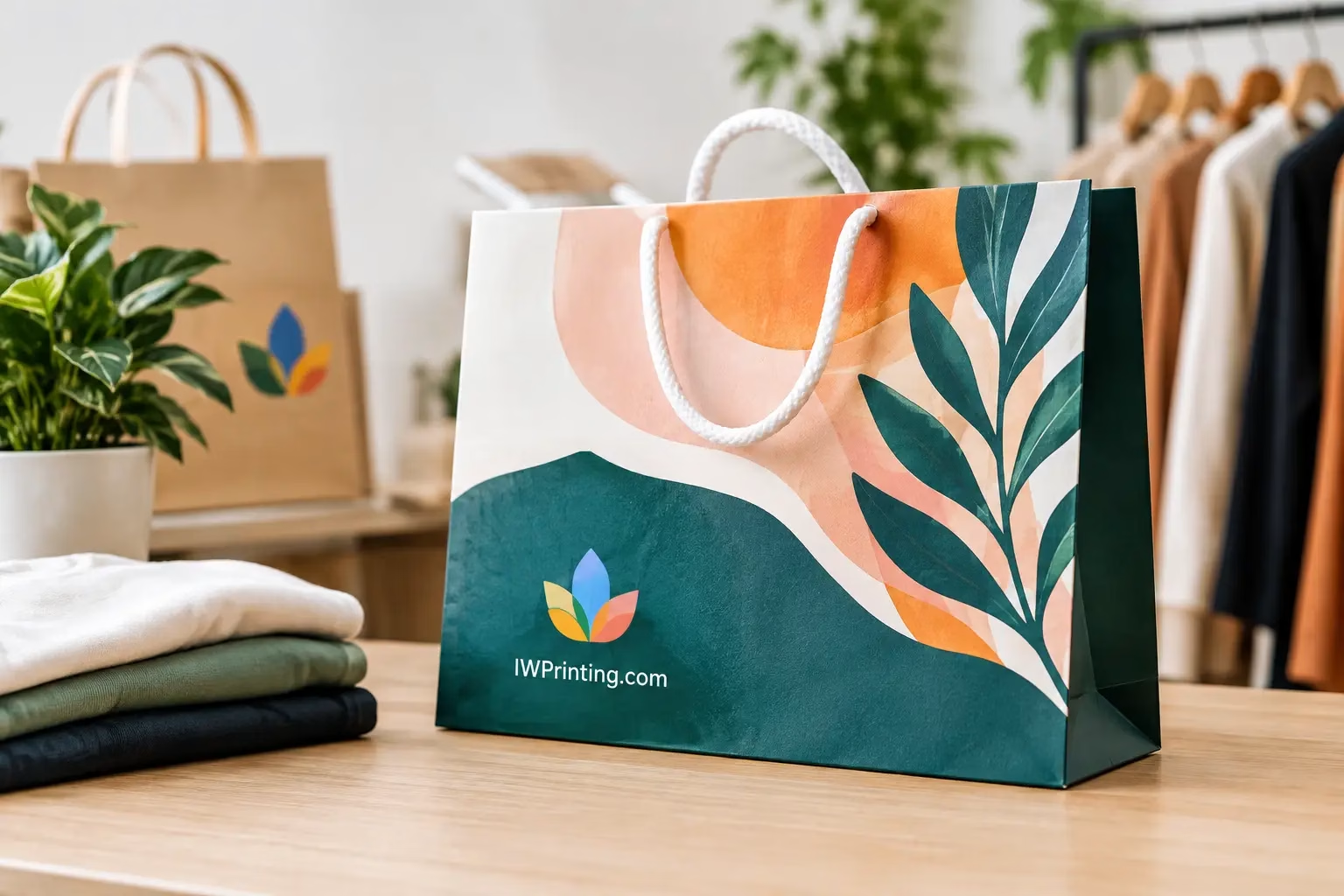
Shopping Bag Printing That Builds Brand Recall
Shopping bag Printing turns every purchase into brand exposure. Choose materials, sizes, finishes, and artwork that fit your product, budget, and customers.
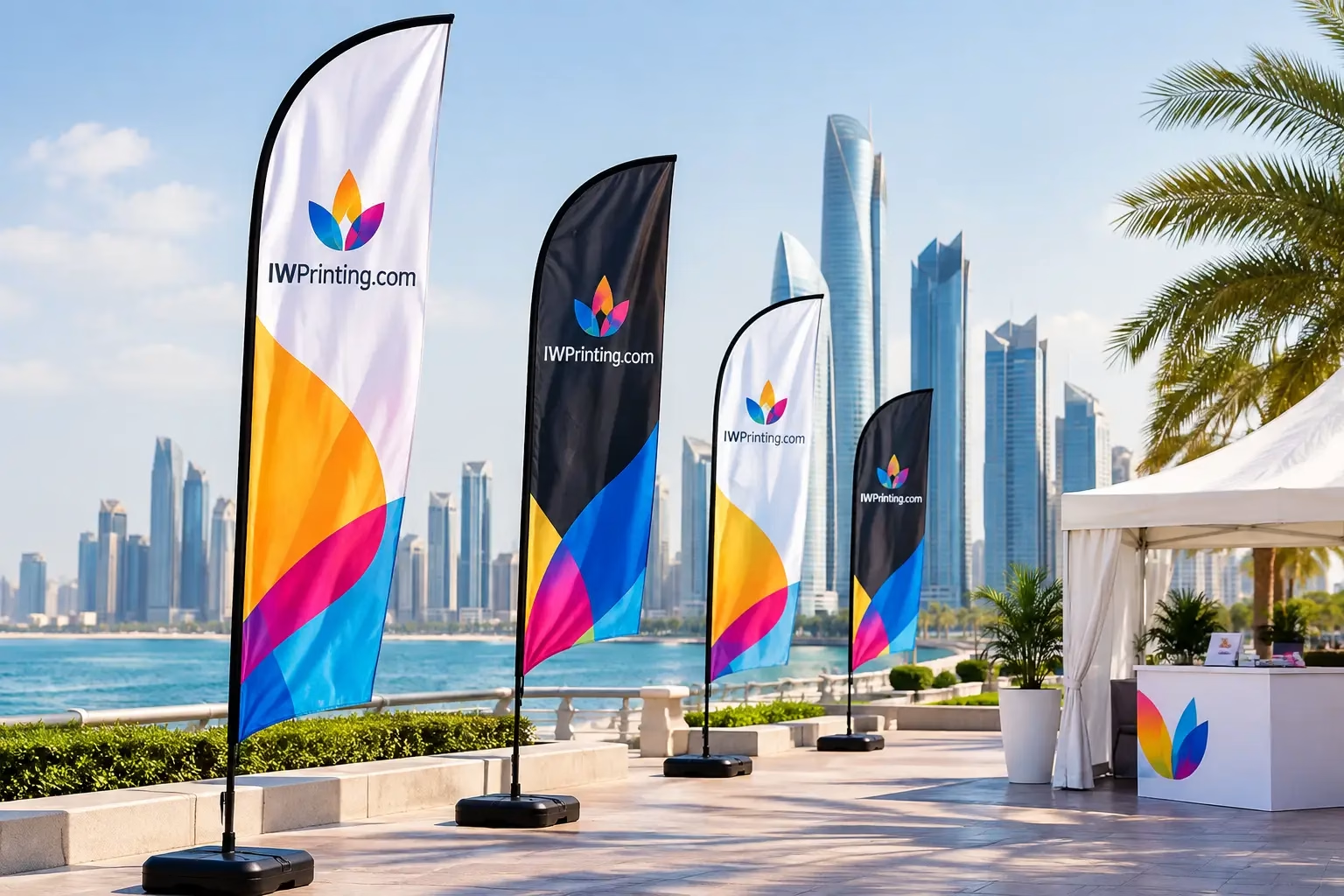
A well-placed flag does more than fill an empty space. Outside a showroom, at a construction site, along an event entrance, or beside an exhibition stand, it puts your name, offer, or message where people can see it from a distance. Flags Printing in Abu Dhabi gives businesses a practical, high-visibility format for promotions that need to work in open spaces, busy venues, and changing conditions.
The best result is not simply a logo placed on fabric. It is a flag matched to its location, viewing distance, campaign duration, and installation method. That is where material choice, size, print quality, finishing, and quantity all matter.
Flags create movement, which naturally attracts attention in ways that fixed signs sometimes cannot. A row of branded flags can guide visitors toward a registration area, identify a retail promotion, mark a property launch, or give an outdoor event a more organized and professional appearance.
For businesses, the value is straightforward: flags offer a large branding area without requiring permanent construction. They can be used for a weekend activation, seasonal campaign, grand opening, sports day, trade show, or ongoing forecourt display. When the campaign changes, the flags can be replaced without changing the full setup.
They are also useful when a message needs to be understood quickly. A bold logo, short headline, product image, directional arrow, or promotional offer is easier to absorb than a crowded design. This makes flags especially effective for retail, hospitality, real estate, automotive, education, government events, healthcare campaigns, and exhibition branding.
A good flag order starts with the purpose. The shape and base should support the environment, not just the design. A feather flag, for example, has a tall curved profile that remains recognizable even when there is little wind. Teardrop flags keep a more compact, tensioned shape and are often a strong choice for entrances, outdoor promotions, and repeated branding layouts.
Rectangular flags provide a broader print area and a more traditional look. They work well for company identity, national celebrations, formal events, construction projects, and building-front displays. Hand flags are better suited to parades, school activities, national occasions, product launches, and crowd engagement.
The location determines the base. Ground spikes suit soil and grass, while cross bases and weighted water bags are more appropriate for hard flooring, paved areas, exhibition halls, and retail entrances. Wall-mounted poles can work for long-term building displays, but they require careful planning for fixing points and wind exposure.
There is no single best option. A three-day indoor exhibition needs different hardware from a roadside promotion or an outdoor festival. Sharing where and how the flag will be used helps prevent ordering a visually appealing product that is impractical on site.
A flag seen from across a parking area needs a different scale than one placed beside a reception desk. Larger flags can improve visibility, but they also need stable bases, adequate clearance, and artwork that remains readable from a distance.
For most promotional flags, keep the main message short. A logo and one supporting line often perform better than a full list of services. If you need more information, use the flag to draw attention and place the details on nearby signage, brochures, counters, or digital displays.
Fabric flags are commonly selected for their lightweight feel, color reproduction, and ability to move naturally outdoors. Polyester is a popular option because it is practical for promotional use and can produce strong, full-color graphics. Dye-sublimation printing is often preferred for fabric flags because the ink becomes part of the material rather than sitting heavily on the surface.
For double-sided messaging, consider how the flag will be viewed. A single-layer flag may show a reverse image on the back, which is acceptable for many outdoor applications. If correct reading on both sides is essential, a double-sided construction or blackout layer may be required. That improves legibility but can increase production cost and weight.
Outdoor flags also need proper finishing. Reinforced hems, secure stitching, pole pockets, eyelets, and suitable clips all affect how the product performs over time. A low-cost flag can become expensive if it tears early or cannot be safely installed. For short promotions, a standard finish may be enough. For repeated use or exposed locations, invest in stronger construction.
Color is another practical consideration. Brand colors should be supplied in the correct format whenever possible, particularly for logos with defined corporate standards. Bright colors can look excellent in sunlight, but very fine details, pale text, and low-contrast combinations may disappear at distance. A production-ready proof helps identify those issues before printing begins.
Flag artwork should be designed for movement, folds, and distance. The strongest layouts use large visual elements, clear contrast, and safe margins around the edges. Important content should not sit too close to the pole pocket, stitching, or bottom edge, where it may be partially hidden or distorted.
Use high-resolution logos and images. Files that look acceptable on a phone screen may print poorly at large size, especially if they have been copied from social media or compressed through messaging apps. Vector logo files are ideal for sharp text and graphics, while high-resolution print-ready PDFs are typically suitable for finished designs.
Before approving the design, check these practical points:
A professional design review is valuable when flags are part of a larger campaign. Matching the colors, typography, and visual hierarchy across banners, counters, backdrops, vehicle graphics, and brochures creates a more credible brand presence.
Ordering one flag can make sense for a reception entrance or a small promotion. For larger spaces, however, the impact often comes from repetition. Four matching flags at a venue entrance can create a much stronger arrival point than one oversized unit. A row of flags along a walkway can also guide visitor movement while keeping branding visible.
Quantity affects pricing, production planning, and consistency. Ordering a campaign set together helps ensure matching color, material, and finishing across all units. It also makes reordering easier when additional branches, events, or locations need the same branded format.
Think beyond the first event. If your business runs regular activations, exhibitions, community events, or seasonal promotions, a reusable flag system with replaceable printed fabric can be a practical long-term investment. The poles and bases can be retained while campaign graphics change.
A flag can only perform as well as its installation. Bases should be selected for the ground surface and secured according to local venue rules and weather conditions. Do not place tall flags where they obstruct walkways, vehicle sightlines, emergency access, or neighboring displays.
Wind deserves special attention. Flags are designed to move, but strong or sustained wind can place pressure on poles, bases, and stitched edges. In exposed locations, use the recommended hardware, add suitable weight where needed, and remove the flags during severe weather. This protects the display and reduces safety risks.
After use, allow fabric flags to dry before folding and storing them. Keeping damp flags packed away can cause odors, creasing, and material deterioration. Light cleaning and careful storage extend the usable life of reusable event graphics.
The most efficient flag project begins with a clear brief: the flag type, intended location, size, quantity, artwork status, deadline, and whether installation hardware is required. This makes it easier to receive an accurate quotation and avoid last-minute changes.
IWPrinting.com can support custom flag requirements as part of a wider event, retail, signage, or corporate branding project. From artwork support and production through to delivery, the focus is on making the order straightforward and ensuring the finished flags are ready for their intended setting.
When your message needs to stand out in an open, competitive space, choose a flag format that fits the site and keep the design focused. A clear brand message, durable materials, and the right display hardware can turn a simple printed flag into a dependable part of your next campaign.
Shopping bag Printing turns every purchase into brand exposure. Choose materials, sizes, finishes, and artwork that fit your product, budget, and customers.
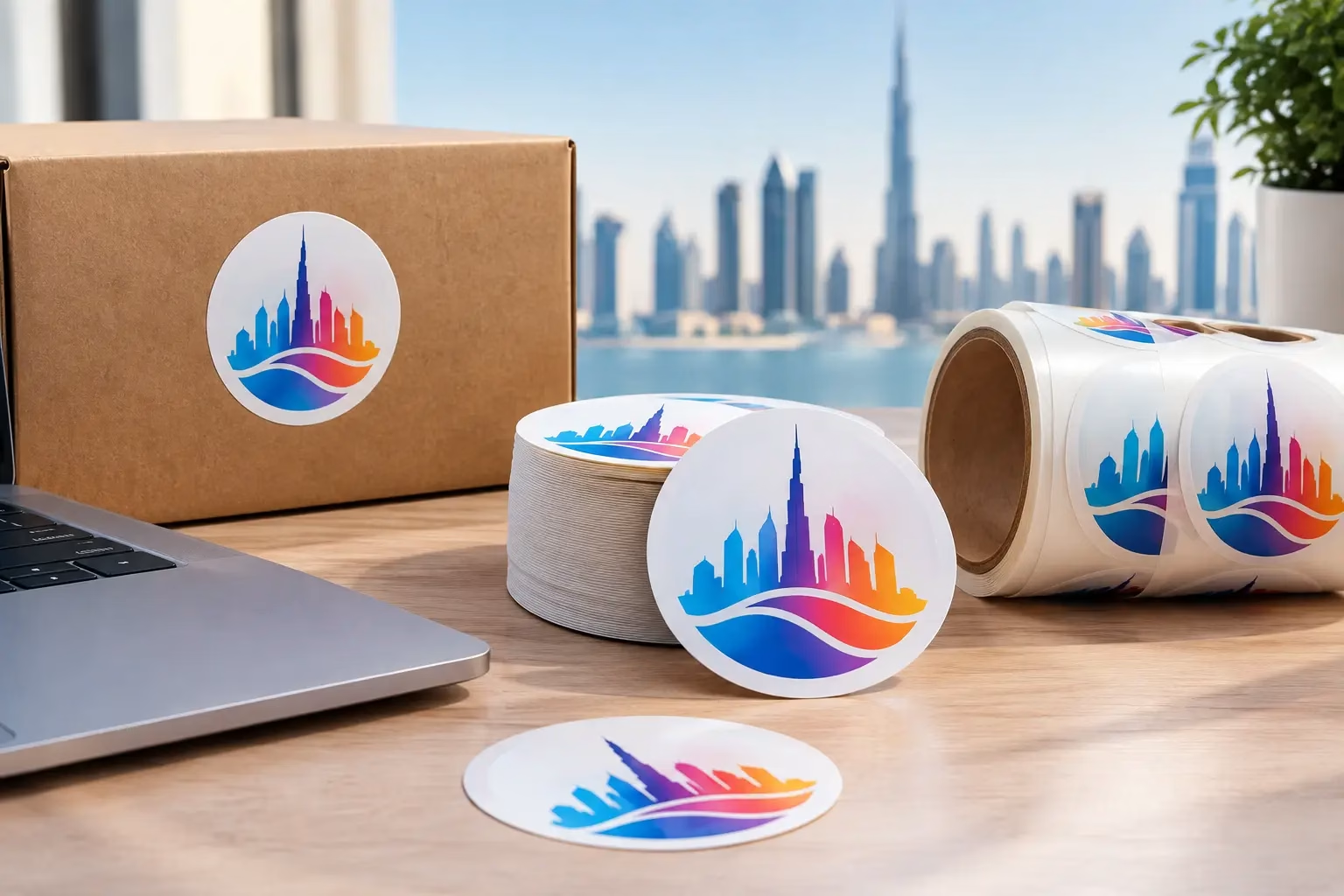
Get Round Sticker Printing in Dubai for product labels, events, and promotions. Choose durable materials, sharp color, custom sizes, and fast delivery.
WhatsApp us
Printing, corporate gifts and signage — tell us what you need and let AI help you find it.
Ask naturally. IWPrint AI can understand your product, quantity, budget and requirement.