
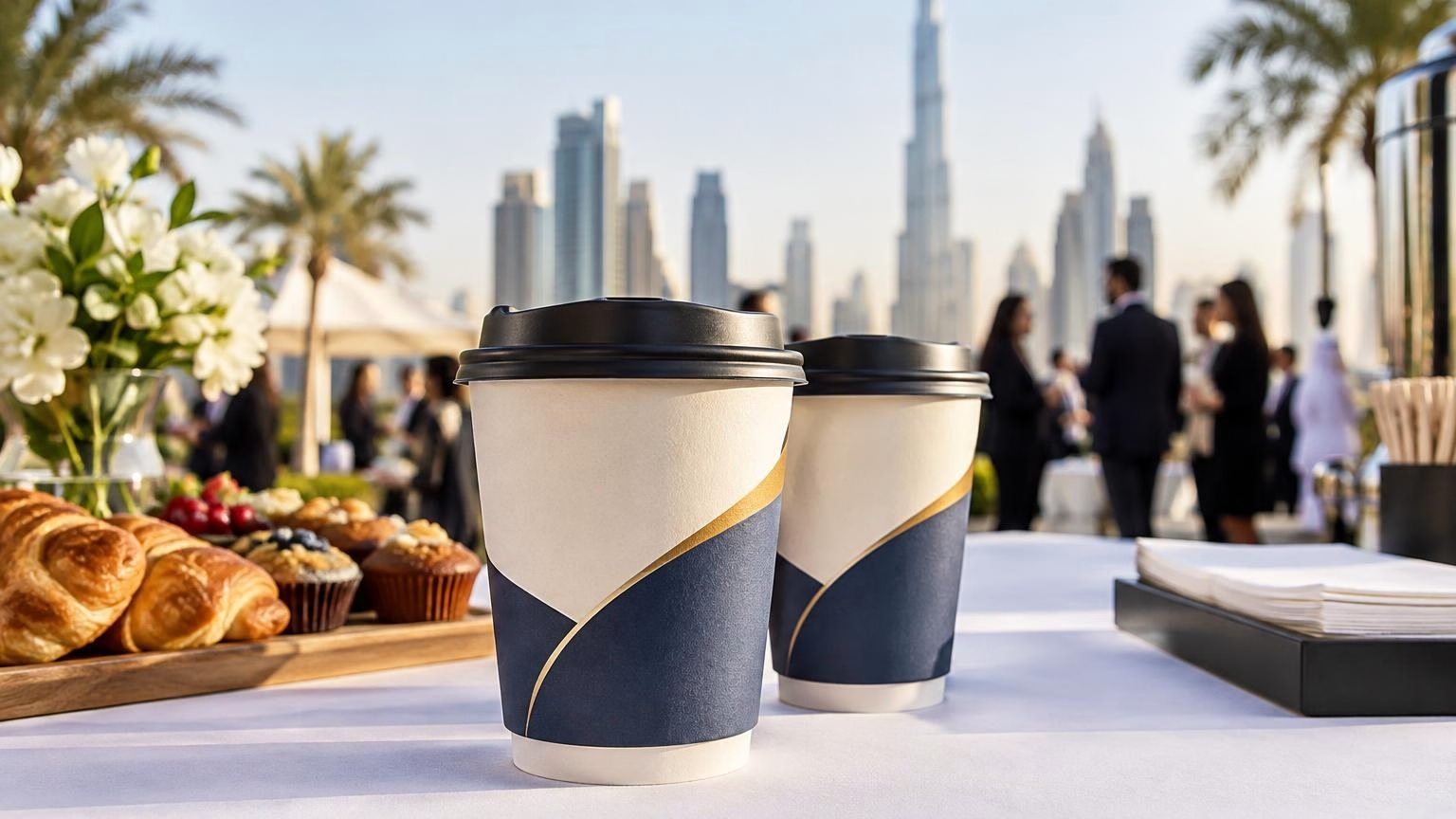
أكواب ورقية مزدوجة الجدار مطبوعة للفعاليات في دبي: دليل الاختيار
تعرّف على كيفية اختيار الأكواب الورقية مزدوجة الجدار المطبوعة لخدمات القهوة والضيافة في فعاليات دبي، وما الذي ينبغي مراجعته في المقاس والتصميم والكمية قبل الطلب.
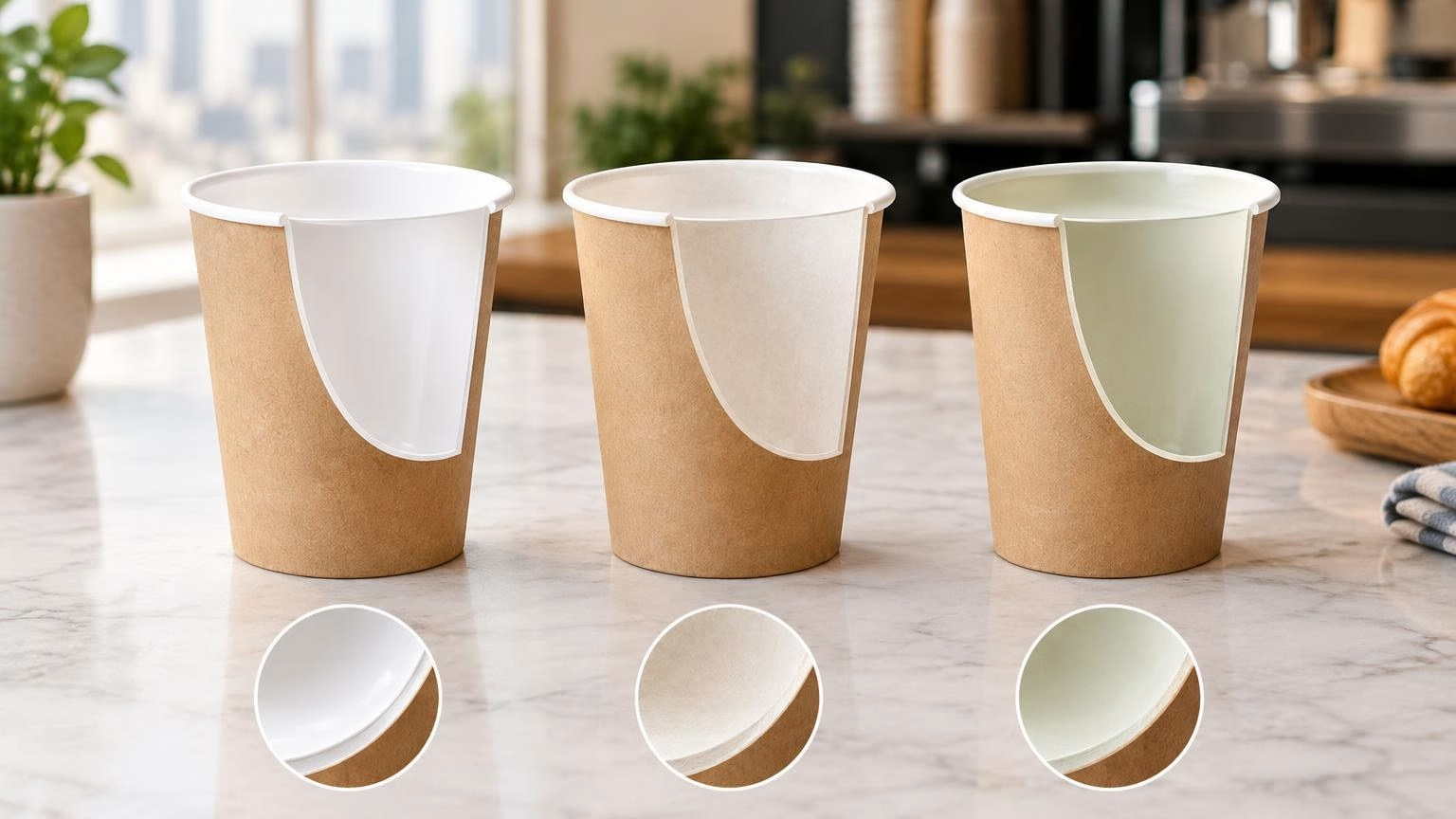
Paper cup lining options in the UAE include PE, PLA and water-based coatings, but there is no single best choice for every business. PE is a widely used plastic lining; PLA is a plant-derived polymer; and “water-based” refers to a coating approach whose composition and performance can vary. For buyers in Dubai and across the UAE, the right choice depends on the drink, intended use, disposal route and the supplier’s documentation.
Before choosing a cup, confirm that its complete construction is suitable for the beverage and service conditions. Do not treat a coating label as proof that a cup is recyclable, compostable or plastic-free. Those claims depend on the specific finished product and the waste-processing options available to the user.
A lining is a layer on the inside of a paper cup that helps the cup hold liquid. The cup’s performance depends on the whole construction—not just the lining—including the paperboard, coating, seams and intended use. A cup designed for one application should not automatically be assumed suitable for another.
For a UAE café, event organiser or business ordering branded cups, start by describing the drinks and service environment. Include whether the cups will hold hot or cold beverages, how long they may be used, and whether they will be filled and served immediately or handled during an event. Ask the supplier to recommend a specific finished cup and confirm its intended use.
The table is a starting point for questions, not a product specification. Coating formulations and cup constructions vary, so confirm the details for the exact cup you plan to order.
| Lining option | What it is | Potential advantages | Points to verify |
|---|---|---|---|
| PE | A polyethylene plastic lining applied to paperboard. | A familiar option used in many paper cup constructions. It can help the cup resist liquid when designed for the intended application. | Ask about the finished cup’s beverage suitability and local end-of-life route. A paper body does not, by itself, make a lined cup straightforward to recycle. |
| PLA | A lining made from polylactic acid, a polymer commonly derived from plant-based feedstocks. | May suit buyers seeking a plant-derived lining, subject to the product specification and the claims that can be substantiated. | Do not assume it will break down in home compost or be accepted by local facilities. Confirm the exact product’s requirements and available processing route. |
| Water-based coating | A broad description of a coating applied using a water-based formulation; ingredients differ by product. | May be considered by buyers exploring alternatives to conventional cup linings. | “Water-based” does not automatically mean plastic-free, compostable, recyclable or suitable for every drink. Request composition and performance documentation. |
PE lining is a common approach to making paperboard cups suitable for holding beverages. It is worth considering when the supplier can confirm the cup’s intended application and provide relevant product information. For cafés, offices and events, focus first on whether the specific cup meets the practical needs of serving the drink.
Disposal is a separate question. Paper and plastic layers can affect how a cup is handled after use, and acceptance varies by waste collection and processing systems. Do not describe a PE-lined cup as recyclable in a particular location unless you have verified that the exact cup is accepted through an available route.
PLA is a polymer often made from plant-derived feedstocks and may be used as a cup lining. Buyers may consider it when material origin is part of their purchasing brief, but that does not settle how the finished cup performs or should be disposed of.
Composting claims need particular care. Conditions required for processing may not exist in a home compost setting or in every commercial facility. Ask for documentation covering the finished cup—not just the lining—and confirm whether a suitable collection and processing route is available to your business or event. If it is not, use precise, qualified wording in customer-facing communications.
Water-based coating is not one universal material specification. It describes a category of coating approach, and the formulation and performance can differ between products. This option may be relevant when comparing alternatives, but the name alone cannot answer questions about the coating’s ingredients, beverage suitability or disposal.
Ask the supplier to explain what is used in the finished cup and provide supporting product information. Confirm suitability for your drink, how the cup should be stored and used, and what can accurately be said about its environmental characteristics.
Make the decision around the intended use and evidence available for the exact cup. A short purchasing checklist helps compare suppliers on the same basis.
For Dubai events and UAE-wide campaigns, artwork should also be checked for legibility at the cup’s actual print size. If the audience needs English and Arabic information, prepare both versions before artwork approval. A clear proof helps reviewers check the logo, wording and layout before the order proceeds.
Request answers in writing so the selected cup, branding and claims are clear to everyone involved. Useful questions include:
PE is a plastic lining commonly used to help paper cups resist liquid. PLA is a plant-derived polymer used as a lining in some cups. Their material origins differ, but neither label alone tells you how a finished cup should be disposed of. Ask about the full cup construction and check whether suitable local collection or processing is available.
Do not assume that a PLA label means a cup will compost in a home bin or in every waste facility. Compostability depends on the finished product, the conditions it requires and whether an appropriate facility accepts it. Request documentation for the specific cup and verify local disposal options before describing it as compostable.
Not necessarily. “Water-based” describes a coating approach, but it does not by itself establish the full coating chemistry or prove that the finished cup contains no plastic. Ask the supplier for the coating composition and relevant product documentation, and avoid making environmental claims based on the label alone.
There is no universal answer based only on the lining name. Suitability depends on the specific cup construction and its intended use. Tell the supplier whether the cup will hold hot or cold drinks, and ask for confirmation of performance and food-contact suitability for that application before ordering.
Printing suitability depends on the cup and the printer’s process, not just the lining category. Share your artwork, colours and intended cup use when requesting a quote or sample. Ask the supplier to confirm available print options, artwork requirements and whether the finished result is suitable for the drink and service environment.
For a branded-cup project, contact IWPrinting to discuss your requirements and confirm available cup constructions, printing options and documentation. Share the intended beverage, use environment and artwork brief so the details can be checked before you proceed.
تعرّف على كيفية اختيار الأكواب الورقية مزدوجة الجدار المطبوعة لخدمات القهوة والضيافة في فعاليات دبي، وما الذي ينبغي مراجعته في المقاس والتصميم والكمية قبل الطلب.
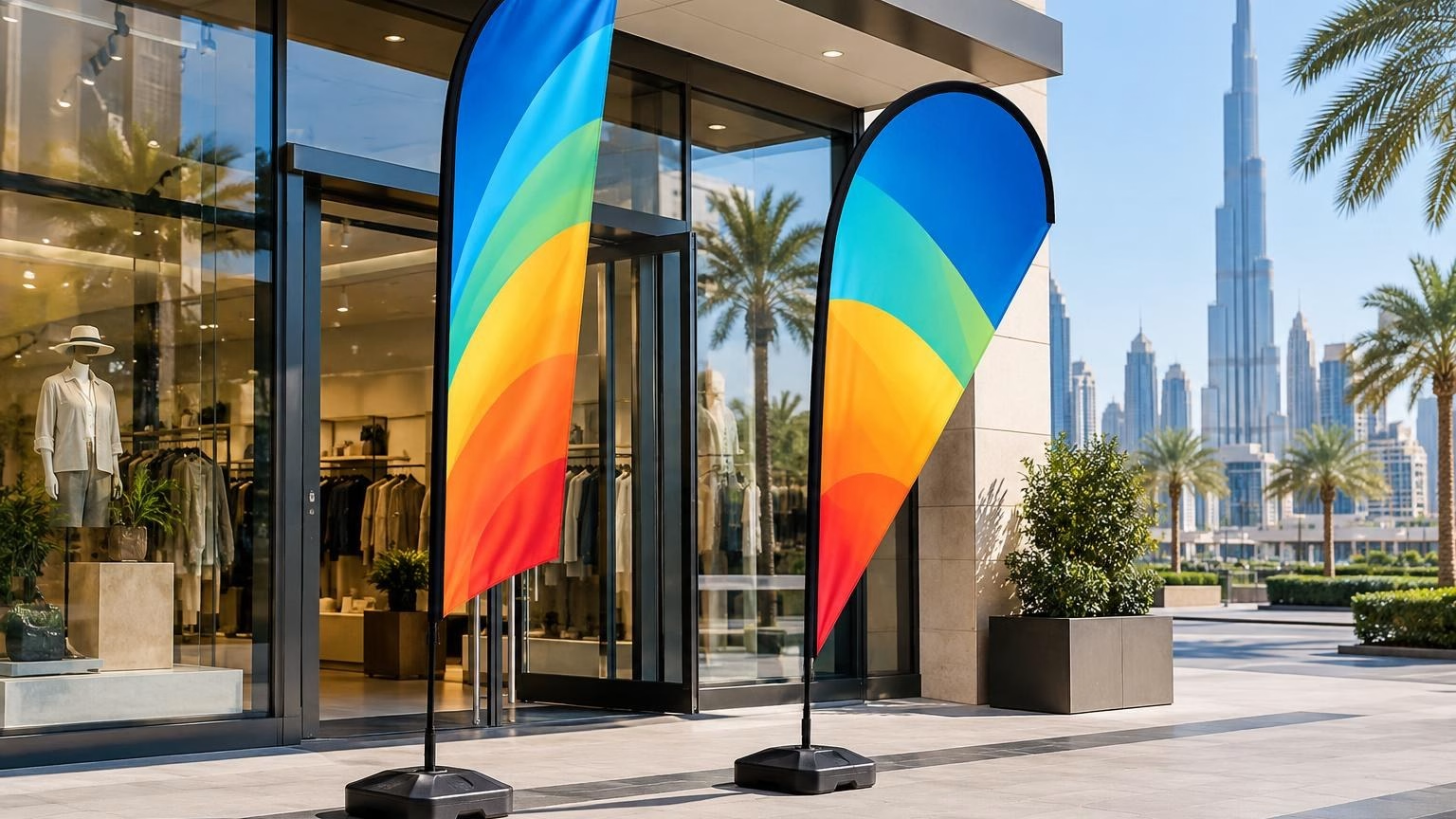
A escolha entre bandeiras tipo pena e gota depende sobretudo da silhueta pretendida, do espaço disponível e da forma como a mensagem será lida. Veja os critérios para entradas de lojas e eventos no Dubai e nos EAU.
I can help you find the right printing, corporate gifts, signage and display products. Tell me what you need, your quantity, and your budget if you have one.
WhatsApp us