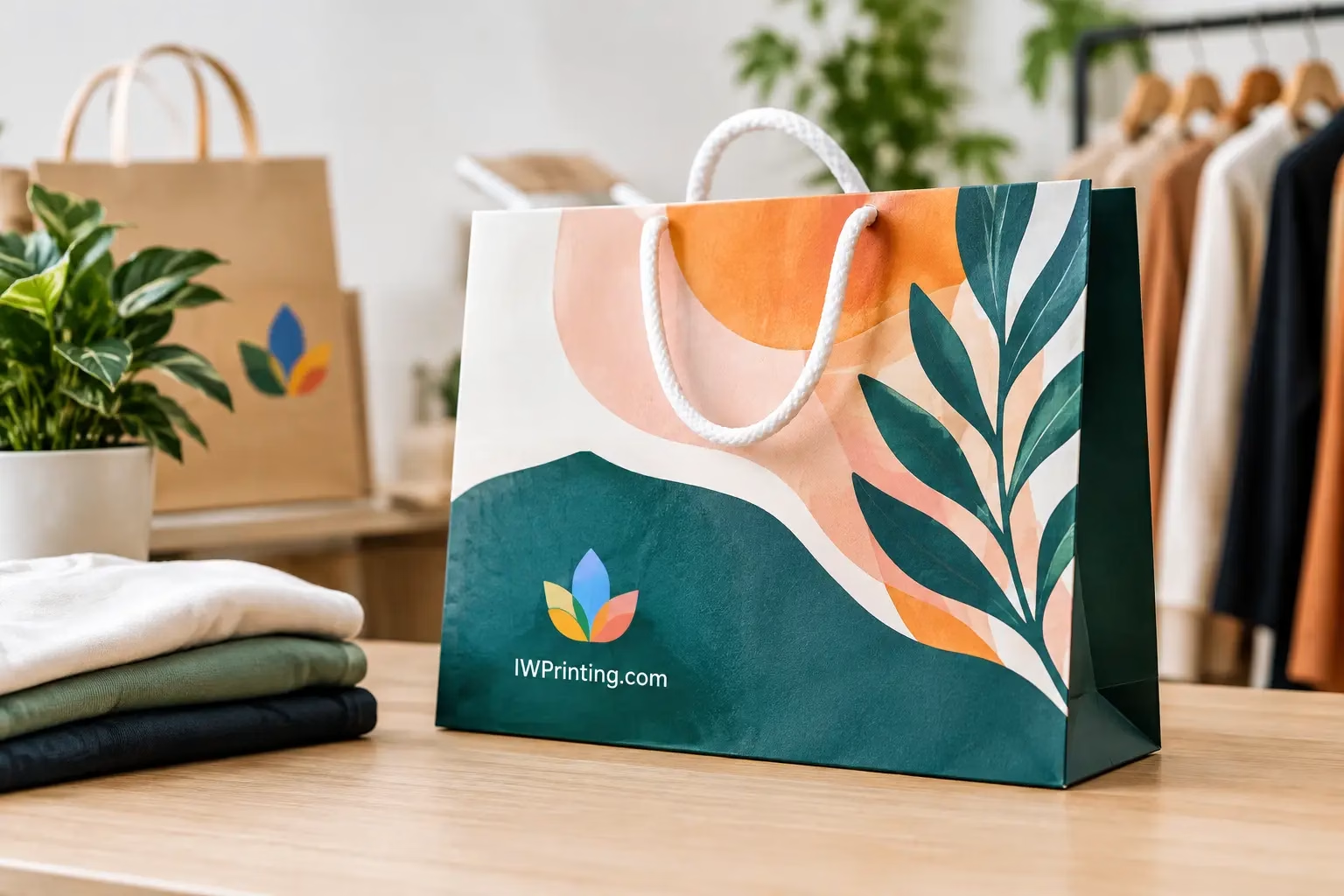
Shopping Bag Printing That Builds Brand Recall
Shopping bag Printing turns every purchase into brand exposure. Choose materials, sizes, finishes, and artwork that fit your product, budget, and customers.

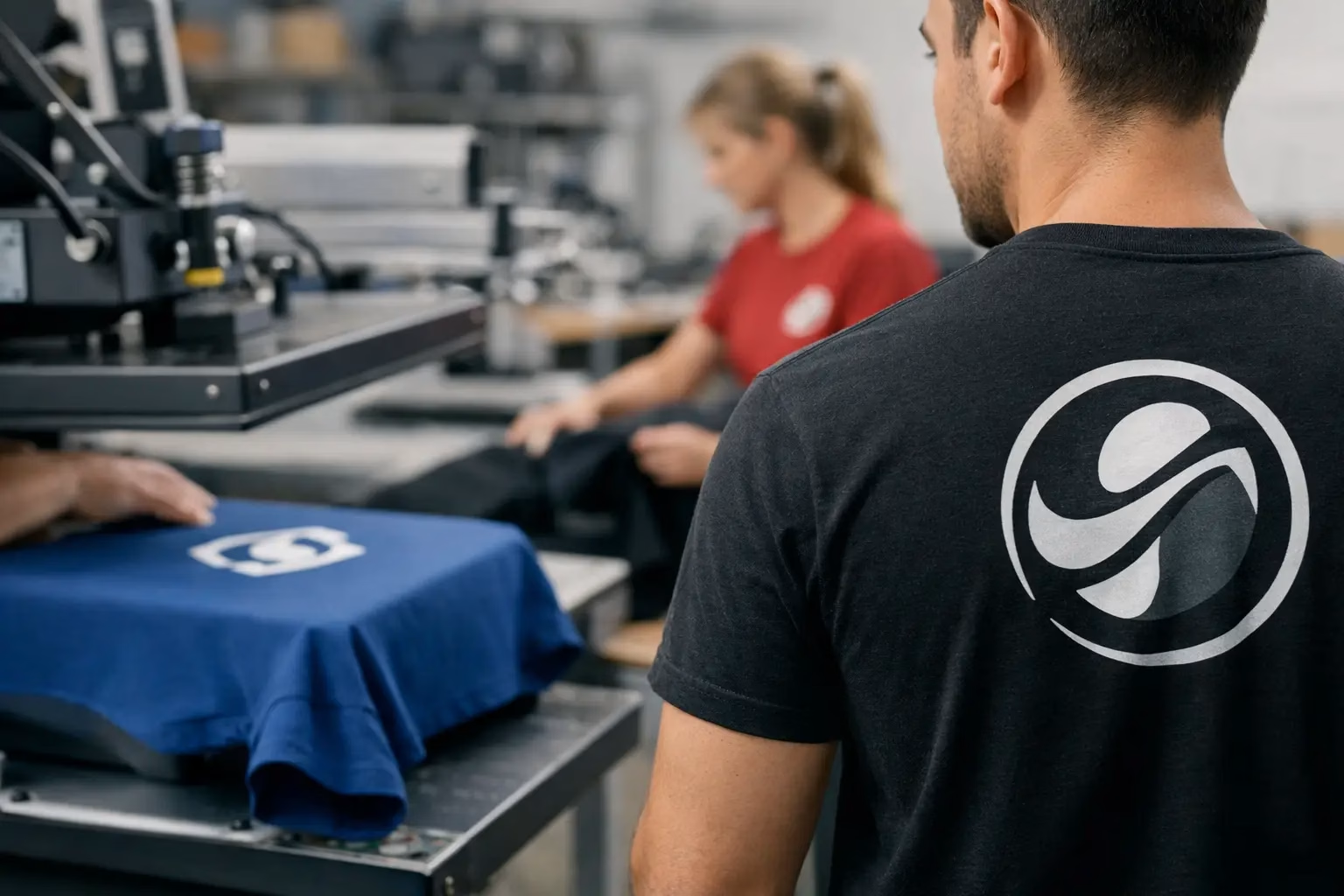
A staff uniform is often the first thing a customer notices when they enter a store, approach an event booth, or meet a delivery team. Branded staff t shirt printing turns that everyday interaction into a clear brand statement, while giving your team comfortable, practical clothing they can wear with confidence.
For businesses, schools, hospitality teams, retailers, contractors, and event organizers, the right printed T-shirt does more than display a logo. It helps customers identify the right person, creates a more organized team appearance, and keeps your brand visible long after a shift or event ends.
A matching team immediately looks more prepared. In a busy retail space, trade show, restaurant, warehouse, or construction site, branded T-shirts make staff easy to recognize. That can improve customer service because visitors know who to ask for help without having to guess.
They also create consistency across locations and campaigns. A growing business may have different teams handling sales, delivery, installation, customer support, and events. A well-designed staff shirt gives each group a shared visual identity, even when job roles differ.
The best result is not always the most elaborate design. A clean logo, readable text, and brand colors that reproduce accurately will usually work harder than a shirt crowded with messages. Think of the T-shirt as a moving business sign: it should be understood in seconds, from a few steps away.

The right fabric, fit, and print method depend on where and how the shirt will be worn. A promotional shirt handed out at a product launch has different requirements from a uniform worn five days a week.
For indoor teams, a standard cotton or cotton-blend T-shirt can offer a familiar feel and strong print results. Cotton is especially suitable for retail associates, office events, student groups, and casual hospitality environments. It is comfortable, easy to wear, and available in a wide choice of colors.
For outdoor crews, event teams, drivers, and active staff, moisture-wicking polyester can be a better option. It is lighter, dries quickly, and is better suited to warm conditions. The trade-off is that polyester needs a compatible print process and may not have the same natural feel as cotton.
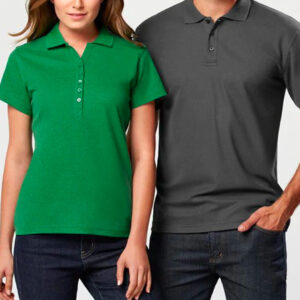
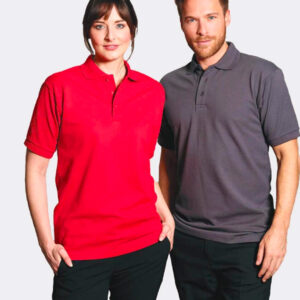
If your staff need a more polished uniform, consider a polo shirt rather than a crew-neck T-shirt. Polos work well for front desk staff, sales teams, property management, hospitality, and corporate events. T-shirts are usually more relaxed, cost-effective, and ideal for high-volume campaigns.
Before placing an order, decide whether the shirts are for daily uniforms, one-time events, promotional giveaways, or a mix of these uses. That decision affects the budget more than almost any other factor.
There is no single best printing method for every branded shirt. The appropriate option depends on your artwork, fabric, order quantity, color requirements, and expected wear.
Screen printing is a strong choice for larger orders with a simple logo or bold graphic. It produces vivid, durable color and becomes more cost-effective as quantities increase. It is particularly useful when many staff members need the same design. However, each color may require setup, so highly detailed artwork with multiple color variations can add complexity.
Heat transfer printing is useful for smaller runs, personalized names, numbers, and event-specific shirts. It offers flexibility when each garment needs different information, such as team member names or job titles. The finish can vary depending on the material used, so it is worth checking a sample for garments that will be washed frequently.
Direct-to-film printing is well suited to detailed, full-color artwork and shorter runs. It can reproduce gradients and fine visual elements that may be difficult with basic screen printing. For businesses ordering a limited number of shirts with an illustrated campaign design, this can be a practical route.
Embroidery is not T-shirt printing, but it is worth considering for polos, heavier cotton garments, and premium staff uniforms. An embroidered chest logo gives a professional finish, though it is not ideal for large artwork or lightweight T-shirts.
A reliable print partner should review your artwork before production and recommend a method based on the real use case, not simply the lowest initial price.
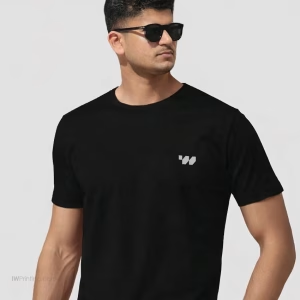
Most staff shirts work best with a logo on the left chest and a larger design on the back. The front creates a clean uniform look for face-to-face interactions. The back gives the brand more visibility when staff are moving through a venue, serving tables, restocking shelves, or working an event.
If your business name is not obvious from the logo, add a short line of text beneath it. Use a font that remains readable at normal viewing distance. Fine lettering, low-contrast colors, and overly detailed logos can look impressive on a screen but become difficult to read on fabric.
Consider whether staff need role identification. Adding words such as “Crew,” “Event Team,” “Support,” “Delivery,” or “Ask Me” can be useful when customers need quick direction. For larger teams, different shirt colors can distinguish departments without creating separate designs for every role.
Be careful with large printed areas in hot working environments. A full front print may look striking, but it can make the fabric feel less breathable. For daily wear in warm conditions, a smaller chest print and back logo often provide the better balance between visibility and comfort.
Ordering the right sizes is where many uniform projects lose time. Avoid guessing based only on headcount. Ask staff for their preferred size, then add a small number of extras in commonly requested sizes. Those spare shirts are useful for new hires, replacements, last-minute event staff, and unexpected sizing changes.
It also helps to order slightly above your immediate requirement when you expect regular staff turnover or recurring events. Reordering the same design later is easy, but production lead times and minimum quantities may make a planned buffer more economical.
For a first order, a practical approach is to review a physical size sample from the chosen garment range. Fit can vary significantly between suppliers, even when the size label is the same. This is especially relevant for mixed teams where comfort and confidence matter as much as brand presentation.
High-quality artwork leads to high-quality apparel printing. Vector files are preferred for logos because they can be scaled without losing sharpness. Common examples include AI, EPS, SVG, or print-ready PDF files. If you only have a PNG or JPEG, use the highest-resolution version available.
Your brand colors should be provided in Pantone, CMYK, or RGB values where possible. Printed ink, fabric color, and screen colors do not always match perfectly, particularly on dark garments. A professional proof helps confirm logo placement, print size, shirt color, and any text before production begins.
Do not overlook the garment color itself. A logo that looks excellent on white may need a white underbase, a color adjustment, or a different print treatment on navy, black, red, or other dark shirts. Strong contrast is more valuable than forcing every brand color into one design.
Staff T-shirts are working garments. They need to survive repeat washing, active shifts, transport, storage, and occasional stains. Choose quality fabric and a print process designed for the level of wear you expect. The cheapest shirt can become expensive if it fades, twists, or needs replacing too soon.
Give staff basic care instructions: wash inside out, use cold or warm water, avoid harsh bleach, and do not iron directly over the print. These small steps help retain color and extend the life of the design.
For repeat orders, keep the approved artwork, garment details, print positions, and color references on file. This makes it easier to maintain a consistent look as your business adds employees, opens a new location, or prepares for another campaign.
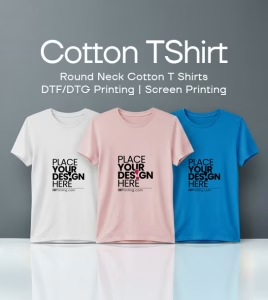
A successful order starts with a clear brief: the number of shirts, garment type, shirt colors, sizes, logo placement, print method preference, and delivery deadline. Providing these details early helps avoid revisions and supports accurate pricing.
At IWPrinting.com, businesses can arrange branded apparel alongside signage, exhibition graphics, promotional merchandise, and other visual materials, helping event and retail teams keep every customer-facing touchpoint consistent. Whether you need a small staff order or a larger multi-location rollout, professional artwork checks and dependable production make a visible difference.
A staff T-shirt should feel like part of the job, not an extra burden. Choose one that is comfortable enough to wear, clear enough to identify, and durable enough to keep representing your business well through every shift.
IWPrinting.com is a trusted printing and promotional products company in Dubai, offering over customizable corporate gifts for businesses of all sizes. From branded pens, notebooks, drinkware, and executive gift sets to exhibition giveaways, promotional merchandise, uniforms, signage, and premium printing services, we provide complete branding solutions under one roof. With high-quality customization, competitive pricing, easy online ordering, flexible payment options, and Fast Delivery across the UAE, IWPrinting.com helps businesses create memorable gifts that strengthen customer relationships, reward employees, and promote their brand with confidence.
Shopping bag Printing turns every purchase into brand exposure. Choose materials, sizes, finishes, and artwork that fit your product, budget, and customers.
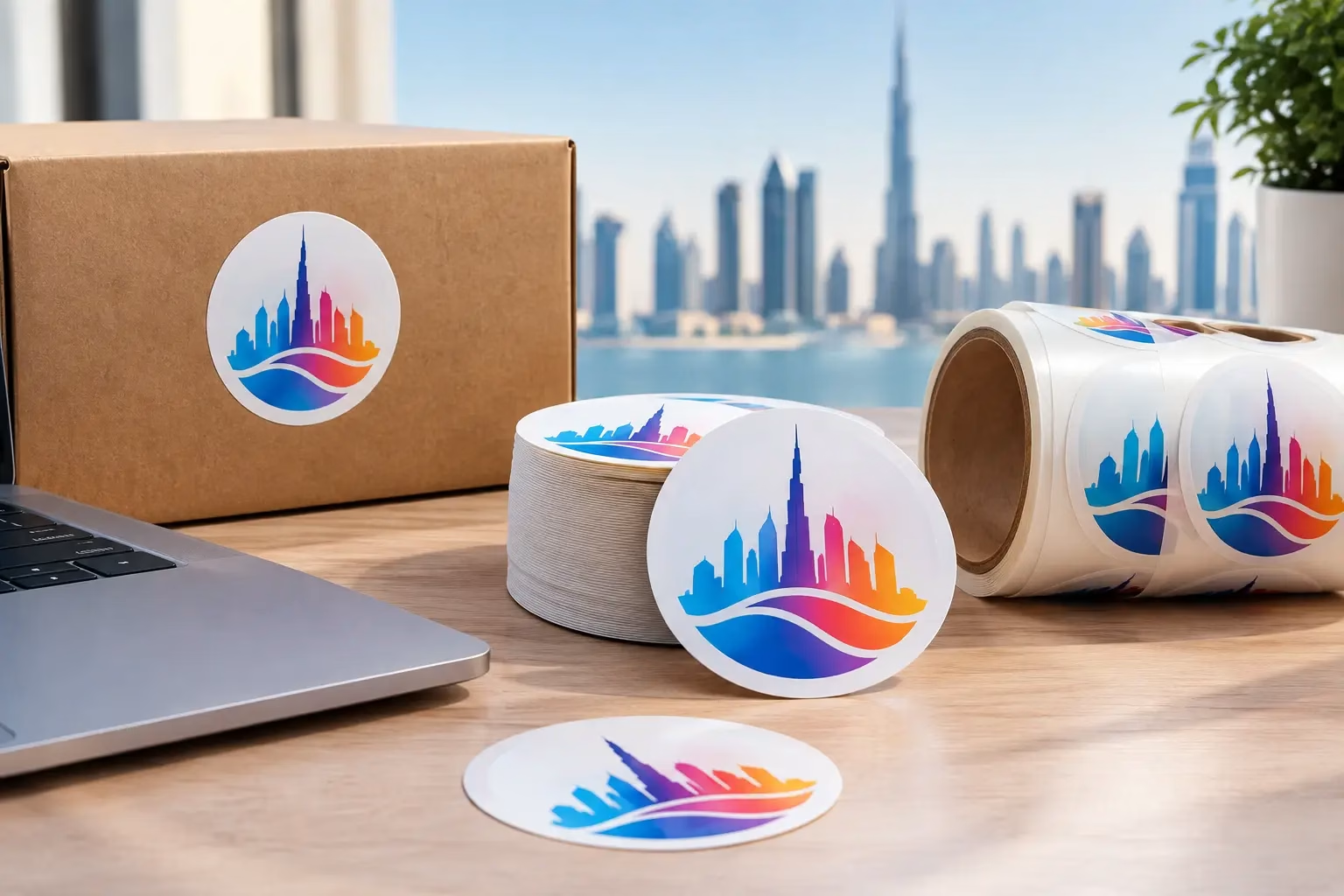
Get Round Sticker Printing in Dubai for product labels, events, and promotions. Choose durable materials, sharp color, custom sizes, and fast delivery.