
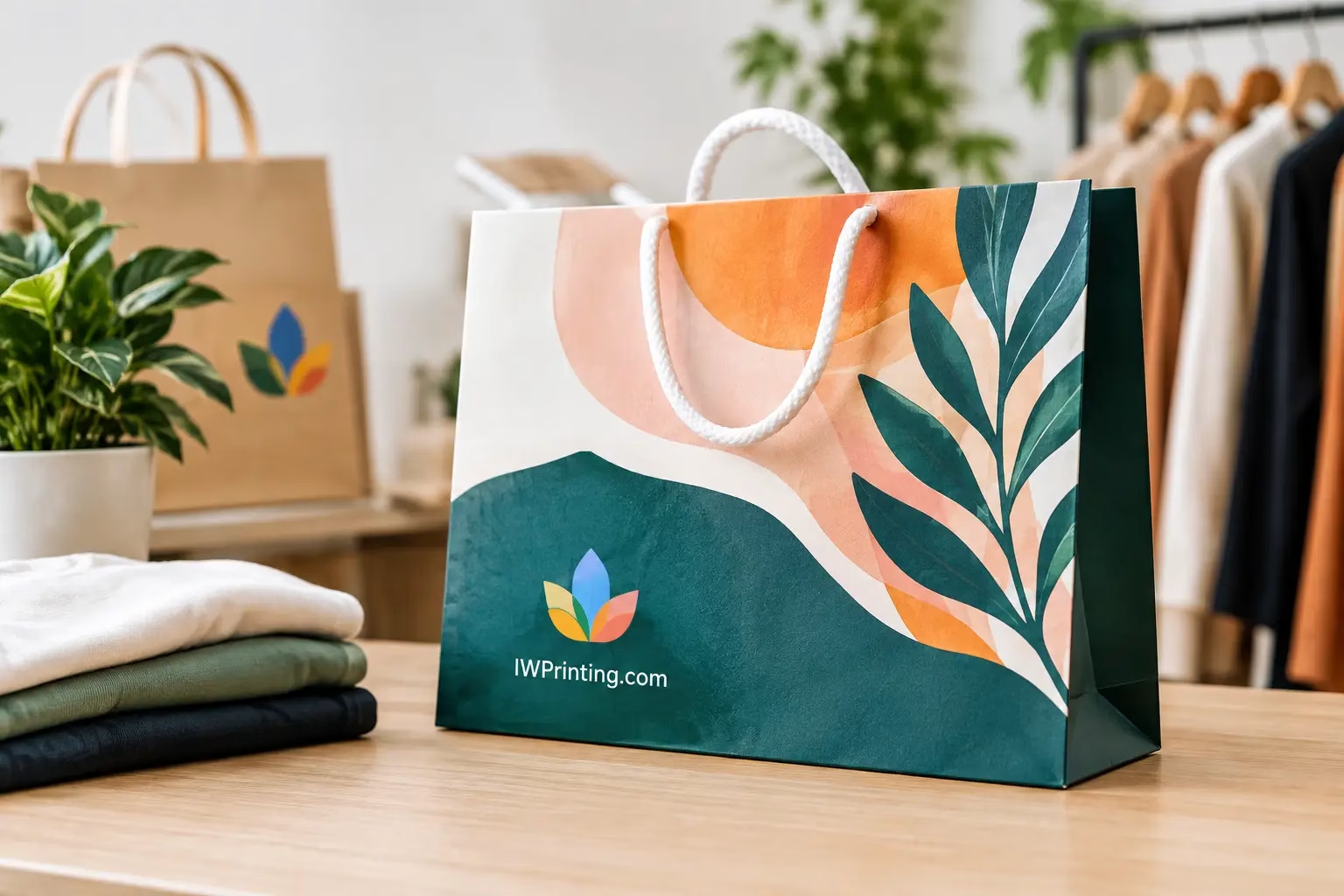
Shopping Bag Printing That Builds Brand Recall
Shopping bag Printing turns every purchase into brand exposure. Choose materials, sizes, finishes, and artwork that fit your product, budget, and customers.
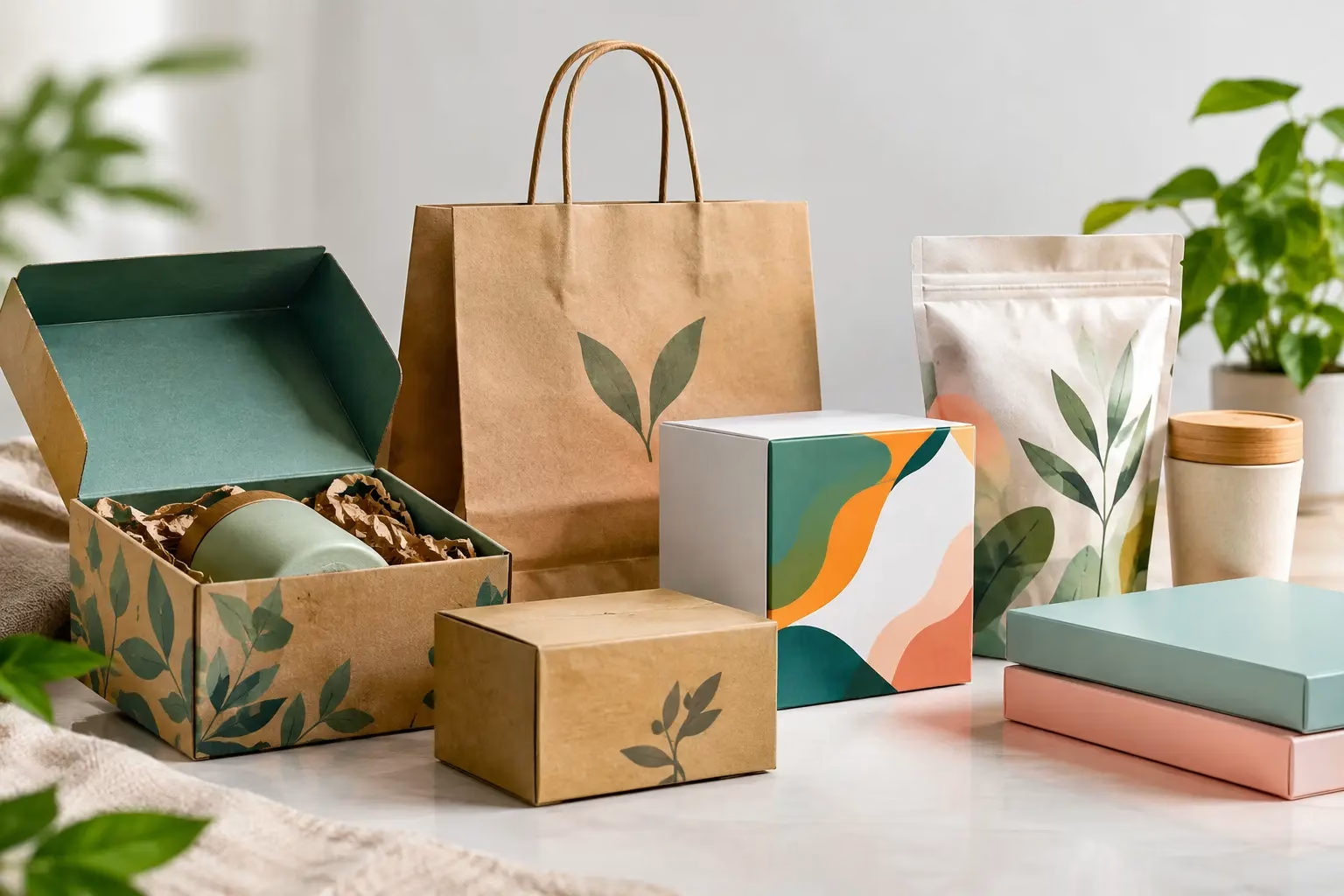
A delivery box arrives at a customer’s door, a retail product is lifted from a shelf, or a corporate gift is handed across a meeting table. Before the product is used, the packaging has already made an impression. Current packaging trends are pushing businesses to treat that moment as a practical brand opportunity, not an afterthought. The best results come from packaging that protects the item, looks professional, suits the customer journey, and stays within a realistic budget.
For growing businesses, the goal is not to follow every new material or design style. It is to select packaging that makes ordering, storing, shipping, and presenting products easier while giving customers a reason to remember the brand.
Customers notice wasted space. A small item floating in a large carton can look careless, increase courier costs, and require extra filler material. Right-sized packaging uses the dimensions of the product to guide the box, pouch, sleeve, or mailer selection.
This does not mean every product needs a fully custom box from day one. Standard-size cartons combined with branded stickers, printed sleeves, tissue paper, or inserts can create a polished experience at a more accessible cost. As order volumes grow, custom die-cut boxes become more practical because they improve fit, presentation, and packing speed.
For fragile items, a close fit must still leave room for protection. The right balance depends on the product’s weight, shape, breakability, and delivery route. A premium candle, electronics accessory, bakery item, and apparel order should not use the same packaging approach simply because the outer box looks attractive.
Sustainability is no longer limited to a single packaging claim printed on a carton. Buyers increasingly look at whether the packaging feels excessive, whether it can be reused, and whether its materials are easy to separate after use. Businesses are responding with lighter cartons, paper-based wraps, recyclable corrugated boxes, reduced plastic components, and simpler structures.
The practical lesson is to avoid making environmental claims that the packaging cannot support. A mixed-material pack may be difficult to recycle even if one component is recyclable. A paper box with heavy lamination may look premium but may not suit every disposal stream. Clear, factual choices build more trust than vague green messaging.
Paper-based packaging works well for many retail, food-service, gifting, and e-commerce applications, but it is not automatically the right answer. Products exposed to moisture, oil, heat, or long-distance handling may need barrier materials or protective coatings. Good packaging design considers the full journey, from production and storage to delivery and disposal.
Unboxing has become part of customer service, especially for e-commerce, beauty, apparel, gifts, and premium retail products. A clean branded box, neatly placed product, thank-you card, care instructions, or promotional insert can make a routine delivery feel considered.
The strongest unboxing experiences are not necessarily elaborate. They are consistent. Brand colors, logo placement, typography, and printed details should match the business card, store signage, product labels, and digital presence. That consistency helps a small business look established and helps an established brand stay recognizable across every customer touchpoint.
There is a cost trade-off. Custom printed boxes, specialty finishes, ribbon, inserts, and tissue paper can raise unit costs quickly. For limited campaigns, seasonal gifting, or high-value products, the investment can be worthwhile. For everyday orders, a branded sticker or sleeve on a quality stock box may deliver the right level of impact without putting pressure on margins.
Labels and stickers are among the most flexible tools in modern packaging. They allow businesses to customize stock boxes, jars, bottles, pouches, paper cups, and gift packs without committing to a large run of fully printed packaging. This is particularly useful for new product launches, changing flavors, multiple sizes, short promotions, and low-volume testing.
A good label must do more than look good. It needs the right adhesive for the surface, enough durability for handling and temperature changes, and legible information at the intended viewing distance. A food label may need ingredient and date details. A cosmetics label may require directions and warnings. A retail label may need barcodes, sizes, or product variations.
Finishes should support the product’s position. Matte labels often suit natural, modern, and premium brands, while gloss can add color intensity and help protect the printed surface. Clear labels can create a minimal look on glass or plastic, but only when the underlying product and container are visually clean enough to support it.
The printing method matters because it affects cost, color, turnaround, and minimum order quantity. Digital printing is often the practical choice for short runs, variable artwork, and fast campaigns. It allows brands to test designs or create personalized packs without carrying excessive inventory.
For larger repeat orders, other production methods may offer stronger unit economics and specialized finishing options. The right choice depends on how many units are needed, how often the artwork changes, the material being printed, and how precise the brand colors must be. Businesses should share their expected quantities and use case before deciding on a format.
Color consistency deserves special attention. Packaging appears under warehouse lighting, retail lighting, office lighting, and daylight. A shade that looks correct on screen can print differently on kraft paper, textured stock, coated board, or plastic film. Proofing and material samples help reduce surprises, particularly when packaging must match existing signage, brochures, or corporate stationery.
Foil accents, embossing, spot UV, textured paper, custom cutouts, and rigid boxes can create a memorable premium finish. They are especially effective for corporate gifts, luxury products, property handover packs, cosmetics, hospitality items, and presentation kits.
However, premium details work best when they reinforce the product value. A high-end finish on a low-cost item can feel mismatched, while an overly complex box can slow down packing teams and frustrate customers trying to open it. The better question is not, “What is the most expensive finish?” It is, “What detail will make this product feel more credible, useful, and giftable?”
Retail packaging needs shelf presence. E-commerce packaging needs shipping performance. Many brands now need both, and that changes the design brief. A package designed only to look good on a shelf may not survive a courier network. A plain shipping carton may arrive safely but miss the chance to strengthen brand recognition.
A two-layer approach often solves this problem: a protective outer mailer or corrugated shipper, followed by a branded inner box, pouch, or wrapped product. It gives the product the protection it needs while preserving a better reveal for the customer. For smaller items, a strong branded mailer with a printed insert may be sufficient.
Packaging also needs to support efficient operations. Barcodes, stock labels, packing instructions, and clearly differentiated product variants reduce errors in storage and dispatch. These details may not be glamorous, but they protect delivery accuracy and customer satisfaction. For a business scaling from dozens of orders to hundreds, that operational clarity becomes part of the brand promise.
Start with the product and customer journey, not a trend board. Consider where the item will be sold, how far it will travel, whether it needs tamper evidence, how often it is reordered, and what customers should feel when they receive it. Then establish a cost per pack that protects your margin.
Next, decide which elements need to be permanent and which can remain flexible. A core box size may stay the same all year, while labels, sleeves, inserts, and stickers can change for promotions or product variations. This approach reduces waste and keeps campaigns easier to manage.
Finally, order samples before committing to a large production run. Check the fit, print quality, folding, strength, adhesive performance, and appearance after handling. A packaging partner should help you compare materials, quantities, finishes, and lead times so the final result works in real business conditions, not only in a digital mockup.
IWPrinting.com supports businesses that need packaging, labels, stickers, printed inserts, and branded presentation materials produced with professional quality and dependable delivery. Whether you are launching a product, preparing event giveaways, or improving e-commerce orders, packaging should make your brand easier to recognize and your operation easier to run.
The most valuable packaging does not need to chase every trend. Choose the ideas that protect the product, respect the customer’s time, and give your brand a clear, confident presence from first touch to final use.
Shopping bag Printing turns every purchase into brand exposure. Choose materials, sizes, finishes, and artwork that fit your product, budget, and customers.
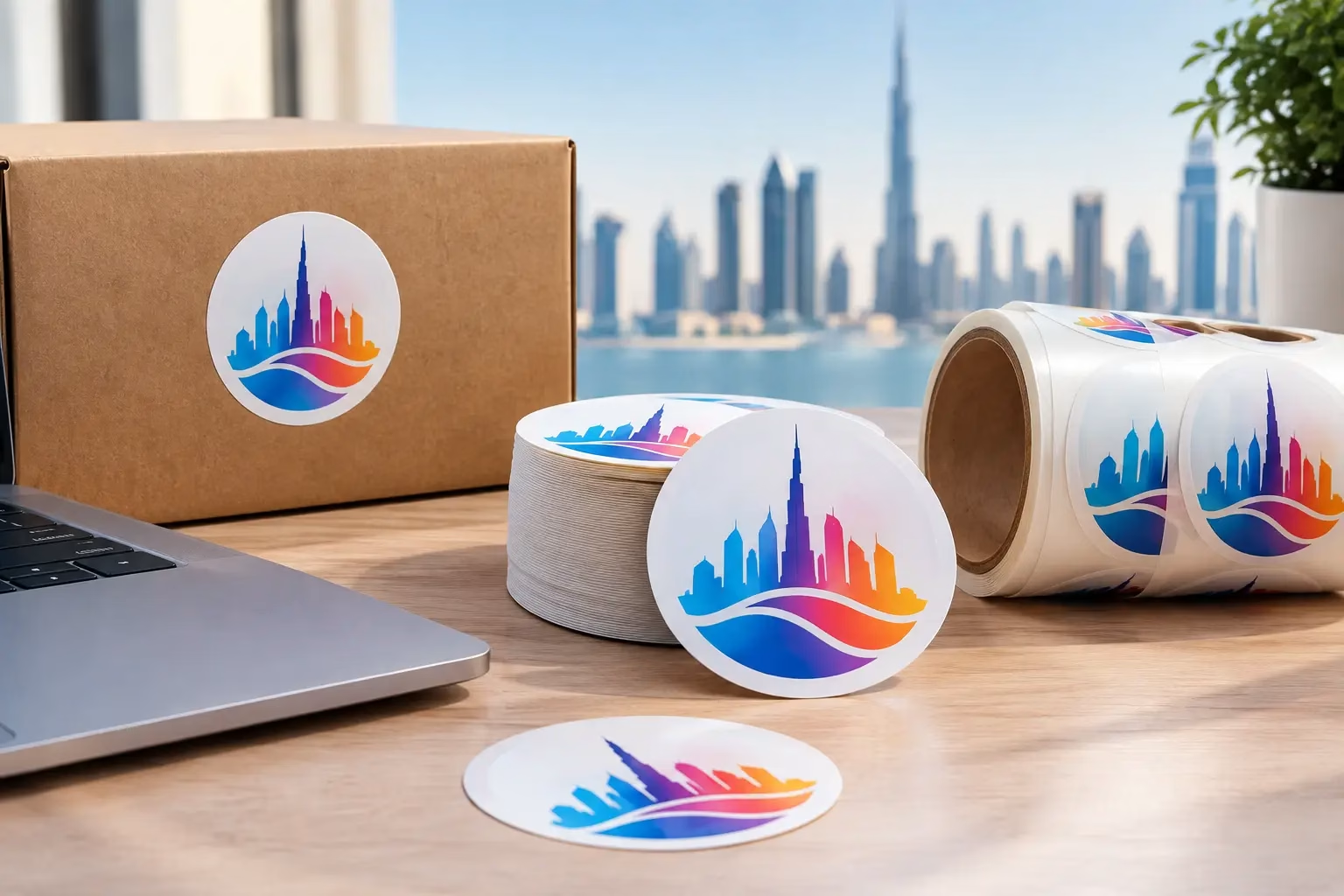
Get Round Sticker Printing in Dubai for product labels, events, and promotions. Choose durable materials, sharp color, custom sizes, and fast delivery.
WhatsApp us
Printing, corporate gifts and signage — tell us what you need and let AI help you find it.
Ask naturally. IWPrint AI can understand your product, quantity, budget and requirement.