
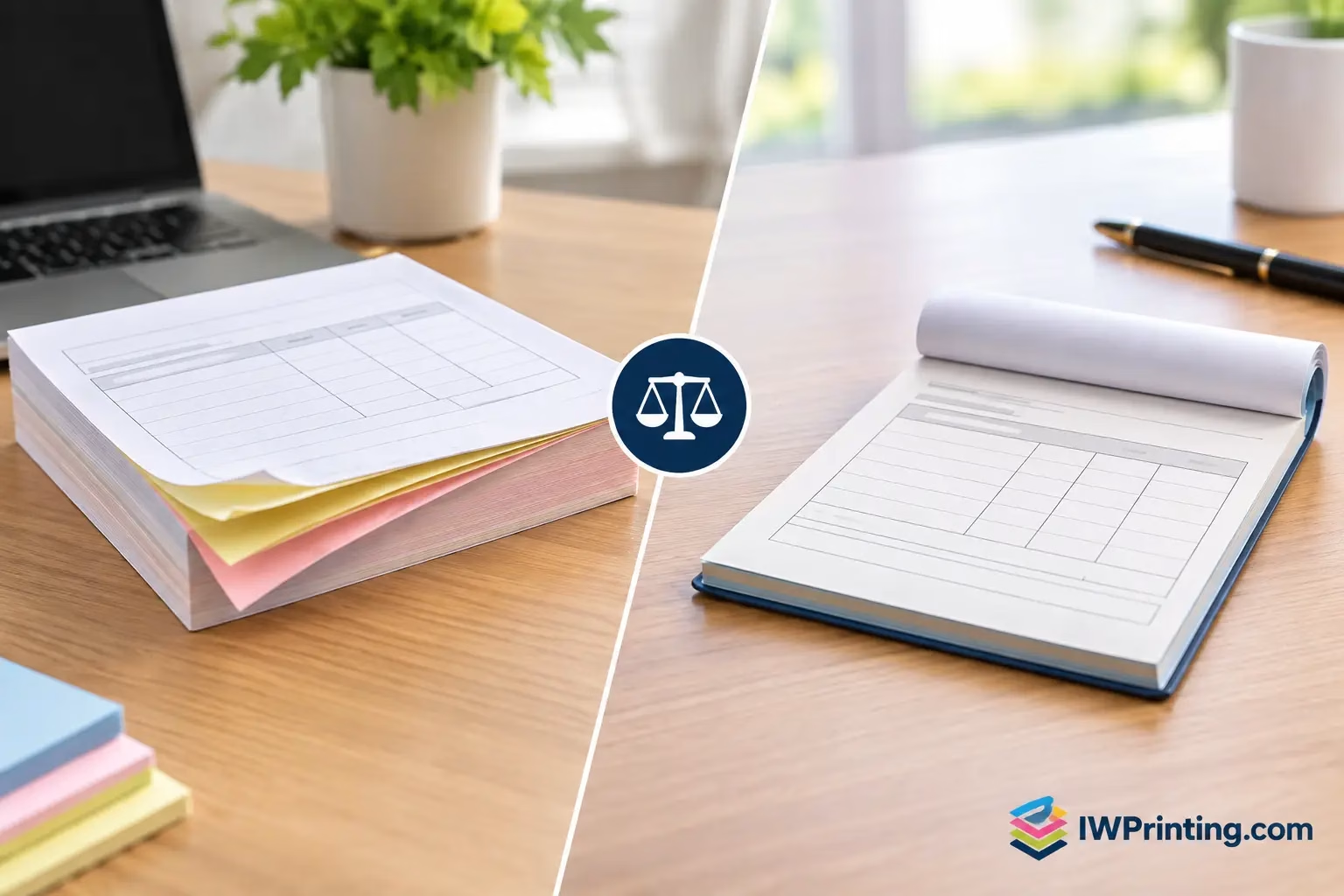
NCR Versus Receipt Books: Which Fits Your Business?
Compare NCR versus receipt books for invoices, orders, and payments. Choose the right format, copy count, and finish for clear daily business records.

A label can look premium, match every brand color, and print perfectly – then still stop a product from reaching the shelf. One missing ingredient, an unreadable warning, an incorrect unit of measure, or an unsupported claim can trigger delays, relabeling costs, customer complaints, and avoidable risk.
This product label compliance guide helps businesses plan labels that are clear, print-ready, and fit for the markets where they will be sold. It is practical guidance, not legal advice. Requirements differ by product category, country, state, retailer, and sales channel, so the final label should always be reviewed against the rules that apply to your product before production begins.
The fastest way to create a compliant label is to collect the required product information before the artwork is designed. Too often, a business starts with a logo, product name, and attractive visuals, then tries to squeeze essential information into the remaining space. That approach creates crowded layouts, tiny type, late changes, and expensive reprints.
Begin by defining exactly what the product is, where it is made, who is responsible for placing it on the market, and where it will be sold. A cosmetic product, packaged food item, cleaning chemical, dietary supplement, toy, and electrical product may each follow very different labeling rules. Products sold in more than one market may need separate label versions rather than one generic design.
Your compliance file should include the product specification, approved ingredients or materials, net contents, country-of-origin details where required, safety information, barcode data, batch or lot format, and any test reports that support product claims. Keep this information under version control. A label is only as accurate as the product data behind it.
Exact requirements depend on the category and destination market, but many physical products need a consistent group of details. These details should be complete, legible, and easy for a customer or inspector to find.
The product’s common or descriptive name should tell buyers what they are purchasing. A brand name alone is rarely enough. For example, “Sunrise” may be a brand, while “Roasted Almond Spread” explains the product.
Net quantity is another common requirement. It should state what is inside the pack using the correct unit and format for the applicable market. Do not estimate from the container size. A 500 ml bottle may not contain 500 ml of product if the declared fill volume is different.
Businesses should also confirm whether the label needs the name and address of the manufacturer, distributor, importer, or responsible company. For imported products, the importing party’s details may be required in the destination market. Food, cosmetics, health-related products, and chemicals can require additional statements, ingredient lists, nutrition details, directions, warnings, or storage instructions.
Traceability information matters even when it is not visually exciting. Lot numbers, batch codes, manufacturing dates, expiration dates, and best-by dates help businesses manage stock and respond quickly if a quality issue occurs. Reserve a stable, accessible space for this information from the beginning, especially if it will be added through variable-data printing, inkjet coding, or thermal transfer.
Compliance is not only about including the right words. It is also about whether the information can actually be read under normal conditions.
Avoid placing legal copy over busy images, metallic foils, transparent areas, or dark gradients. Small reverse text can look sharp on a screen but fill in during printing or disappear under retail lighting. Strong contrast, sufficient font size, clean spacing, and a simple background make a major difference.
The available label area will affect what is practical. A small bottle, tube, sachet, or jar may need a wraparound label, peel-and-reveal construction, carton, hang tag, or secondary package to carry all required content. Trying to force too much information onto a tiny front label is not a cost-saving decision if the result is unreadable.
Also check the final label on the actual package, not only in a PDF proof. Curved containers can distort text. Seams may hide information. Glossy films can create glare. If the product will be refrigerated, exposed to moisture, handled outdoors, or shipped through hot conditions, the material and adhesive must remain stable throughout its intended use.
Claims sell products, which is why they deserve careful review. Words such as “organic,” “natural,” “eco-friendly,” “antibacterial,” “clinically proven,” “non-toxic,” “recyclable,” “made in,” and “safe for children” can carry specific legal or substantiation expectations depending on the product and market.
A claim can be misleading even when it is technically true. For example, “plastic-free packaging” may be inaccurate if a hidden liner, seal, or window contains plastic. “Sugar-free” and “low calorie” can be regulated nutrition claims. A skincare statement that implies treatment or prevention of a medical condition may move the product into a more regulated category.
Use claims that your business can document. Keep supplier declarations, testing results, certifications, and internal approval records in one place. If the evidence is limited, revise the wording before printing. A simpler claim that is accurate is far more valuable than a bold promise that creates compliance exposure.
A product sold online can reach multiple locations quickly, but that does not mean one label works everywhere. Language rules, measurement units, warning formats, recycling statements, origin declarations, and date formats can vary across markets.
For US distribution, check applicable federal, state, and product-specific rules. If you sell in the UAE, GCC, Europe, or other export markets, confirm local language and labeling requirements before placing a production order. Some markets require Arabic, while others may require multiple languages or a local importer declaration. Translation should be reviewed by someone who understands both the product category and the regulatory meaning – not just the words.
Retailers and marketplaces can add their own rules. They may specify barcode placement, packaging dimensions, label durability, warning visibility, or file standards. A label that satisfies the law may still be rejected by a retailer if it does not meet the retailer’s operational requirements.
A structured approval process prevents last-minute edits from becoming production mistakes. Assign clear ownership across product, marketing, operations, regulatory, and print teams. Marketing can own brand consistency, but it should not be the only team approving mandatory information.
Before sending artwork to print, review the following items together:
A printed proof or short-run sample is worth the time for any new product, new container, or complex finish. It can reveal issues that digital artwork does not show, including color shifts, poor adhesion, barcode scanning problems, and text that becomes difficult to read around a curve.
The right printing method depends on quantity, turnaround time, design complexity, and how the label will be used. Digital label printing is efficient for short runs, variable data, frequent changes, and multiple SKUs. Larger runs may benefit from other production methods when consistency and unit economics are the priority.
Material selection is equally important. Paper labels can be cost-effective for dry, short-life products. Synthetic films are generally better for moisture, oils, refrigeration, and heavy handling. A matte laminate can improve readability, while gloss can make colors stand out but may increase glare. Specialty finishes such as foil, embossing, or spot effects can elevate shelf appeal, yet should never interfere with mandatory copy, barcodes, or variable information.
At IWPrinting.com, businesses can coordinate label artwork, material selection, print production, and delivery with one production partner. That is especially useful when label requirements change across SKUs, pack sizes, campaigns, or export markets.
A compliant product label is not a block of fine print added at the end. It is part of the product experience, the supply chain, and the trust a customer places in your brand. Build the information early, validate claims carefully, test the finished label in real conditions, and keep a controlled record of every approved version. The result is a package that looks professional, communicates clearly, and is ready to move from production to market with fewer surprises.
Compare NCR versus receipt books for invoices, orders, and payments. Choose the right format, copy count, and finish for clear daily business records.

Learn how to plan exhibition signage that guides visitors, elevates your brand, and fits your booth, budget, timeline, and event goals with confidence.
WhatsApp us
Printing, corporate gifts and signage — tell us what you need and let AI help you find it.
Ask naturally. IWPrint AI can understand your product, quantity, budget and requirement.