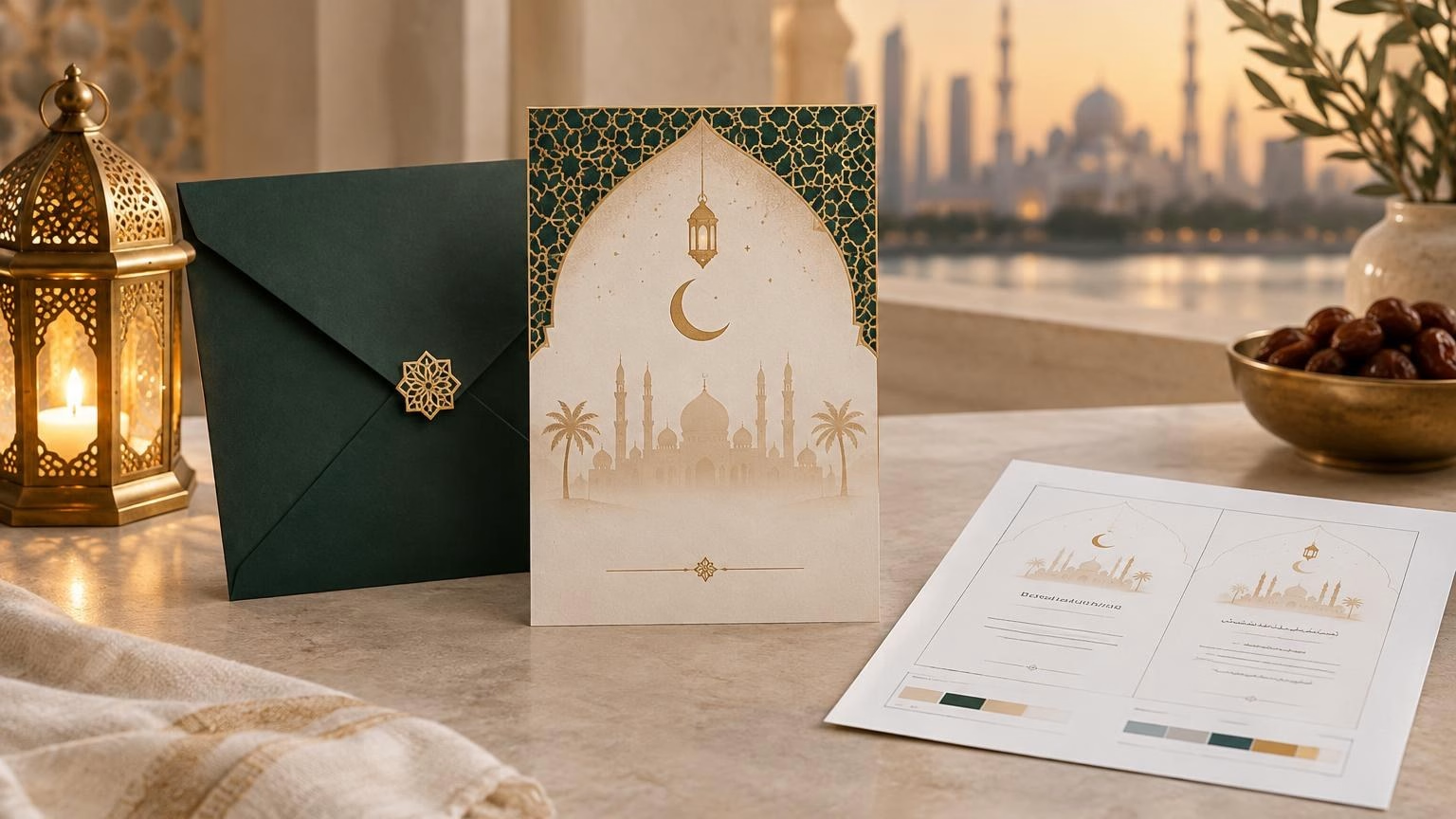
For Ramadan event invitations in the UAE, choose a format that suits the guest experience and the amount of information, then prepare and proof the English and Arabic artwork together. Start planning early enough to confirm the date, venue, guest list, wording and print options before approving a final design.
A concise flat card can suit a straightforward invitation. A folded format may be more practical when guests need a schedule or additional information in both languages. The right choice depends on the event, audience and how invitations will be distributed; confirm available print specifications with your printer before designing to a fixed size.
Key takeaways
- Confirm event details and the intended audience before selecting a format.
- Give English and Arabic copy equal care: Arabic needs correct right-to-left direction and fluent proofreading.
- Choose a flat or folded layout according to the amount of content and presentation needs.
- Set quantity from the guest list and distribution plan, with sensible provision for approved changes.
- Review a complete proof, including names, dates, venue details, links and both language versions, before printing.
Start with the event and guest experience
The invitation should make it easy for guests to understand what they are invited to and what they need to do next. A private iftar, a corporate Ramadan gathering and a community event can call for different tones and levels of detail. Decide who is hosting, who will receive the invitation and whether the event is formal, family-oriented or business-focused before writing the copy.
Confirm date-dependent details with the host before finalising the design. Include a clear event name or purpose, host name, date, start time, venue and RSVP instructions. Add other details only when they help guests plan, such as a map link, parking information, dress guidance, guest access instructions or a note about the meal.
For corporate events, check how the invitation fits the organisation’s brand: logo use, colours, language order and tone may need approval. A family or community gathering may benefit from warmer wording and a simpler layout. In either case, legibility and accurate information matter more than decorative detail.
Choose a print format for the occasion
Invitation formats are a design decision, not a one-size-fits-all choice. Compare the amount of copy, the way the invite will reach guests and the impression you want it to make. The options below are general planning guidance; check the printer’s available sizes, materials and finishes before preparing production artwork.
| Format |
Can suit |
Consider |
| Flat card |
A short invitation with a clear RSVP instruction. |
Keep the wording focused; check that both languages fit comfortably. |
| Folded card |
An invitation with a schedule, extra directions or more bilingual copy. |
Plan the reading order across panels and keep key details easy to find. |
| Invitation with an insert |
An event with separate practical information, such as directions or a programme. |
Make sure the insert is clearly associated with the invitation and does not repeat confusing or outdated details. |
A printed invitation can also be part of a wider event identity. For a venue that needs visible entrance or wayfinding communication, IWPrinting’s banner printing in Dubai may be worth considering alongside the invitation. If a separate information sheet is needed, review the available brochure printing options; a brochure is better suited to expanded event information than to a simple invite.
Prepare bilingual English-Arabic artwork carefully
Bilingual artwork is not simply English copy placed beside an Arabic translation. Each language needs correct typesetting, a logical reading order and enough space to remain readable. Arrange for a fluent Arabic reader to review the final wording and proof, especially names, titles, venue details and RSVP instructions.
Check language direction and hierarchy
- Set Arabic text in a right-to-left reading direction. Do not reverse or mirror the Arabic letters.
- Choose a clear layout: for example, separate language blocks or a considered front-and-back arrangement.
- Make the hierarchy consistent so guests can locate the event name, date, time and RSVP details in either language.
- Check Arabic shaping, spacing and punctuation in the actual proof, not only in the design file.
- Use type sizes and contrast that remain comfortable to read; avoid squeezing one language into leftover space.
Translate meaning, not just words
Agree on the intended tone and terminology before layout begins. Names, honorifics and organisation titles may need an approved Arabic rendering. Have the English and Arabic versions checked against each other so that neither omits important information or gives a different date, time or instruction. Keep a final approved copy document as the reference for artwork review.
Plan materials, presentation and distribution
Material and finish affect how an invitation feels and how it performs during handling. A simple hand-delivered invite, a card sent by post and an invitation placed at a reception desk may have different practical needs. Consider the event’s formality, how guests will receive the piece and whether the design relies on fine text or subtle colour contrast.
Before choosing a material or finish, ask the printer what is available for the intended format and artwork. Check how the chosen surface may affect colour, legibility and any special design details. Do not approve a finish based only on a screen preview; request guidance on the available proofing process and review the result at a comfortable reading size.
If invitations will be placed in envelopes or assembled with other event pieces, check that the finished set is practical to handle and distribute. For a coordinated event detail such as a branded seal or favour label, custom shape stickers are another printed item to discuss with IWPrinting. They complement an invitation but do not replace the event information guests need.
Set quantity and review artwork before ordering
Plan quantity from the distribution method, not just the number of people expected. Establish whether each copy is for one guest, a household, a company or a table. Then account for the final approved guest list, any planned additions and the copies needed by the host or event team. If the list is still changing, clarify how that affects the quantity you request.
Before sending artwork for printing, work through this checklist:
- Confirm the date, time, venue spelling and event details with the host.
- Check that the RSVP method works and that any web address or location link is accurate.
- Verify names, titles, contact details and any access or parking instructions.
- Compare English and Arabic versions line by line for matching information.
- Review Arabic direction, shaping, spacing and punctuation in the proof.
- Check margins, panel order and reading sequence for the selected format.
- Confirm the quantity and ask the printer to clarify available format and material choices.
- Approve the final proof only after the authorised reviewer has checked all copy and layout details.
Share print-ready artwork requirements with the designer early, but do not lock the design to unconfirmed specifications. Ask the printer about the required file setup, available format choices and proofing steps before finalising the production file. This helps prevent avoidable revisions and keeps event information consistent across the invitation and any related printed pieces.
Frequently asked questions
What should a Ramadan event invitation include?
Include the event name or purpose, host, date, start time, venue and a clear RSVP method. Add practical details guests need, such as a location link, parking guidance, dress code or whether the invitation is for a hosted meal. For bilingual invitations, check that all essential details appear in both English and Arabic.
Should English or Arabic appear first on a bilingual invitation?
There is no single order that suits every audience. Consider who is receiving the invitation, the host’s brand or protocol requirements, and the layout. Give both languages clear visibility, use right-to-left typesetting for Arabic, and have a fluent reader review the final proof.
Is a folded invitation better than a flat card?
A flat card is usually suited to a concise invitation, while a folded format can provide more room for bilingual wording, a schedule or additional guest information. Choose based on the amount of content, how the invitation will be handed out or sent, and the presentation you want.
How many Ramadan invitations should I print?
Start with a confirmed guest list and decide whether each invitation is for an individual, a household or an organisation. Account for approved additions, replacements and any copies needed for hosts or event teams. Ask about print options once you have a realistic quantity and final artwork.
When should I prepare Ramadan invitation artwork?
Begin early enough to confirm event details, translate and review both language versions, check the layout, and approve a proof before printing. Ramadan dates and event plans may need confirmation, so avoid finalising date-dependent artwork until the host has checked the details.
Plan your Ramadan event print materials
Start early by confirming the event details, guest list and bilingual copy, then contact IWPrinting to discuss suitable print options and artwork requirements for your invitation and any related event materials.