
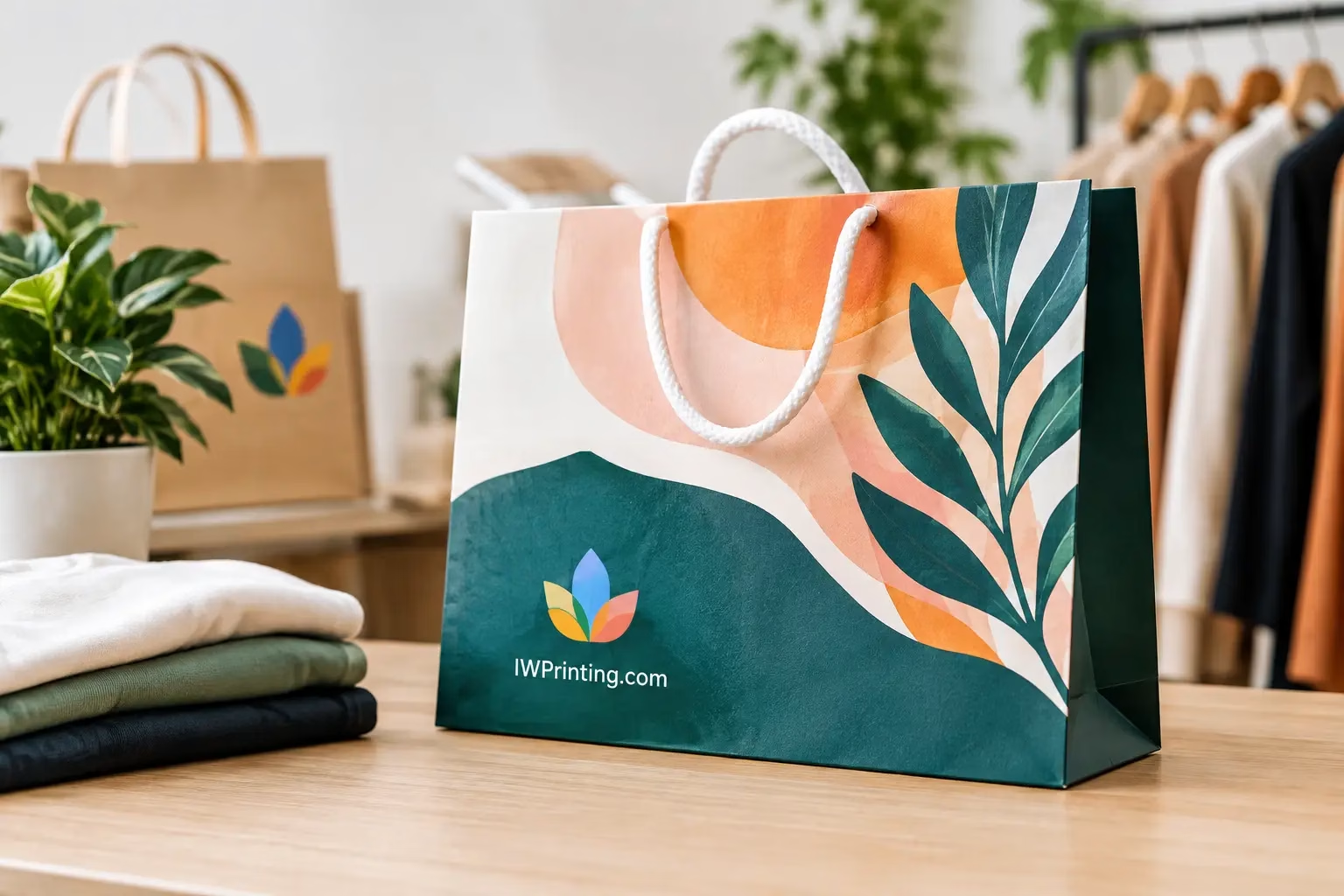
Shopping Bag Printing That Builds Brand Recall
Shopping bag Printing turns every purchase into brand exposure. Choose materials, sizes, finishes, and artwork that fit your product, budget, and customers.

A plain square label can identify a product. Custom die cut stickers can make it feel like a finished brand experience. The difference is in the outline: a sticker shaped around your logo, mascot, product icon, or message catches the eye before a customer reads a word.
For UAE businesses competing for attention on shelves, delivery packaging, event tables, laptops, and takeaway bags, that extra visual impact matters. Die cut stickers are affordable enough for daily brand use, yet distinctive enough to support launches, promotions, and customer-facing packaging.
Die cutting is a finishing method that cuts a printed sticker into a custom shape rather than a standard rectangle, circle, or square. The shape can follow the outer edge of a logo, create a product silhouette, or frame a short promotional message in a more memorable way.
For example, a coffee shop might use a sticker shaped like a coffee cup, while a salon may use an outline that follows its logo. A food business can create a label shaped around a spice jar, burger, or dessert icon. The sticker still does the practical work of sealing, labeling, or promoting, but it looks more intentional in the process.
This is different from a kiss-cut sticker. With kiss-cut products, the sticker itself is cut to shape while the backing sheet remains rectangular. Die cut stickers are commonly cut through both the sticker material and backing, creating individual pieces that are ready to hand out, pack into orders, or apply directly.
The best sticker application depends on what the customer will see, touch, and keep. A custom-shaped sticker can be a product label, but it can also work as a small promotional item that extends your brand beyond the original purchase.
Retailers use them on shopping bags, tissue paper, boxes, jars, bottles, and promotional packs. Restaurants and cafes use them to seal takeaway packaging, identify food items, promote a new menu item, or add a branded touch to delivery orders. Service businesses can place them on folders, welcome packs, equipment cases, and event giveaways.
They are also useful for exhibitions and corporate events. Instead of giving visitors only a brochure or business card, include a well-designed die cut sticker they may place on a laptop, notebook, phone case, or water bottle. It is a small item, but it gives the brand more chances to be seen after the event ends.
For startups and small businesses, stickers are especially practical because they help standard packaging feel customized. A plain kraft box or mailer can become branded packaging without committing to a large run of fully printed boxes. This is often a smart choice when product sizes, seasonal designs, or inventory levels change frequently.
A custom shape should make your sticker easier to recognize, not harder to use. The strongest designs usually start with a clear logo or simple visual element. If your logo has a distinctive outline, use it. If it contains many fine details, simplify the outer contour so the finished sticker remains clean at its printed size.
Avoid trying to cut around every letter, curve, and tiny graphic element. Complex outlines can look impressive on a screen but become difficult to peel, apply, or read once printed. Fine points and narrow edges are more likely to bend or wear during handling.
A good rule is to leave a visible border around your artwork. This margin, often called a bleed area in print production, gives the cutter room to work and helps prevent unwanted white edges around colored designs. If a logo needs to appear right at the edge, the background color or design should extend beyond the final cut line.
Think about where the sticker will be used, too. A compact logo-shaped sticker works well on cups and product containers. A larger, bolder shape is better for giveaway stickers and display packaging. If the sticker needs to carry product details, ingredients, a barcode, or instructions, a more conventional shape may be easier to read. Custom does not always mean complicated.
The appearance of a sticker matters, but its working environment matters more. A label on a dry retail package has different needs from a sticker placed on a cold drink cup, outdoor equipment, or a delivery bag that may face heat and moisture.
Paper-based sticker materials can be a cost-effective choice for indoor use, short-term promotions, and packaging that stays dry. They offer a familiar printed-label look and can suit products such as bakery boxes, gift packs, folders, and event materials.
Vinyl or other water-resistant sticker materials are generally the better choice when durability is required. They are more suitable for bottles, cars, windows, laptops, outdoor promotions, and items that may be handled often. A more durable material usually costs more, so there is no reason to over-specify it for a short-lived indoor campaign.
Finish also affects the result. A gloss finish can make colors look brighter and works well for bold retail graphics. Matte has a softer, more premium appearance and can make small text easier to read under strong lighting. If customers need to write on the sticker, such as for order names or dates, ask about a finish that supports writing clearly.
Before placing a large order, consider the surface. Stickers adhere differently to cardboard, plastic, glass, textured paper, metal, and curved containers. A design that looks perfect on a flat box may need a smaller size or different adhesive for a narrow bottle or textured takeaway bag.
Print-ready artwork helps avoid delays and gives you a more predictable result. For the cleanest custom die cut stickers, provide your logo and graphics at high resolution. Vector files are ideal for logos because they can be resized without losing sharpness. If a raster image is used, it should be high quality at the final print size.
Keep text large enough to read. This is particularly important for phone numbers, social media handles, website addresses, discount codes, and product information. A sticker may look large on a computer monitor but become much smaller in a customer’s hand.
Use colors that are consistent with your existing brand materials. If your business cards, packaging, uniforms, and signage all use the same core colors, the sticker should support that system. Consistency makes a small item feel like part of a professional brand rather than a separate promotion.
If you are unsure about the cut line, artwork layout, or final dimensions, professional graphic design support can save time. It is often more affordable to correct a file before production than to reprint an order after discovering that a logo is too close to the edge or text is too small.
Quantity-based pricing makes a real difference with stickers. Larger orders usually reduce the cost per piece, which makes sense for businesses that use the same design every day on packaging, deliveries, or retail products. It also helps to order enough for the full campaign rather than running out midway through a launch.
However, bigger is not always better. If you are testing a new product line, opening a pop-up, or running a seasonal offer, a smaller run may be the safer decision. This gives you flexibility to change the design, message, or product details without leaving unused stock behind.
Estimate usage based on the actual application. A restaurant may need one sticker per delivery order, while a retailer may use two or three across a bag, box, and thank-you card. Event giveaways require a different calculation because not every visitor will take one. Add a sensible buffer for staff use, damaged pieces, and last-minute demand.
For repeat orders, keep the approved artwork, size, material, and finish details on file. Easy reordering is valuable when packaging supplies are running low and your team needs the same result without starting the approval process again.
Custom-shaped stickers work best when they serve a clear purpose: making packaging recognizable, helping products stand out, supporting an event, or giving customers something worth keeping. They are not a replacement for good branding, clear product information, or quality packaging. They are the detail that brings those elements together.
For businesses that need dependable print production, IWPrinting.com can help turn approved artwork into professionally printed sticker orders with practical quantity options and delivery support. Start with where the sticker will be used, choose the material for that environment, and let the shape reinforce the brand customers should remember.
Shopping bag Printing turns every purchase into brand exposure. Choose materials, sizes, finishes, and artwork that fit your product, budget, and customers.
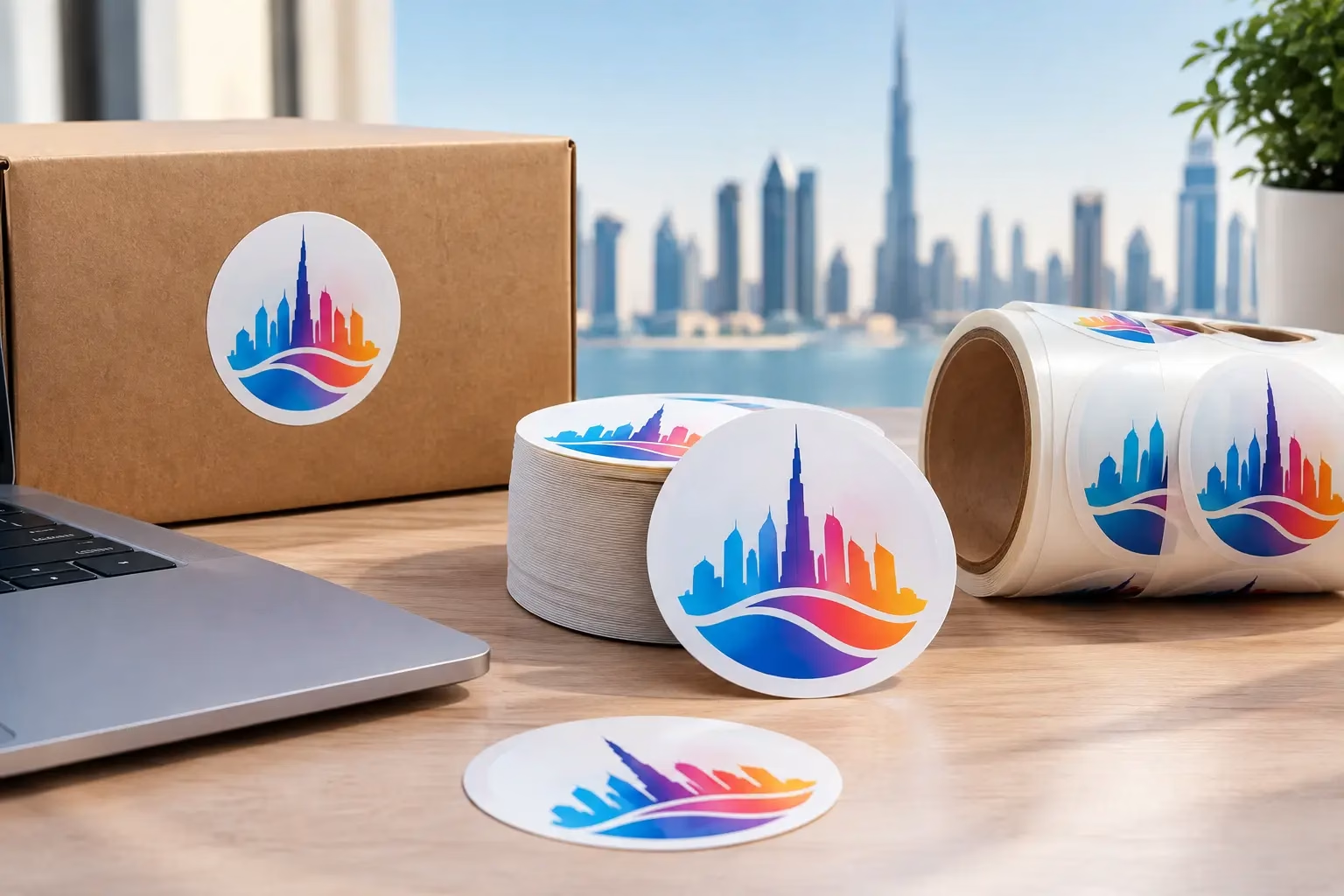
Get Round Sticker Printing in Dubai for product labels, events, and promotions. Choose durable materials, sharp color, custom sizes, and fast delivery.
WhatsApp us
Printing, corporate gifts and signage — tell us what you need and let AI help you find it.
Ask naturally. IWPrint AI can understand your product, quantity, budget and requirement.