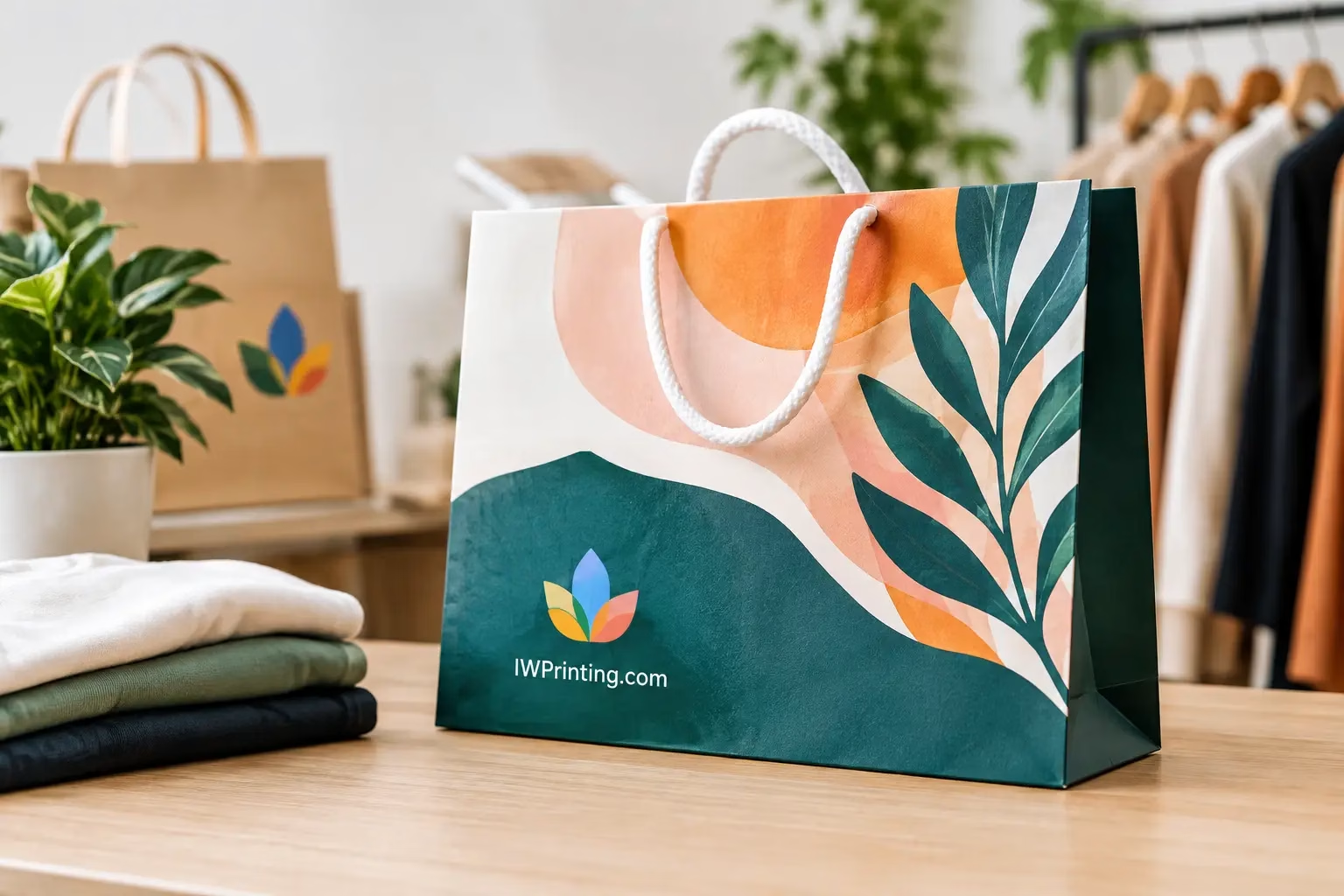
Shopping Bag Printing That Builds Brand Recall
Shopping bag Printing turns every purchase into brand exposure. Choose materials, sizes, finishes, and artwork that fit your product, budget, and customers.


A branded gift can sit on a client’s desk for years, travel through an airport in an employee’s carry-on, or become the giveaway that makes visitors remember your exhibition stand. That is why choosing a corporate gifts supplier should be treated as a business decision, not a last-minute purchasing task. The right partner helps you deliver useful, well-made products that represent your brand properly, arrive when promised, and stay within budget.
For businesses ordering in volume, the decision is rarely just about finding the lowest unit price. Product quality, branding accuracy, stock availability, lead times, packaging, and delivery all affect the final result. A low-cost item that arrives late or carries a poorly printed logo can cost more in reputation than it saves in AED.
Before comparing products or requesting quotations, be clear about what the gift needs to achieve. Corporate gifts work best when the product, recipient, and occasion fit together.
A premium executive gift set may suit a client appreciation program or board-level event. Branded drinkware, notebooks, tote bags, or technology accessories can be more practical for employee onboarding, conferences, and large-scale promotional campaigns. For hospitality, retail, real estate, and education brands, useful everyday items often create more repeat visibility than decorative products.
The purpose also determines the level of customization required. A simple logo print may be enough for a high-volume giveaway. A client gift may need individual names, custom sleeves, presentation boxes, or a printed message card. Clarifying this early makes it easier for a supplier to recommend suitable materials and production methods.
A dependable corporate gifts supplier should do more than source merchandise. They should help move the order from concept to delivery with clear communication at every stage. This matters especially when gifts are part of a larger campaign, exhibition, opening event, employee initiative, or seasonal activation.
Look for a supplier that can support product selection, artwork checks, logo placement, production, quality control, packing, and delivery. If your campaign also needs printed invitations, branded packaging, signage, banners, exhibition displays, or apparel, working with one production partner can reduce coordination time and keep your visual identity consistent.
At IWPrinting.com, this integrated approach helps businesses combine corporate gifts with printing, packaging, event branding, and delivery under one organized order process. It is particularly useful when deadlines are tight and multiple branded items need to arrive together.
A broad catalog is useful because it gives you options across budgets and occasions. Common choices include branded pens, notebooks, mugs, water bottles, USB drives, power banks, umbrellas, apparel, bags, desk accessories, trophies, and gift sets. But more products do not automatically mean a better recommendation.
Ask whether the supplier understands the intended use of each item. A power bank can be a strong choice for an exhibition audience that travels frequently. A reusable bottle may better support a workplace wellness initiative. A branded notebook with premium finishing can feel more valuable than an expensive item that has no connection to the recipient’s needs.
The best choice depends on your audience, quantity, deadline, and brand position. A startup launching a new service may prioritize reach and affordability. A luxury hospitality group may prioritize presentation, material quality, and refined finishing.
Corporate gifts are physical brand assets. Your logo needs to be sharp, correctly positioned, and suitable for the surface of the product. This is where professional production knowledge makes a visible difference.
Different materials require different customization methods. Screen printing can be effective for bold artwork on bags, bottles, and apparel. UV printing is often suitable for detailed full-color logos on flat surfaces. Laser engraving creates a durable, premium result on metal items, while embossing or debossing can add subtle texture to leather-look notebooks and presentation cases.
Do not assume every logo will work equally well on every product. Fine text may not reproduce clearly at a small size. A full-color logo may need simplification when printed on a curved object. Metallic finishes can affect color appearance. A capable supplier should review your artwork and explain these limitations before production begins, rather than after the goods are made.
For important campaigns or higher-value gifts, request a digital artwork proof and, where timing allows, a physical sample. A sample lets you check print size, color, product feel, packaging, and overall perceived value. It adds time and cost, but it can prevent a much larger problem on a bulk order.
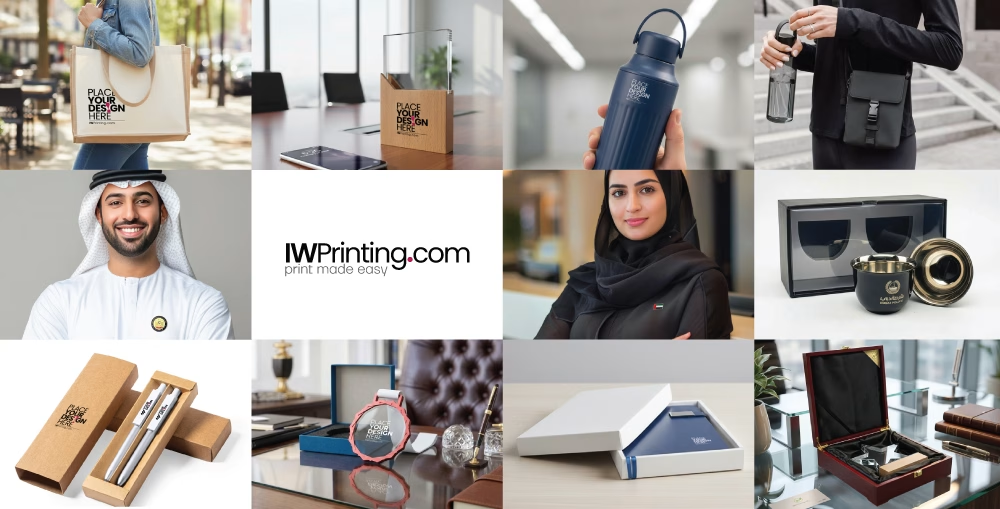
Two quotations can look similar while covering very different levels of service. Review the full scope instead of comparing the headline price alone. Check the product specification, material, color options, branding method, number of print colors, setup charges, packaging, VAT where applicable, delivery, and turnaround time.
It is also worth confirming whether the price is based on the exact quantity you need. Corporate gifts often become more cost-efficient at higher quantities, but ordering more than you can use creates storage and budget pressure. A good supplier should provide transparent pricing tiers so you can make a practical decision.
When reviewing a quote, confirm these four points:
Clear answers reduce surprises. They also make reordering easier when a campaign expands or a department needs the same item later.
Corporate gift orders are often connected to fixed dates: an exhibition opening, Ramadan campaign, employee recognition event, new office launch, or year-end client program. The deadline is not only the day you need the gifts. It must include time for design approval, product sourcing, branding, quality checks, packing, and delivery.
Ready-stock products with simple branding can often move faster than fully custom gift sets or imported specialty items. However, fast production should never mean skipping approvals. Even a basic logo placement needs to be checked carefully before a large quantity goes into production.
If your date cannot move, tell the supplier immediately. They can recommend products that are available, practical branding methods, and delivery options that fit the schedule. If you have more flexibility, use it to request samples and consider premium finishing that gives the gift greater impact.
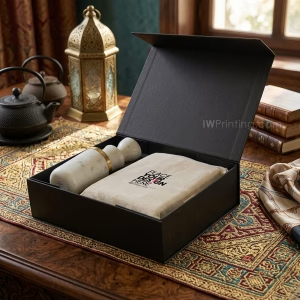
The recipient’s first impression begins before they use the gift. Presentation changes perceived value. A simple branded box, printed sleeve, tissue wrap, thank-you card, or personalized label can make a standard product feel thoughtful and campaign-specific.
Packaging also creates an opportunity to align the gift with your wider brand activity. A real estate developer might include a project brochure with a premium welcome gift. A university may add a personalized card for new students or partners. An event organizer can use custom packaging to reinforce sponsor branding and event messaging.
There is a trade-off, of course. More elaborate packaging increases cost, production time, and shipping volume. For a high-volume exhibition giveaway, practical bulk packing may be the better choice. For key clients or employee awards, presentation is often worth the additional investment.
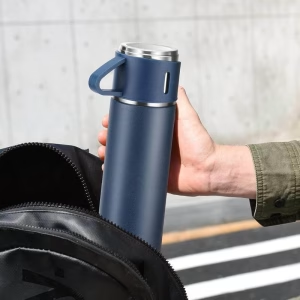

The strongest corporate gift programs are not built from one rushed order. They become easier when your supplier understands your logo files, approved colors, preferred products, recurring quantities, and delivery requirements.
Keep a record of successful items, final artwork, quantities, and recipient feedback. If branded tumblers performed well at a previous event, reordering or adapting them for a new campaign is faster than starting from zero. If a product received complaints about quality or usability, replace it rather than repeating the same purchase because it was inexpensive.
A reliable supplier should make this process straightforward with accurate records, consistent production standards, responsive support, and practical alternatives when stock or deadlines change. That reliability gives your marketing, HR, procurement, and event teams more confidence to plan ahead.
The right corporate gift is not simply a logo placed on a product. It is a useful reminder of how your business works: prepared, professional, and considerate. Choose a supplier that protects that impression from the first artwork proof to the final delivery.
Shopping bag Printing turns every purchase into brand exposure. Choose materials, sizes, finishes, and artwork that fit your product, budget, and customers.
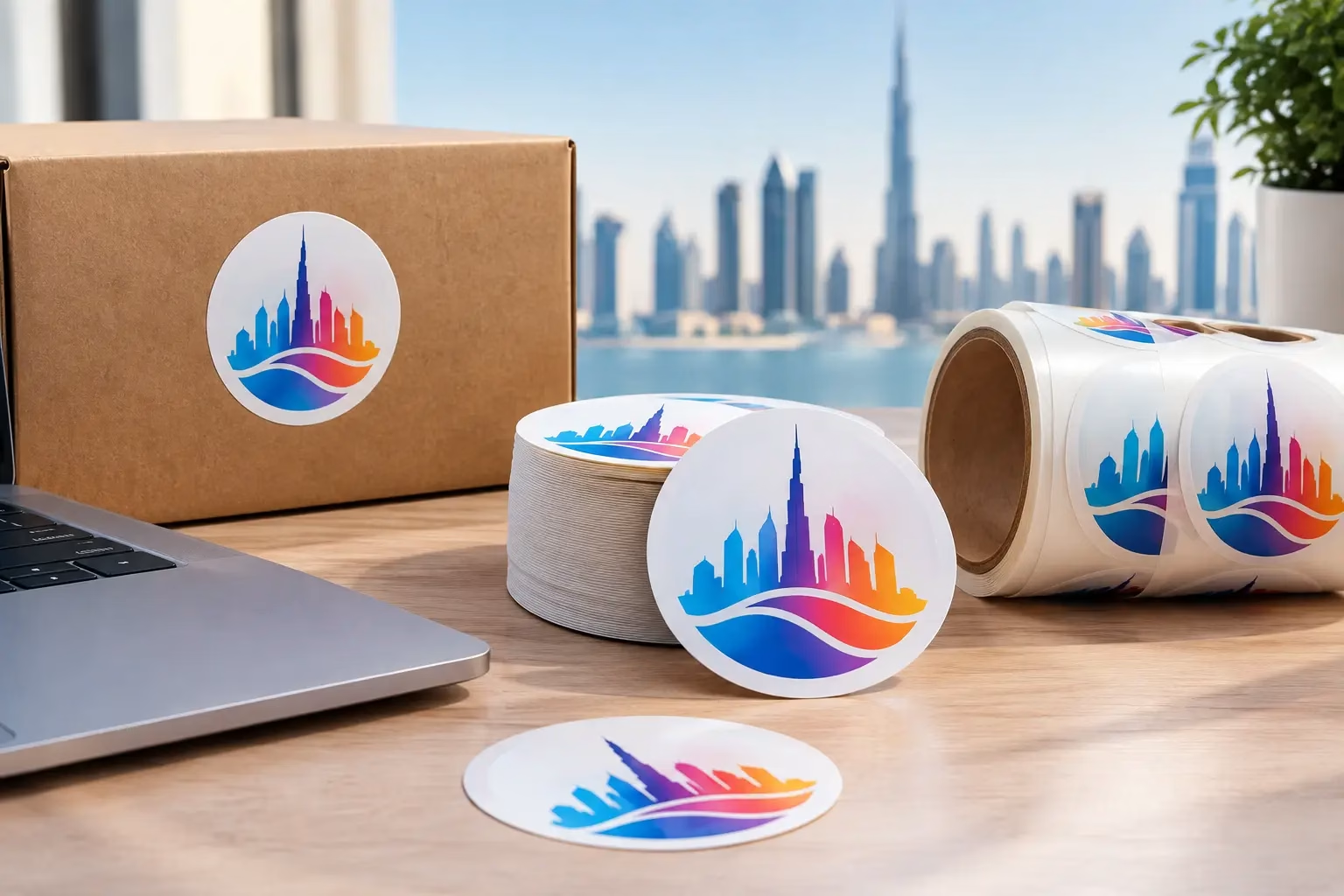
Get Round Sticker Printing in Dubai for product labels, events, and promotions. Choose durable materials, sharp color, custom sizes, and fast delivery.