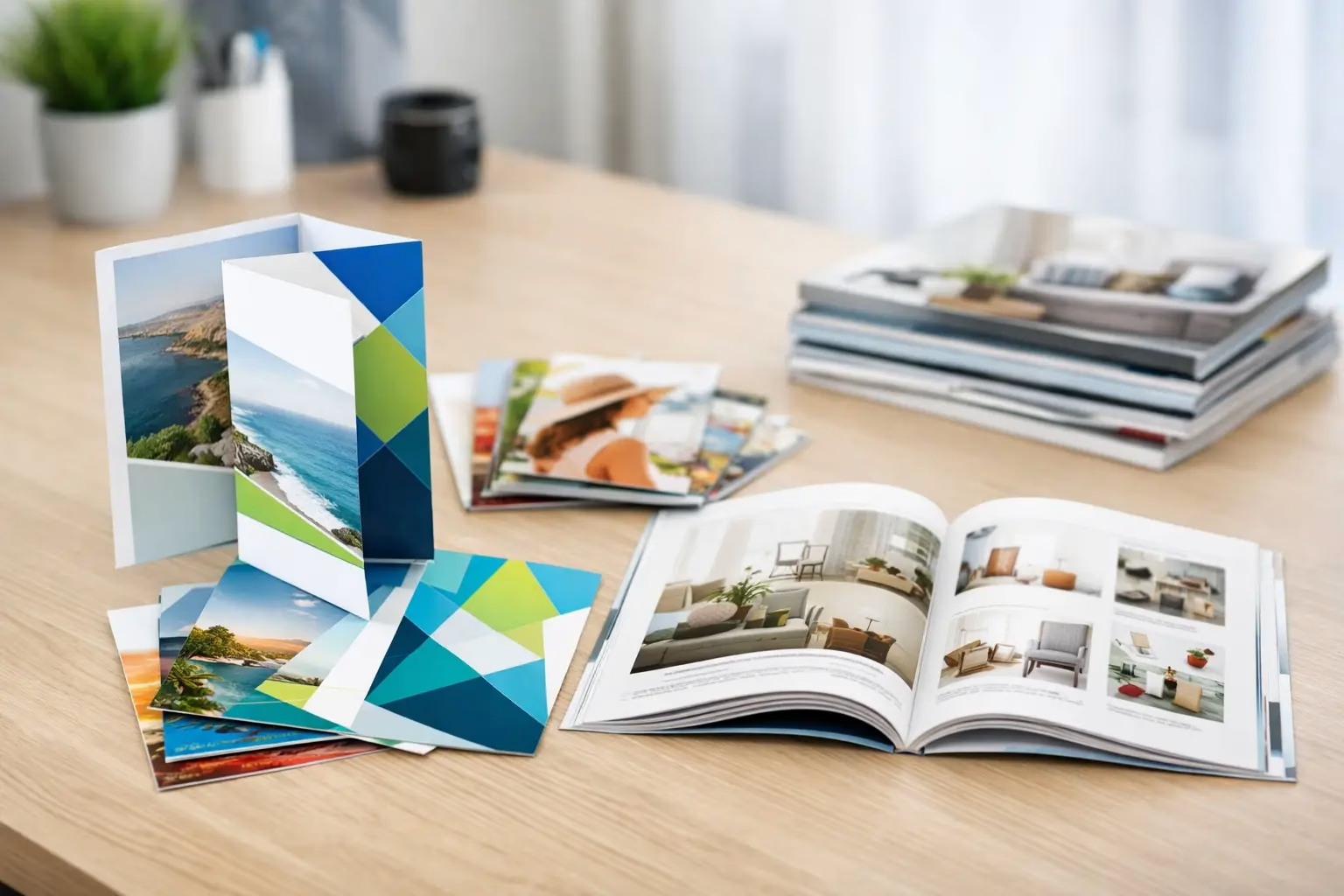
A customer may see your ad for a few seconds, but a well-printed piece can stay on their desk, counter, or coffee table for weeks. That is the advantage of brochure, flyer, leaflet & catalogue printing: it gives your offer a physical presence that supports sales conversations, store visits, events, and direct campaigns.
The right product is not simply the one with the lowest unit cost. A flyer is built for speed and reach. A brochure gives a service-led business space to explain its value. A leaflet makes practical information easy to carry. A catalog turns a product range into an organized buying tool. Choosing correctly helps you spend smarter and gives customers the information they need to act.
Brochure, Flyer, Leaflet & Catalogue Printing: Choose by Purpose
These formats are often grouped together, yet each does a different job. Starting with your campaign objective makes paper size, folding, stock, finishing, and quantity easier to decide.
Flyers for quick promotions and high-volume reach
A flyer is usually a single printed sheet, commonly produced in A6, A5, A4, DL, or square formats. It works well for limited-time offers, grand openings, restaurant promotions, real estate launches, trade show handouts, menus, and event announcements.
Because a flyer has limited space, it needs one clear message. Lead with the offer, add a strong image or product visual, include contact details, and make the next action obvious. A QR code can direct people to an online menu, booking page, product page, or registration form, but it should support the message rather than replace essential information.
For large distribution runs, an economical paper stock can be the practical choice. If the piece will be displayed at a reception desk or inserted into premium packaging, a heavier stock may create a more professional first impression. The best option depends on how long the flyer needs to last and where customers will receive it.
Leaflets for clear, portable information
A leaflet can be a single sheet or a simple folded piece designed to explain more than a flyer without becoming a full brochure. Healthcare providers, schools, hospitality brands, government departments, and service businesses often use leaflets for instructions, price guides, maps, programs, safety information, and service summaries.
The main strength of a leaflet is readability. Use clear headings, short blocks of copy, and enough white space to prevent important details from being missed. A bi-fold or tri-fold format can organize information into a natural sequence, such as problem, solution, benefits, and contact details.
Avoid forcing too much content into small panels. Tight text, tiny type, and crowded images make a leaflet harder to use, even when the printing is excellent. If your message needs detailed specifications, a catalog or multi-page brochure will serve customers better.
Brochures for trust-building sales information
A brochure is the better choice when customers need context before they call, visit, or request a quote. It is useful for corporate profiles, property developments, training programs, medical services, travel packages, construction services, financial offerings, and company presentations.
Brochures can be folded sheets or multi-page booklets. A folded brochure suits a focused service overview, while a booklet gives room for case studies, package options, process explanations, certifications, testimonials, and frequently requested details. The format should follow the buyer journey. A prospect who is comparing providers needs proof and clarity, not pages of generic claims.
Paper and finishing affect how the brand is perceived. Matte stock often suits refined corporate, educational, and luxury applications, while gloss can make product photography and bright colors stand out. Spot UV, lamination, embossing, and foil can add impact, but they should be used with purpose. A premium finish is valuable when it reinforces the position of the brand; it is unnecessary when a high-volume campaign needs fast, affordable distribution.
Catalogs for product-led selling
A catalog is built for browsing, comparison, and repeat orders. Retailers, manufacturers, distributors, hospitality suppliers, corporate gift providers, and e-commerce businesses can use catalogs to present a structured range of products with images, item codes, sizes, colors, prices, and ordering information.
Good catalog design makes finding products easy. Group products logically, use consistent page layouts, and ensure product codes are accurate. Strong photography helps, but clean specifications and readable pricing are equally important. For a buyer ordering hundreds of uniforms, packaging items, office supplies, or promotional products, clarity saves time and reduces ordering errors.
Binding matters more as page counts increase. Saddle stitching is cost-effective for smaller booklets, while perfect binding creates a clean spine for thicker catalogs. For frequently updated product lines, consider a practical print quantity rather than producing too many copies that may become outdated after a price change or new product launch.
Paper, Size, and Finish Shape the Result
Print specifications should match the way the item will be used. A restaurant promotion distributed for one weekend has different needs from a property brochure used by sales teams for several months. A catalog handled repeatedly in a showroom needs durability, while an exhibition handout may prioritize compact size and easy transport.
Paper weight is usually measured in GSM. Lighter stocks are suitable for mass flyers and inserts. Medium-weight stocks work well for folded leaflets and standard brochures. Heavier cover stocks give catalogs and presentation materials a more substantial feel. There is no single “best” GSM because durability, budget, postal requirements, and handling all influence the choice.
Size affects both cost and usability. Standard sizes are efficient and familiar, but custom dimensions can help a campaign stand out. A square flyer may suit a beauty, retail, or food brand. A DL brochure fits neatly into envelopes and display holders. Larger A4 formats give property, construction, and corporate businesses more room for plans, charts, and detailed visuals.
Lamination adds protection against fingerprints, moisture, and regular handling. Matte lamination offers a smooth, understated finish, while gloss lamination produces a brighter surface. If customers need to write on the printed piece, such as an appointment card or order form, test the stock and finish first. Some coated surfaces are not ideal for standard pens.
Prepare Artwork That Prints Cleanly
A strong idea can lose impact if the file is not prepared for print. Professional artwork should use high-resolution images, usually 300 DPI at final print size, and CMYK color mode for predictable production. RGB colors can look brighter on a screen than they do in print, so brand-critical colors should be checked before a large run.
Build in bleed around the edges of the artwork so backgrounds and images print cleanly after trimming. Keep text, logos, phone numbers, and QR codes within a safe margin. This is particularly important for folded brochures, where panels and fold lines need careful planning.
Proofread every detail before approval. Check phone numbers, email addresses, website spelling, prices, dates, product codes, and QR codes. A printed error is more expensive than a final review. For catalogs and large campaigns, a printed proof or sample can be worthwhile, especially when color accuracy, special finishes, or complex folds are involved.
Plan Quantity Around Distribution, Not Guesswork
Ordering more usually lowers the cost per piece, but excess stock can become waste. Start with the actual distribution plan: how many store locations, sales representatives, mailers, event attendees, packages, or campaign days are involved? Then add a sensible margin for replacements and unexpected demand.
For a new campaign, a smaller test run may be the smarter move. You can learn which offer, format, and call to action generates the best response before committing to a larger quantity. Established businesses with stable branding and repeat promotions can benefit from planned reorders to keep materials available without last-minute pressure.
Fast turnaround also requires realistic planning. Artwork approval, special finishes, binding, delivery schedules, and installation of related displays can all affect lead times. Ordering early gives more flexibility on materials and production choices, while urgent jobs may require simpler specifications.
Make Print Work With the Rest of Your Brand
Printed marketing materials are most effective when they match the wider customer experience. The colors, typography, offer, and message on a flyer should align with your storefront signage, event backdrop, packaging, social campaign, and sales presentation. Consistency makes a business easier to recognize and more credible.
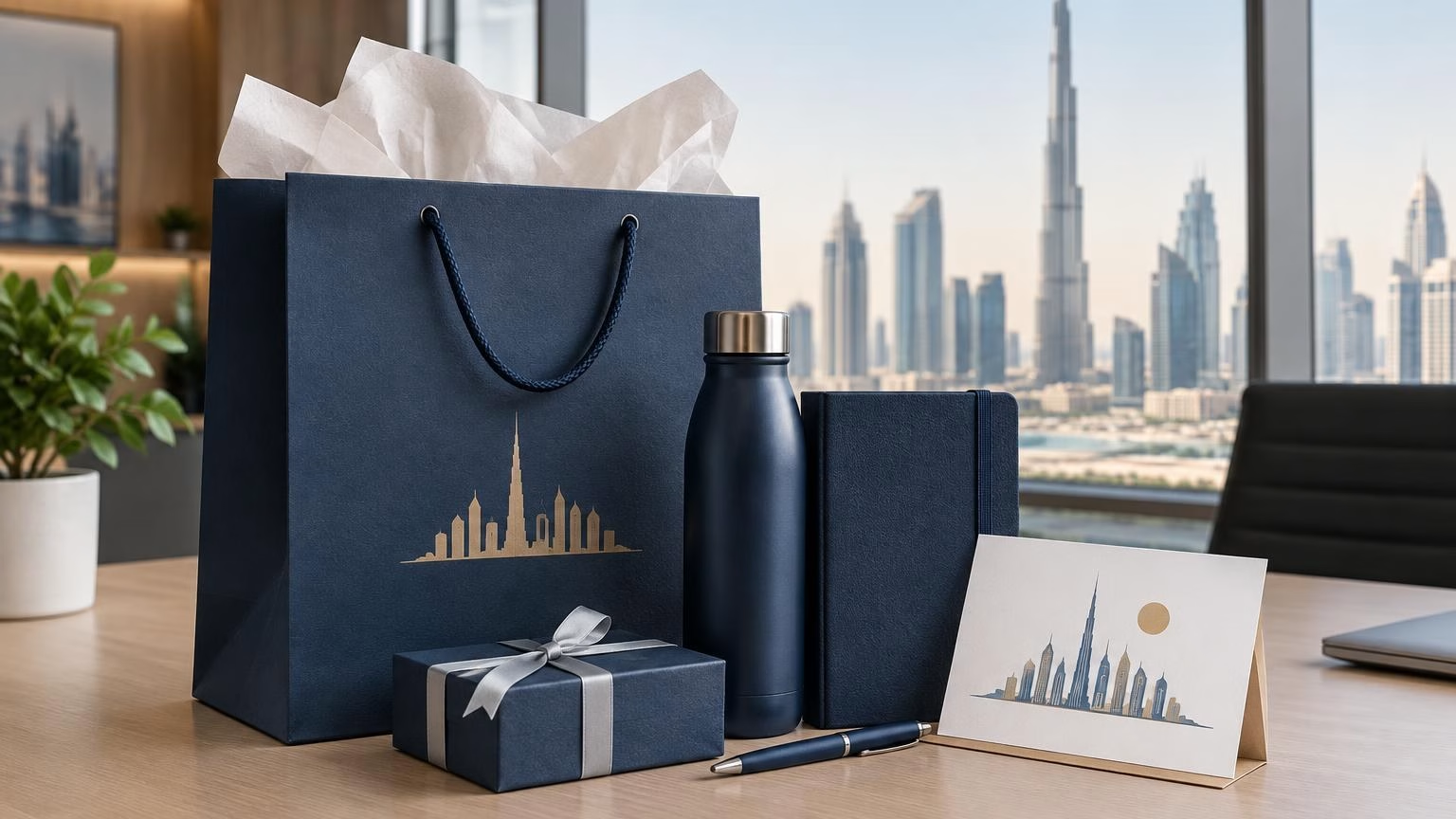
For businesses ordering in Dubai or across the UAE, IWPrinting.com can support standard print orders and customized projects with professional production and reliable delivery. The practical approach is to begin with the job the printed piece must do, then select the format and finish that help it do that job well.
Before you send artwork to print, place one finished piece in the hands of the intended customer. If they can quickly understand the offer, trust the brand, and know what to do next, you have chosen the right format.