
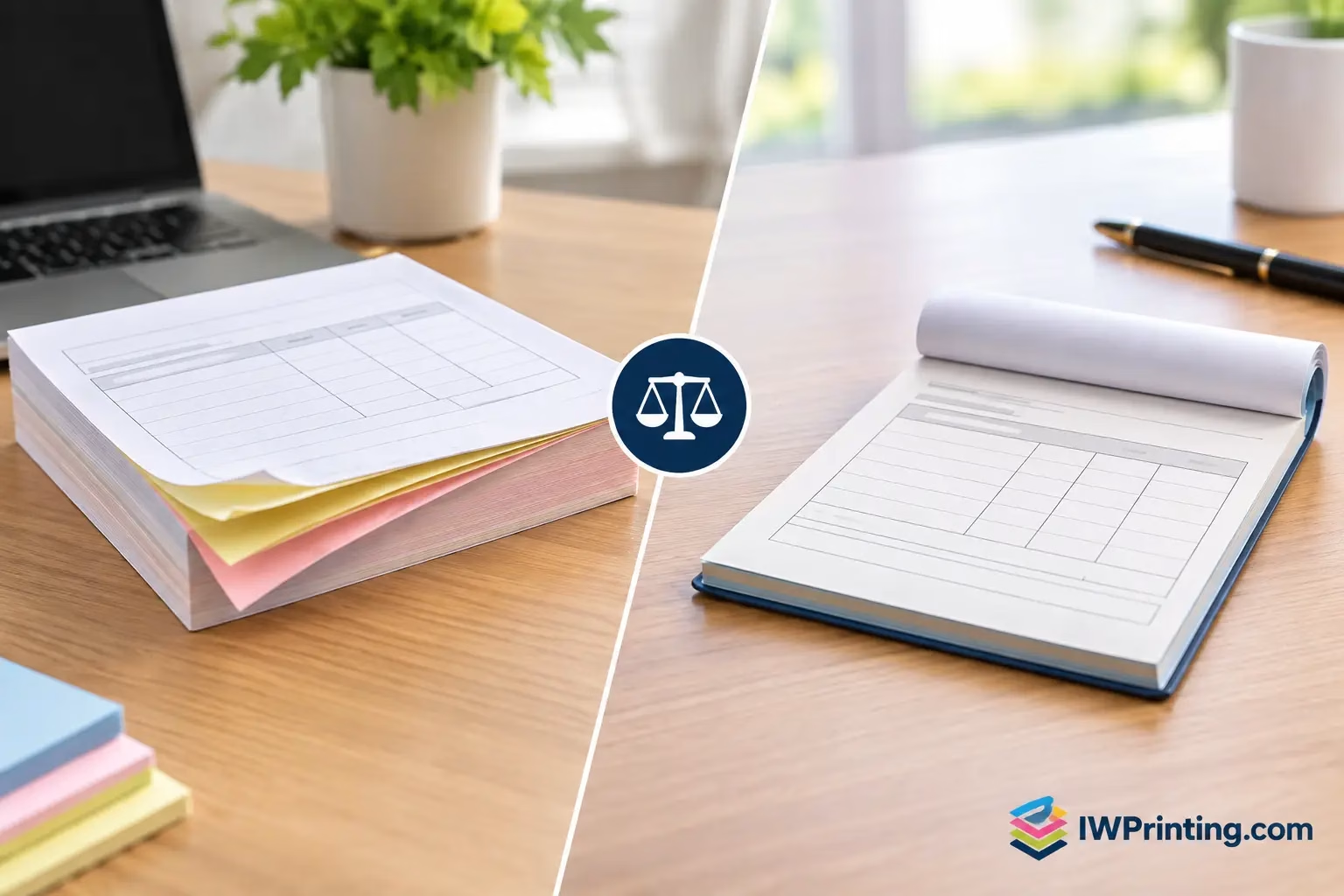
NCR Versus Receipt Books: Which Fits Your Business?
Compare NCR versus receipt books for invoices, orders, and payments. Choose the right format, copy count, and finish for clear daily business records.
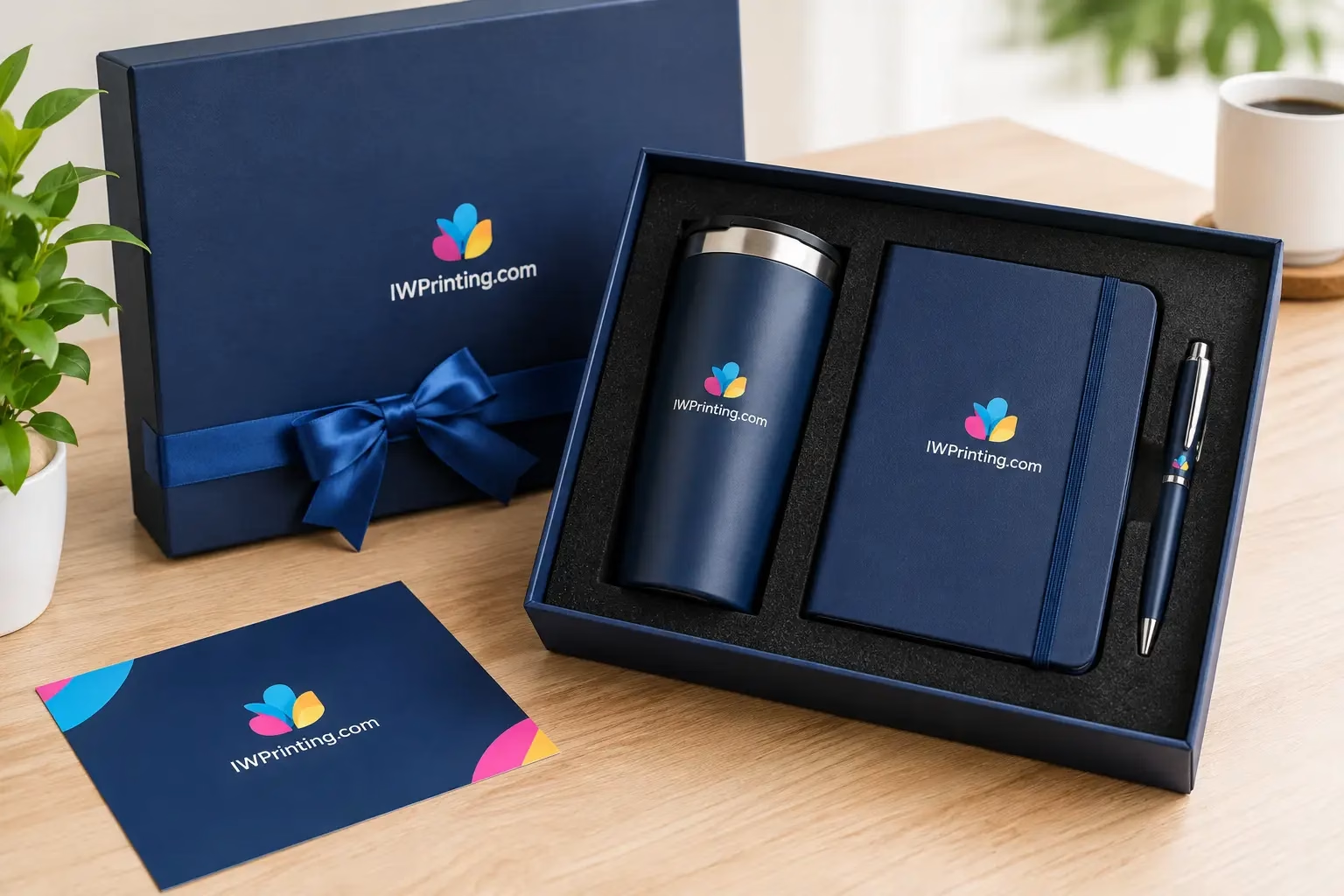
A single branded pen is easy to overlook. A well-built welcome box with a notebook, insulated bottle, charger, and a personal message feels intentional. That is the difference Promotional Gift Sets Printing can make: it turns everyday products into a useful, physical reminder of your business long after an event, meeting, or delivery is over.
For companies buying corporate gifts, the goal is not simply to place a logo on several items. It is to create a set people want to open, use, and keep. The right combination supports brand recognition, makes recipients feel valued, and gives your campaign a more professional finish without making ordering complicated.
A gift set gives your brand more than one chance to be noticed. The recipient may use the bottle at work, carry the tote to the grocery store, and keep the notebook on their desk. Each item has a role, but the packaging and coordinated design make them feel like one complete brand experience.
This is especially useful when the occasion matters. New employee onboarding, client appreciation, real estate handovers, conference registration, holiday gifting, school events, and product launches all benefit from a gift that feels considered rather than generic. A set also gives businesses flexibility. You can build an affordable option for high-volume distribution or a premium set for key clients and executive guests.
The value is not always in choosing the most expensive products. It is in choosing products that fit the recipient’s day. A quality notebook and pen may be more effective for a training program than a costly gadget. For a hospitality group, a travel mug, luggage tag, and branded pouch may make better sense. Useful products remain visible. Novelty items often disappear after the first day.
The fastest way to make a gift set feel generic is to choose items before deciding who will receive them. Begin with the audience, the setting, and the action you want the gift to support.
For employees, practical desk and commute items tend to work well. Think notebooks, pens, drinkware, apparel, USB drives, backpacks, and wireless accessories. They support a sense of belonging while helping teams use the brand in their working routine.
For clients and partners, presentation matters more. Premium metal pens, leather-look organizers, insulated tumblers, executive notebooks, and elegant gift boxes communicate appreciation without requiring an oversized budget. The set should reflect the relationship. A prospect attending a short meeting may need a simple, polished gift. A long-term partner or a project milestone may justify a more elevated package.
For events, speed and portability are major factors. Attendees do not want heavy or awkward products to carry around an exhibition hall. Compact items such as notebooks, tote bags, branded lanyards, reusable cups, phone accessories, and snack boxes can be practical choices. If the objective is lead generation, include a clear card, QR code, or campaign message inside the box rather than relying on the logo alone.
Strong Promotional Gift Sets Printing starts with a theme that makes the products work together. A “workday essentials” set might include a notebook, pen, coffee tumbler, and desk organizer. A “travel ready” set could combine a neck pillow, luggage tag, power bank, and pouch. A “new home” gift for a property handover might include a keychain, welcome card, coaster set, and branded tote.
The theme does not need to be clever. It needs to be clear. When each product supports the same use case, the recipient immediately understands why the set was assembled. This also makes internal approval easier because the purchase has a direct business purpose.
Keep the number of items sensible. Two or three good products in a well-finished box can feel more valuable than six low-cost items packed together. Larger sets are appropriate for premium campaigns, but every extra item affects packing time, storage, delivery cost, and the chance that something will feel unnecessary.
A tiered approach is often the most practical option for organizations with different audiences. Use an entry-level set for event visitors and broad campaign distribution, a mid-range set for active customers and employees, and a premium version for senior stakeholders or milestone gifts.
This approach protects the budget while maintaining a consistent brand look. The packaging, color palette, and message can remain aligned across all tiers, even when the contents change. It also makes reordering simpler when one campaign requires a higher quantity than another.
Your logo should look at home on the product, not forced onto it. Different materials need different printing or decoration methods, and choosing the right one affects durability, color quality, and overall appearance.
Screen printing is a reliable choice for many promotional products, particularly bags, apparel, and larger single-color designs. UV printing can deliver sharp, full-color detail on suitable hard surfaces. Laser engraving works particularly well on metal pens, bottles, keychains, and executive gifts because it creates a clean, permanent mark. Embroidery adds texture and a premium feel to caps, polos, jackets, and fabric bags.
The right method depends on the artwork and item. Fine gradients may look excellent with full-color printing but may not translate well to a small engraved area. A detailed logo can lose legibility on a tiny keychain. In those cases, using a simplified logo mark or a short brand message may produce a better result.
Do not treat every product as equal branding space. A bottle may carry the main logo, while a notebook uses a subtle debossed mark and the gift card communicates the campaign message. That variation creates a more polished set than repeating the same large logo on every surface.
The box is the first thing the recipient sees. It sets expectations before they touch a single item. A simple kraft box can suit an eco-conscious campaign, while a rigid magnetic box with custom inserts is better for premium corporate presentations. Branded sleeves, tissue paper, ribbon, stickers, and printed message cards can elevate the experience without always requiring fully custom packaging.
Custom inserts are worth considering when products need to stay organized and protected. They prevent bottles, pens, and accessories from moving during delivery, and they make the set look deliberate when opened. For fragile or high-value items, protective packaging is not optional. It protects both the products and your brand reputation.
There is a budget trade-off. Fully customized boxes look impressive but may be less cost-effective for very small quantities or last-minute orders. For a short campaign, using ready-made premium boxes with branded labels, printed cards, and coordinated fillers can achieve a professional result faster. For recurring onboarding or annual client gifting, custom packaging may be a better long-term investment.
Gift sets involve more production steps than single promotional items. Products must be selected, branded, checked, assembled, packed, and delivered. If custom boxes or multiple printing methods are involved, production planning becomes even more important.
Start with a realistic quantity. Ordering too few can raise the unit cost, while ordering too many can create storage issues and leave you with dated campaign materials. If you expect repeat demand, choose a core set that can be reordered easily and add seasonal elements only when needed.
Artwork approval should happen before production begins. Supply high-resolution logo files, confirm brand colors, and check spelling on cards, sleeves, and packaging. Requesting a sample or digital proof is particularly helpful for premium gifts, multilingual messaging, or designs with small details.
For businesses managing campaigns across multiple locations, consolidated packing can reduce coordination. Sets can be assembled by department, event, recipient group, or branch and prepared for scheduled delivery. IWPrinting.com can support custom product selection, branded packaging, production, and delivery so buyers have one accountable partner rather than several separate suppliers.
A gift set should not end at the logo. Include a short message that gives the recipient context. A welcome note can introduce company values. A client gift card can thank them for their partnership. An event insert can point to a product demonstration, special offer, or future conversation.
Keep the message human and specific. “Thank you for being part of our journey” is stronger when paired with a reason, such as a completed project, a new partnership, or an anniversary. If the set supports a campaign, make the next step clear but not pushy. A gift should feel like appreciation first and promotion second.
The best branded gifts earn a place in real life. Choose useful products, keep the design consistent, package them with care, and allow enough time for quality production. When the set feels right for the recipient, it keeps working for your brand long after it reaches their hands.
Compare NCR versus receipt books for invoices, orders, and payments. Choose the right format, copy count, and finish for clear daily business records.
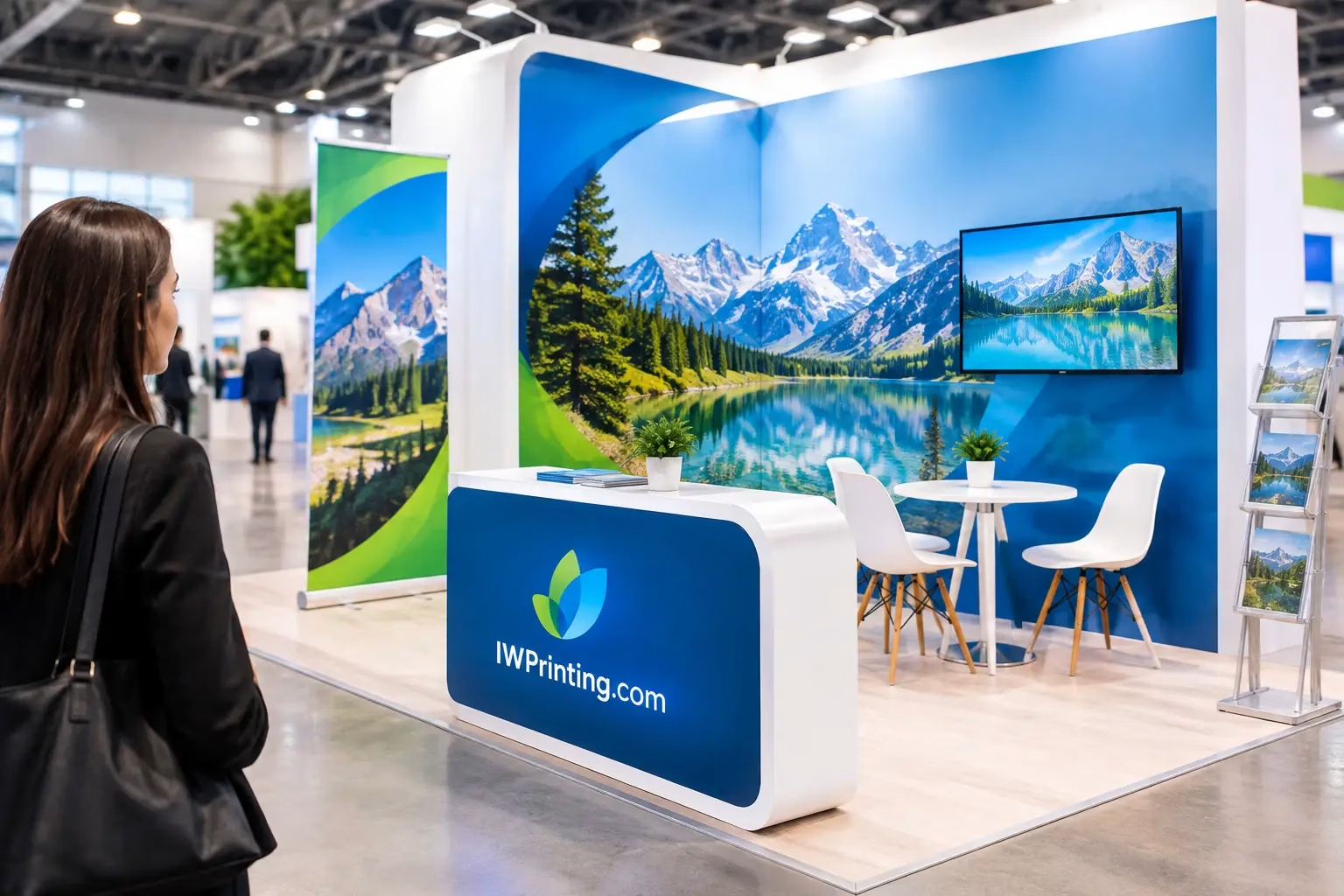
Learn how to plan exhibition signage that guides visitors, elevates your brand, and fits your booth, budget, timeline, and event goals with confidence.
WhatsApp us
Printing, corporate gifts and signage — tell us what you need and let AI help you find it.
Ask naturally. IWPrint AI can understand your product, quantity, budget and requirement.