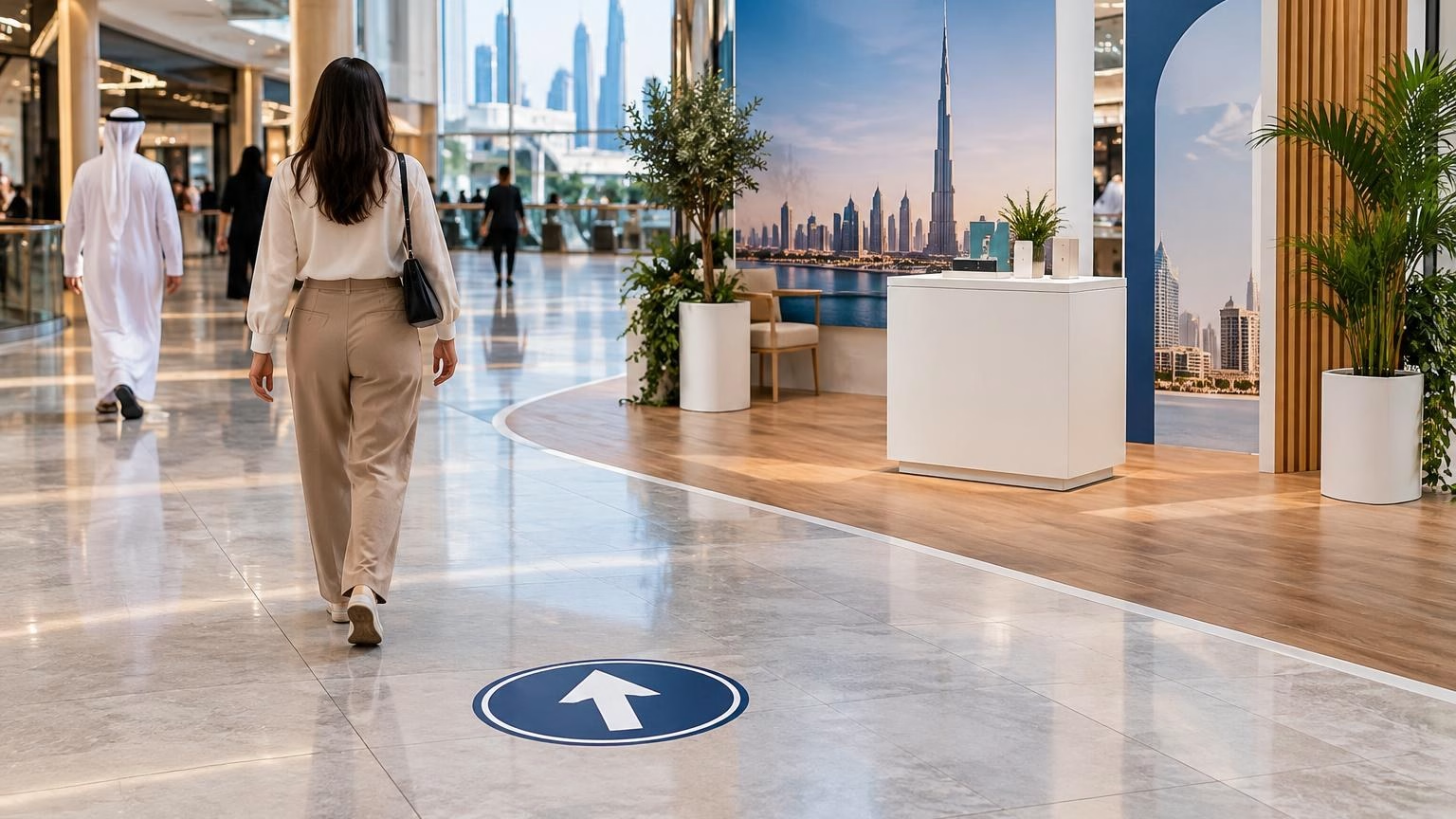
Temporary floor graphics can direct visitors, highlight a retail promotion or reinforce event branding in Dubai and across the UAE. The right choice depends on the floor surface, indoor or outdoor conditions, expected foot traffic and how long the graphic needs to remain in place.
Before ordering, ask the supplier to confirm that the proposed material and any protective finish are suitable for the specific floor and use. Plan the placement around visitor movement, confirm artwork dimensions and agree on a removal approach before installation.
Key takeaways
- Match the graphic and adhesive to the actual floor surface and location; do not assume one option fits every site.
- Check suitability for foot traffic, cleaning routines, moisture, sunlight and heat where relevant.
- Place graphics where they support wayfinding or a campaign without obstructing access or creating a trip concern.
- Keep the message brief and prepare artwork to the supplier’s specifications.
- Confirm removal instructions and test discreetly with venue approval before a full installation.
What temporary floor graphics are used for
Temporary floor graphics are printed graphics applied to a floor for a limited campaign, event or wayfinding purpose. In retail, they can point shoppers toward a display, promotion or service area. At an event, they can help mark routes, identify zones or carry a short branded message.
They work best when they add useful information at the moment a visitor needs it. A graphic should support signs, staff guidance and the wider customer journey—not compete with them. For broader decisions about sign materials and application environments, see IWPrinting’s signage material guide.
Choose material for the floor and conditions
There is no single material that is automatically right for every floor. The surface, exposure and use period affect which construction and adhesive should be considered. Share those details with the supplier and ask for confirmation before committing to a material.
| Decision factor |
What to check |
| Floor surface |
Identify the floor finish and condition. Ask whether the material is appropriate for that surface and whether a test is recommended. |
| Indoor or outdoor location |
Describe exposure to direct sun, heat, dust, moisture and changing conditions. Confirm suitability for the exact location. |
| Foot traffic |
Explain how busy the area is and whether people will turn, queue or move equipment over the graphic. Ask what use the proposed product is intended for. |
| Cleaning routine |
Check how the floor is cleaned, including the timing and methods used, and whether these could affect the graphic. |
| Time in place |
State the planned display period. Ask how it may affect application, performance and removal from the selected floor. |
Some temporary graphics use a removable adhesive construction, but “removable” should not be treated as a guarantee of residue-free removal on every surface. Confirm the supplier’s guidance for the actual flooring and installation period. If the area is exposed to UAE outdoor conditions, specifically ask whether the material is intended for that environment rather than relying on an indoor-use assumption.
Plan placement around visitor movement
A well-placed floor graphic is easy to notice and has a clear purpose. Walk the customer or attendee route before deciding where it should go. Consider sightlines, lighting, furniture, queues and the point at which someone needs the information.
- Entrances: Use a concise welcome or directional message where visitors can see it without blocking access.
- Retail decision points: Place a promotion near the relevant product or display, not somewhere that could confuse shoppers.
- Event routes: Use a consistent visual cue to guide guests between areas, and coordinate it with other event signage.
- Open areas: Check the graphic from different approach directions and consider whether people or movable displays will cover it.
Keep graphics clear of door swings, ramps, emergency routes and floor markings. Consider whether the location could be affected by water, cleaning or equipment movement. If a floor is uneven, damaged or has a surface treatment that could affect adhesion, get specific advice before installation.
Floor graphics are one part of an event display. Depending on the venue and audience, a custom banner or acrylic sign holder may provide supporting information at eye level. Choose complementary formats rather than crowding one area with repeated messages.
Make the artwork easy to understand
Floor graphics are often viewed while people are walking, so prioritise a short message, strong contrast and a clear visual direction. Use the brand logo and colours consistently, but keep essential wording readable at the planned viewing distance.
- Set the final shape and dimensions only after confirming the installation area.
- Keep key text, logos and directional cues away from the edge of the design.
- Check that arrows point toward the intended destination from the visitor’s approach.
- Use a high-quality logo file and confirm artwork setup requirements with the supplier.
- Review a proof or final artwork preview before approving production.
Do not assume that a design prepared for a poster or screen will work unchanged on the floor. The viewing angle, surrounding floor colour and distance can affect how it reads. A site photo or simple placement sketch can help the supplier understand the intended result.
Plan quantity and ordering details
Estimate quantity from the number of placement points—not just the size of the venue. List each location, the graphic dimensions and whether the design repeats or changes by zone. This makes it easier to check the total artwork set and avoid ordering the wrong number of pieces.
Before placing an order, confirm the product’s intended use, material and adhesive suitability, artwork specifications, installation responsibilities and removal guidance. Share the venue’s requirements and any restrictions on floor applications. Do not assume production timing, availability or delivery arrangements; confirm current details directly with IWPrinting when requesting a quote.
For events that use several display formats, IWPrinting’s guide to choosing a popup stand can help with a related part of the display plan.
Remove graphics carefully
Removal should follow the supplier’s instructions for the selected material and floor. Confirm who is responsible for removal and whether the venue requires it to be done by a particular team. Avoid scraping, pulling forcefully or applying heat or cleaning chemicals unless the instructions specifically allow it.
- Check the agreed removal guidance and get venue approval before starting.
- Begin at an edge and proceed slowly, watching for any change to the flooring.
- Stop if the surface lifts, marks or otherwise appears affected, and seek appropriate guidance.
- Use only a cleaning method approved for both the floor and any adhesive residue.
For a larger installation, consider testing a sample area in an inconspicuous location before applying all graphics. This is especially useful when the floor finish is delicate, newly treated or unfamiliar.
How to choose the right temporary floor graphic
Use this quick checklist to evaluate a proposed option for a retail campaign or event in the UAE:
- What is the precise floor surface and its condition?
- Is the location indoors, outdoors or exposed to direct sun or moisture?
- How much foot traffic and cleaning will the graphic encounter?
- How long should it remain, and what removal process is approved?
- Does the supplier confirm the material is suitable for this particular use?
- Are artwork dimensions, quantity, installation and ordering details agreed?
If any answer is unclear, resolve it before production. A floor graphic is a surface-specific choice: the best option is the one confirmed for the intended site, campaign and removal plan.
Frequently asked questions
What should I check before ordering temporary floor graphics in the UAE?
Confirm the floor surface, whether it is indoors or exposed to weather, how long the graphic needs to stay in place and the expected foot traffic. Ask the supplier to confirm that the proposed material and any protective layer are suitable for that exact use and surface. Also agree on artwork dimensions, installation responsibilities and the recommended removal method.
Can temporary floor graphics be used outdoors in Dubai?
Outdoor use depends on the specific material, surface, weather exposure and pedestrian conditions. Heat, direct sun, dust and moisture can affect performance, so do not assume an indoor product is suitable outside. Describe the location to the supplier and request confirmation for the intended conditions before ordering or installing.
How do I choose a location for a floor graphic?
Choose a clean, visible area where the message supports a clear visitor journey, such as near an entrance, at a decision point or beside a relevant display. Avoid placing graphics where they could obstruct access, create a trip concern, cover important floor markings or be hidden by queues and furniture. Check the location in person before finalising the layout.
Will a temporary floor graphic leave adhesive residue?
That depends on the adhesive, flooring, time in place and site conditions. Ask the supplier about removal expectations for your particular floor and follow the product instructions. A small test in an inconspicuous area, with venue approval, can help identify concerns before a larger installation. Do not use unapproved solvents or tools.
What artwork should I prepare for floor graphics?
Prepare the final message, logo, brand colours and intended dimensions, then confirm the supplier’s artwork requirements before setting up the file. Keep key wording concise and legible from a standing position. Include a clear margin around important content and ask how the design will be adjusted for the selected shape and installation location.
Plan your floor graphics with IWPrinting
Share your campaign purpose, location, floor surface, artwork and quantity requirements with IWPrinting to discuss suitable options and confirm current ordering details. Contact the team before finalising your plan so the intended use and site conditions can be reviewed.