
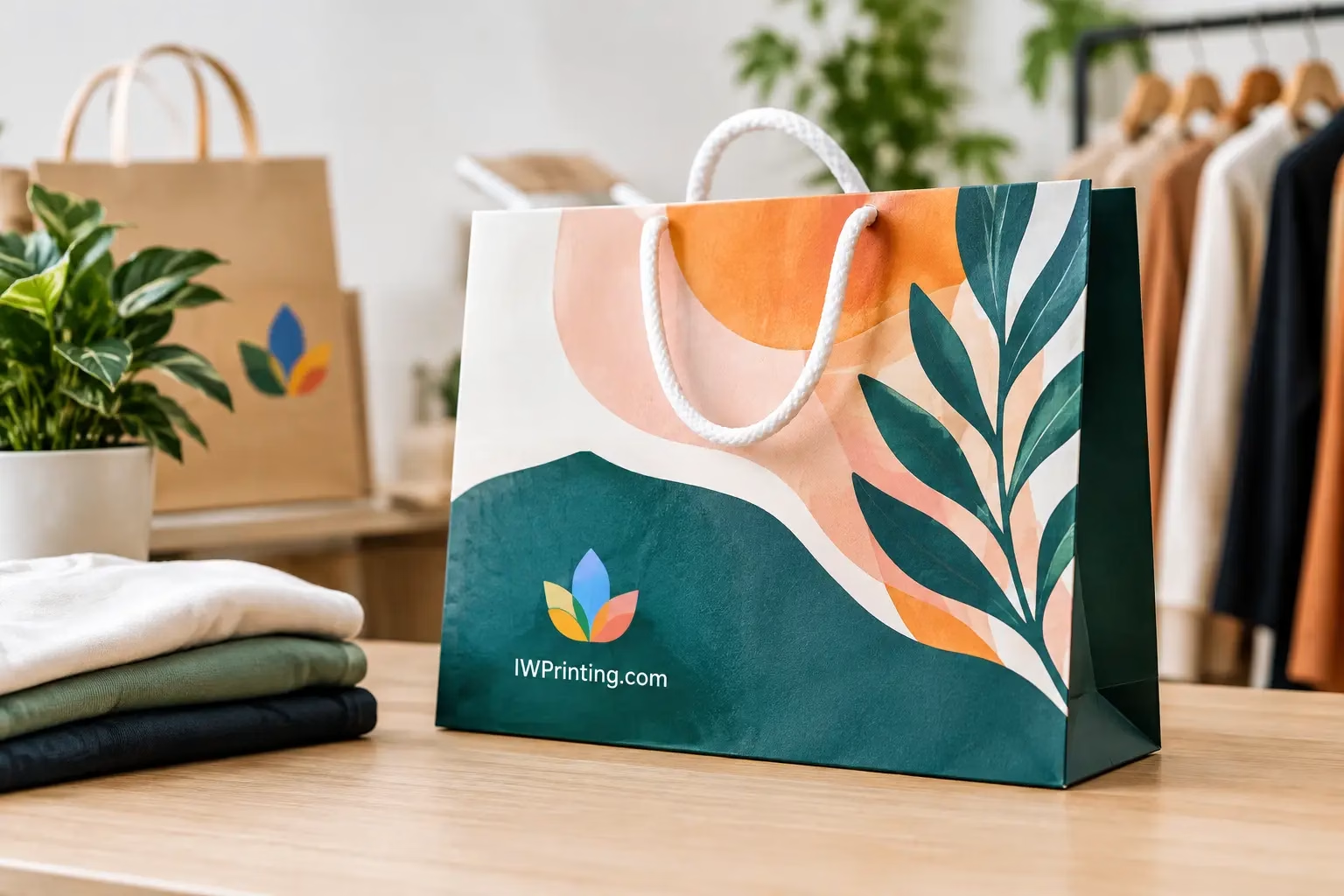
Shopping Bag Printing That Builds Brand Recall
Shopping bag Printing turns every purchase into brand exposure. Choose materials, sizes, finishes, and artwork that fit your product, budget, and customers.
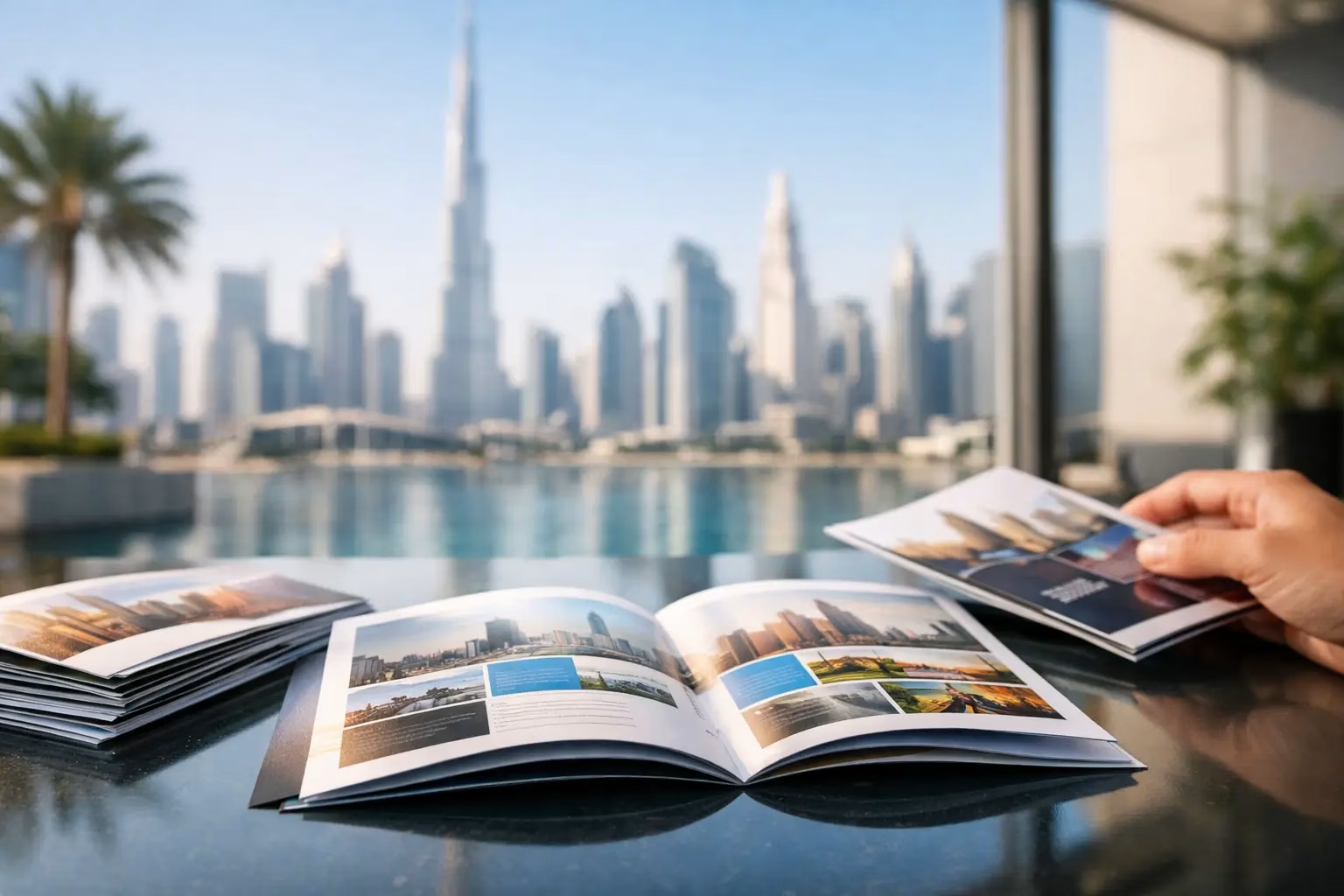
A brochure is often handed over in the same moment a customer decides whether to take your business seriously. At a sales meeting, property viewing, clinic reception, retail counter, or exhibition stand, brochure printing Dubai businesses choose needs to look credible, explain the offer quickly, and feel worth keeping.
That means the lowest unit price is not always the best value. A flimsy brochure with unclear copy or poorly matched images can weaken an otherwise strong campaign. The right format, stock, fold, and finish turn a simple printed piece into a practical sales tool that supports your staff long after the first conversation.
Before choosing paper or requesting a quote, decide what the brochure is meant to achieve. A company profile used in B2B meetings needs more space for capabilities, credentials, and project examples. A restaurant menu brochure must be easy to scan and durable enough for regular handling. A real estate brochure benefits from large images, floor-plan clarity, and a premium finish that matches the value of the property.
For a short promotion, a compact flyer-style brochure may be enough. For several services, packages, or product categories, an A4 or A5 folded brochure gives customers a clearer path through the information. Trying to fit an entire company story onto a small sheet usually creates crowded pages, tiny text, and an expensive print piece that nobody reads.
A useful rule is simple: give each panel one purpose. It might introduce the brand, explain a service, show benefits, feature products, or prompt an action. When every panel competes for attention, the main message gets lost.
Brochure dimensions affect both how the piece is used and how much content it can hold. A standard A4 tri-fold is familiar, economical, and easy to place in folders, display racks, and direct-mail packs. It works well for service overviews, hospitality offers, education programs, and product ranges.
A4 bi-fold brochures provide four larger panels and suit corporate presentations, event programs, property information, and premium product launches. A5 brochures are compact, easy to distribute, and ideal for promotions, menus, healthcare information, and leave-behind marketing. Square formats can create a distinctive look for retail, beauty, lifestyle, and food brands, though they may cost more depending on the final size and quantity.
The fold also changes the reading experience. A tri-fold guides readers through a sequence, while a gate fold creates a reveal that can work well for launches or high-end invitations. Z-folds are useful when information needs to be compared panel by panel. More complex folds can be memorable, but they require careful layout and may increase production time. If speed and budget matter most, standard folds are usually the practical choice.
Folded brochures should not be designed as equal boxes without checking the fold type. On a roll-fold brochure, one inside panel is commonly made slightly narrower so it closes neatly. Text, logos, and important images also need safe spacing away from fold lines and trim edges.
This is where professional artwork setup saves money. Correct bleed, image resolution, color settings, and fold allowances help prevent costly reprints, delayed launches, and disappointing results.
Paper weight is one of the fastest ways to change how a brochure feels. Lightweight stocks can be suitable for high-volume promotions where cost and easy distribution are priorities. For most business brochures, a medium to heavy stock offers better opacity, durability, and perceived quality.
A 130 gsm to 170 gsm stock is often a sensible choice for promotional brochures and large runs. Around 200 gsm to 250 gsm creates a firmer, more premium hand feel for company profiles, hospitality collateral, and high-value product presentations. The best option depends on the fold, number of panels, distribution method, and budget. Very heavy paper can look impressive, but it may crack along folds unless it is properly scored.
Finish matters as much as thickness. Gloss stock makes colors and photography appear more vibrant, making it a strong choice for retail offers, food images, travel, and product-focused campaigns. Matte stock feels more refined and reduces glare, which is useful for corporate brochures, professional services, and text-heavy content. Uncoated paper offers a natural texture and is easier to write on, making it practical for forms, appointment information, or brochures that include notes and pricing fields.
People rarely read a brochure from top to bottom on the first pass. They look at the cover, headings, images, pricing, and the call to action. Your design should support that behavior instead of forcing readers through dense paragraphs.
The cover should make one clear promise. Rather than leading with a generic statement about quality, say what the customer can get: office branding solutions, custom packaging for food brands, property leasing opportunities, or a limited seasonal offer. Use short headings inside the brochure, keep body copy readable, and leave enough white space for the key details to stand out.
Strong photography and product images are worth the investment. Low-resolution visuals may look acceptable on a screen but can print soft or pixelated. Use images with sufficient resolution at their final printed size, and make sure colors are consistent with your signage, packaging, business cards, and digital materials. A brochure should feel like part of one brand system, not a separate campaign.
Your call to action should be specific. Invite readers to request a quote, visit a showroom, book an appointment, scan a QR code, call a sales team, or redeem an offer. Include the information they need to act, but do not overcrowd every panel with repeated contact details.
Digital printing is often the best fit for short runs, fast campaigns, personalized versions, and frequent content updates. It allows businesses to order practical quantities without committing to a large offset run. This is useful for startups testing a new service, event organizers updating schedules, or sales teams that need materials quickly.
Offset printing is typically more cost-effective for larger quantities and can deliver highly consistent results across a long run. It is a good option when the artwork is final, the same brochure will be distributed over time, and unit cost is a major consideration. The trade-off is that setup and production schedules may be less flexible than digital printing.
For brochures distributed at exhibitions, store openings, and outdoor promotional activity, ask about durability. A protective lamination can help reduce scuffing and moisture damage, especially for pieces handled by many people. It adds cost, so it makes the most sense for premium brochures or materials expected to remain in use for months rather than days.
A realistic quantity starts with distribution, not guesswork. Consider how many brochures your sales team uses each month, how many visitors an event is likely to attract, how many retail locations need stock, and whether the message will remain current. Ordering too few can create urgent reprint costs. Ordering too many can leave you with outdated brochures after a price change, new product launch, or brand update.
For a campaign with changing details, smaller batches are often smarter. For evergreen company profiles, product catalogs, or standard service brochures, a larger quantity may lower the cost per piece. Keep a digital master file organized so reordering is fast when stock runs low.
Before approving your brochure for print, confirm the final size, fold type, paper stock, finish, quantity, and delivery date. Review every phone number, website address, price, service name, and QR code. Check that images are sharp, brand colors are correct, and the cover panel is positioned properly for the selected fold.
It is also worth requesting guidance if your artwork has not been prepared for print. A small adjustment to margins, fold placement, or image quality before production is much easier than correcting thousands of finished brochures afterward.
A well-planned brochure gives your team something tangible to leave behind after the conversation. For businesses that need dependable production, professional design support, and delivery across the UAE, IWPrinting.com can help turn approved artwork into marketing materials that are ready to represent the brand with confidence.
Shopping bag Printing turns every purchase into brand exposure. Choose materials, sizes, finishes, and artwork that fit your product, budget, and customers.
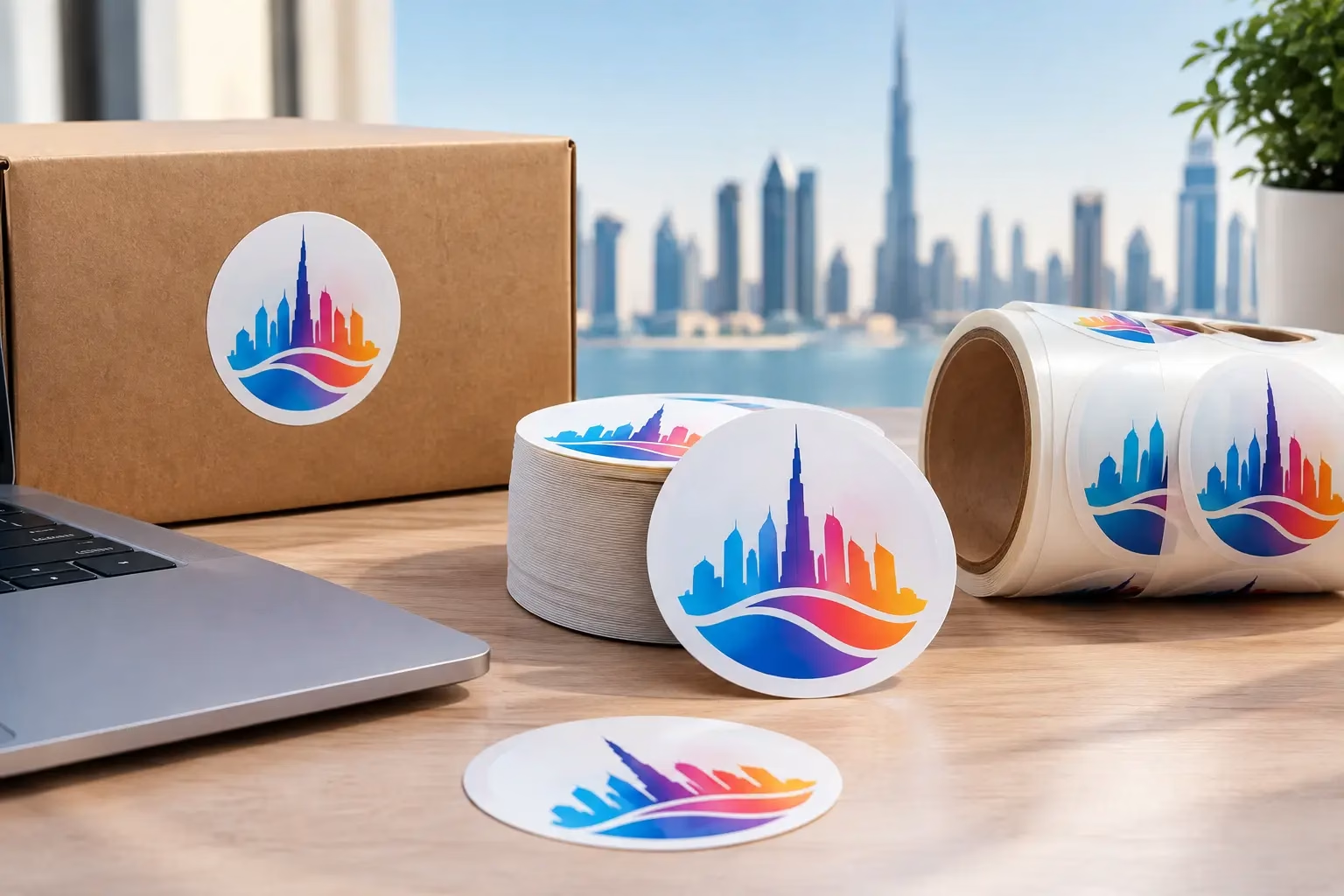
Get Round Sticker Printing in Dubai for product labels, events, and promotions. Choose durable materials, sharp color, custom sizes, and fast delivery.
WhatsApp us
Printing, corporate gifts and signage — tell us what you need and let AI help you find it.
Ask naturally. IWPrint AI can understand your product, quantity, budget and requirement.