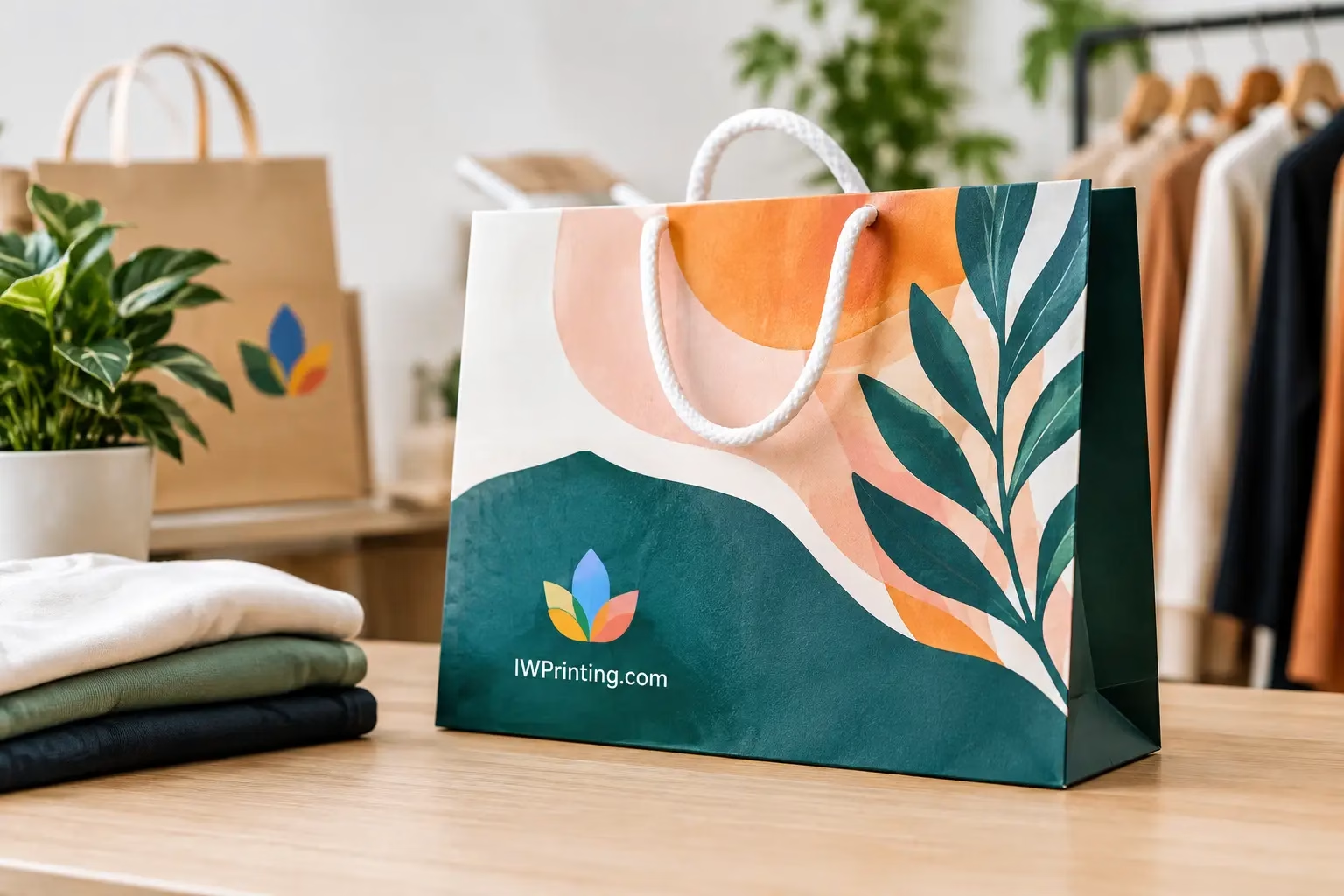
Shopping Bag Printing That Builds Brand Recall
Shopping bag Printing turns every purchase into brand exposure. Choose materials, sizes, finishes, and artwork that fit your product, budget, and customers.

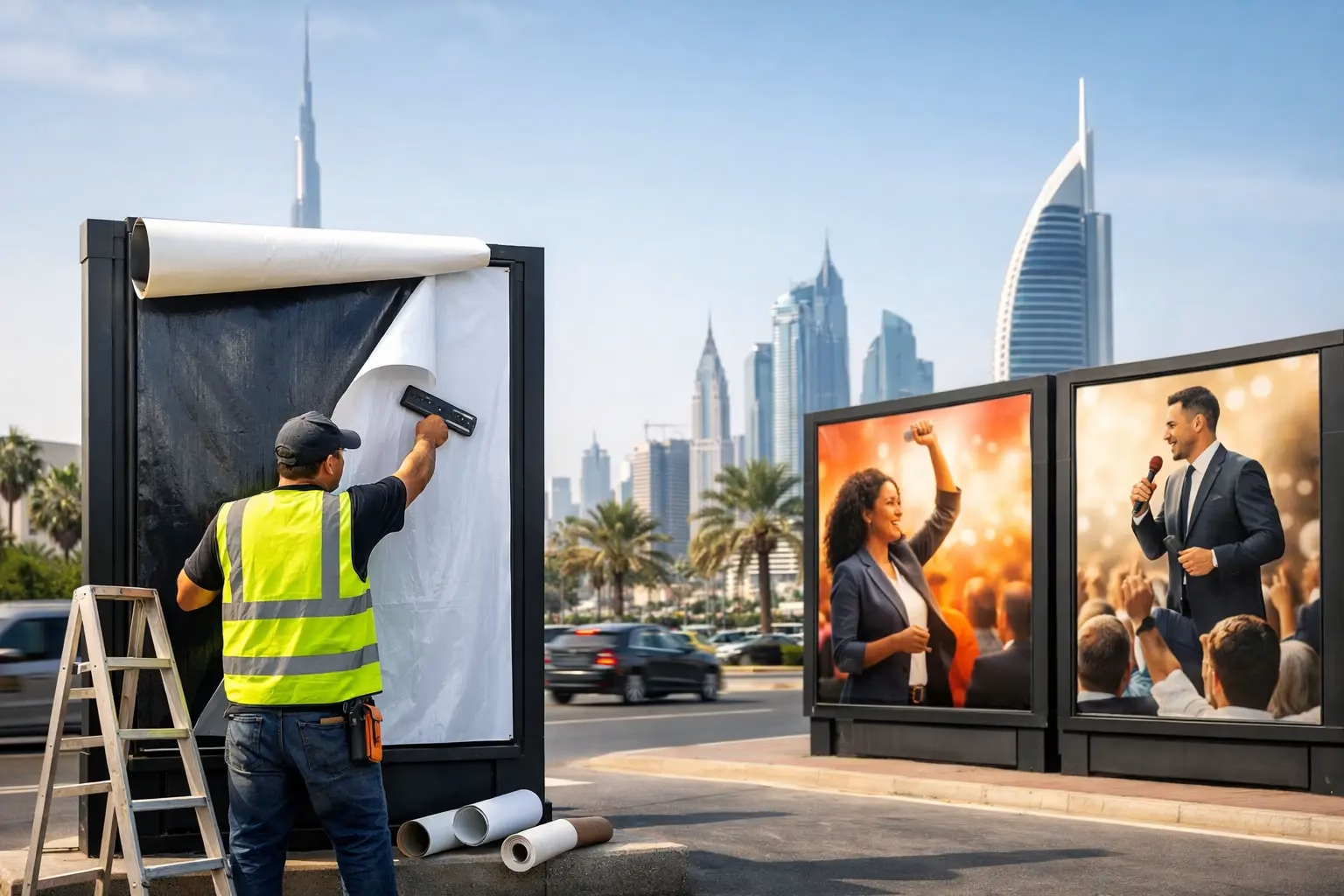
A poster has only a few seconds to earn attention. In a busy retail corridor, a hotel lobby, an exhibition hall, or a community notice area, people will not stop to decode a crowded message. Effective poster printing Dubai businesses can rely on starts with a clear purpose, the right material, and print quality that keeps colors, text, and images looking professional at viewing distance.
For a single promotion, posters can be a cost-effective way to create visibility quickly. For a larger campaign, they become part of a connected brand experience alongside window graphics, roll-up banners, flyers, event signage, and point-of-sale displays. The difference is not simply the size of the print. It is whether the poster is designed, produced, and placed for the job it needs to do.
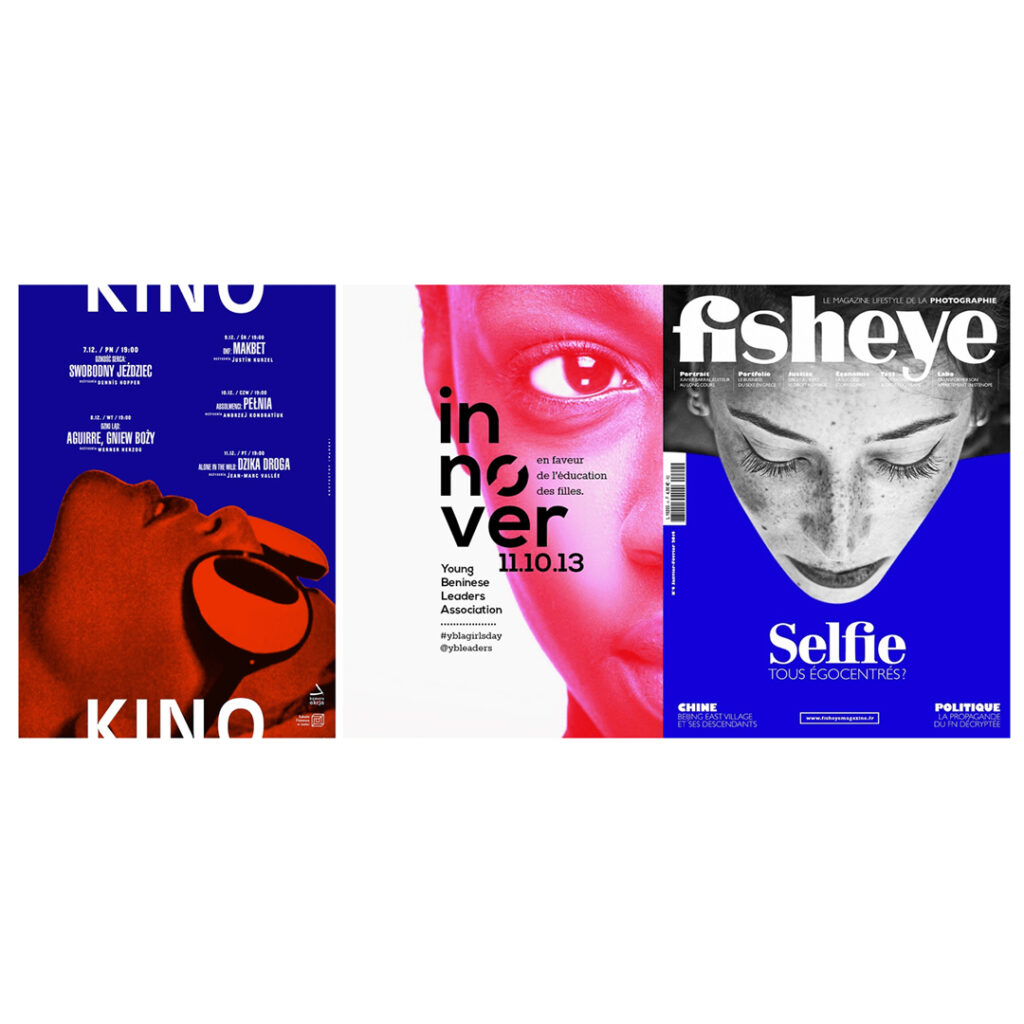
A good poster is not a brochure enlarged to a larger page. It needs one clear message, a strong visual hierarchy, and a direct action for the viewer. That might be visiting a store, scanning a QR code, registering for an event, trying a limited-time offer, or remembering a new brand name.
Start with the viewing environment. A poster beside a cashier counter can carry more detail because customers are already standing nearby. A poster facing passing foot traffic needs a short headline, one main image or offer, and large contact details. A poster used at an exhibition should support the sales conversation rather than compete with it.
The most useful rule is simple: if the main message cannot be understood from a few steps away, simplify it. Keep essential details such as dates, prices, locations, and calls to action easy to find. Use brand colors consistently, but make sure there is enough contrast for text to remain readable.
Poster size affects cost, impact, transport, and placement. There is no universal best option. The right format depends on where the poster will be displayed and how much information it must carry.
A4 and A3 posters are practical for reception desks, cafés, staff notice boards, menus, small promotions, and in-store messaging. They are easy to distribute and replace, making them a sensible choice for campaigns that change often.
A2 is a strong middle ground for retail walls, event entrances, property marketing, and promotional displays where people will view the message from a moderate distance. A1 and A0 formats create much more presence and suit launches, exhibitions, large retail spaces, directional messaging, and high-visibility campaign artwork.
Custom sizes are often worth considering when standard dimensions do not fit the available wall, frame, or display board. Before placing an order, measure the installation area and account for frames, mounting gaps, or other nearby signage. A poster that is technically large can still look undersized when installed on a wide blank wall.
Portrait posters are familiar and work well for events, menus, announcements, and vertically structured content. Landscape posters can be more effective for wide product images, property visuals, restaurant promotions, or messages placed above counters and shelves.
Orientation should follow the message and location, not personal preference. If a poster will sit next to several vertical displays, a landscape format can stand out. If it will be viewed in a narrow corridor, portrait may use the available space more efficiently.
Paper choice has a direct effect on how a poster looks and how long it lasts. Indoor, short-term promotions may only need a quality coated paper stock. Posters for repeated handling, longer display periods, or busy public spaces may benefit from heavier paper, synthetic material, or lamination.
Gloss finish makes colors appear vivid and can be a good fit for product photos, food imagery, beauty campaigns, entertainment promotions, and bold retail offers. Its trade-off is glare. Under strong spotlights or glass-fronted displays, reflections can make copy difficult to read.
Matte finish reduces glare and gives a more refined appearance. It is often preferred for corporate communication, educational materials, art prints, premium brand campaigns, and posters that will be photographed. Colors may appear slightly softer than on gloss, so artwork should be prepared with the finish in mind.
Lamination adds protection against scuffs, fingerprints, light moisture, and frequent handling. It is useful for posters displayed in reception areas, retail locations, food service environments, and event spaces. For a short campaign inside a controlled environment, lamination may not be necessary. Choosing it only where it adds value helps keep the project affordable.
For outdoor use, standard paper posters are rarely the best long-term solution. Weather, direct sun, humidity, and wind all affect durability. Waterproof synthetic stocks, mounted boards, banners, or purpose-built outdoor signage may be a better investment depending on the location and campaign duration.
A sharp design on a screen can still produce disappointing results if the file is not prepared for print. Images should be high resolution at the final print size. A small social media image stretched to A1 will usually look soft or pixelated, especially when it includes product details or fine text.
Use CMYK color settings where possible. Screen colors are created with light, while printed colors are created with ink, so some bright RGB tones may shift when printed. Brand colors should be supplied accurately, particularly for logos and repeat campaigns. If exact color matching is essential, discuss the requirement before production rather than approving a file based only on screen appearance.
Keep text away from the edges and include bleed when artwork runs to the trim line. Bleed gives the printer extra image area for clean cutting, while a safe margin protects important copy, logos, and QR codes from being placed too close to the edge.
QR codes deserve special attention. They need sufficient contrast, clear space around the code, and a size that can be scanned from the expected viewing distance. Test the code from a printed proof or at least from a realistic screen size before sending the final file.
Not every business has a ready-to-print file, and that should not delay a campaign. Professional design support is useful when a poster needs to match existing brand guidelines, adapt to multiple sizes, include bilingual content, or coordinate with signage and exhibition materials.
A production-ready design should be built around the final dimensions and material, not adjusted at the last minute. This reduces rework, avoids low-resolution graphics, and makes it easier to reorder the same campaign later.
Order quantity should match the campaign plan, not just the number of locations. Include spare posters for replacements, last-minute requests, and new branches. A small overrun is often more practical than a second urgent print run, especially when the campaign has a fixed launch date.
For recurring promotions, keep approved artwork organized by size, finish, and version. This makes reordering faster and protects brand consistency across teams and locations. It also prevents a common problem: different branches displaying outdated pricing, old phone numbers, or mismatched campaign visuals.
Timing matters just as much as print quality. Allow enough time for artwork checks, design updates, production, finishing, packing, and delivery. If posters need mounting, framing, or installation with other displays, plan the full project schedule rather than treating printing as the only step.
IWPrinting.com can support businesses with poster production as part of a wider visual communication project, from artwork support and large-format printing to signage, exhibition displays, and delivery. That single-partner approach is especially useful when a campaign needs coordinated materials rather than one standalone poster.
Before approving poster artwork, confirm four practical details: the final size and orientation, the display environment, the finish and durability required, and the exact message viewers need to act on. Then check names, prices, dates, contact information, and QR codes one more time. These are small details, but they are the details that turn a good-looking poster into a dependable sales tool.
The best poster is not necessarily the biggest or most expensive one. It is the one that reaches the right audience, stays readable in its real location, and gives people a clear reason to respond.
Shopping bag Printing turns every purchase into brand exposure. Choose materials, sizes, finishes, and artwork that fit your product, budget, and customers.
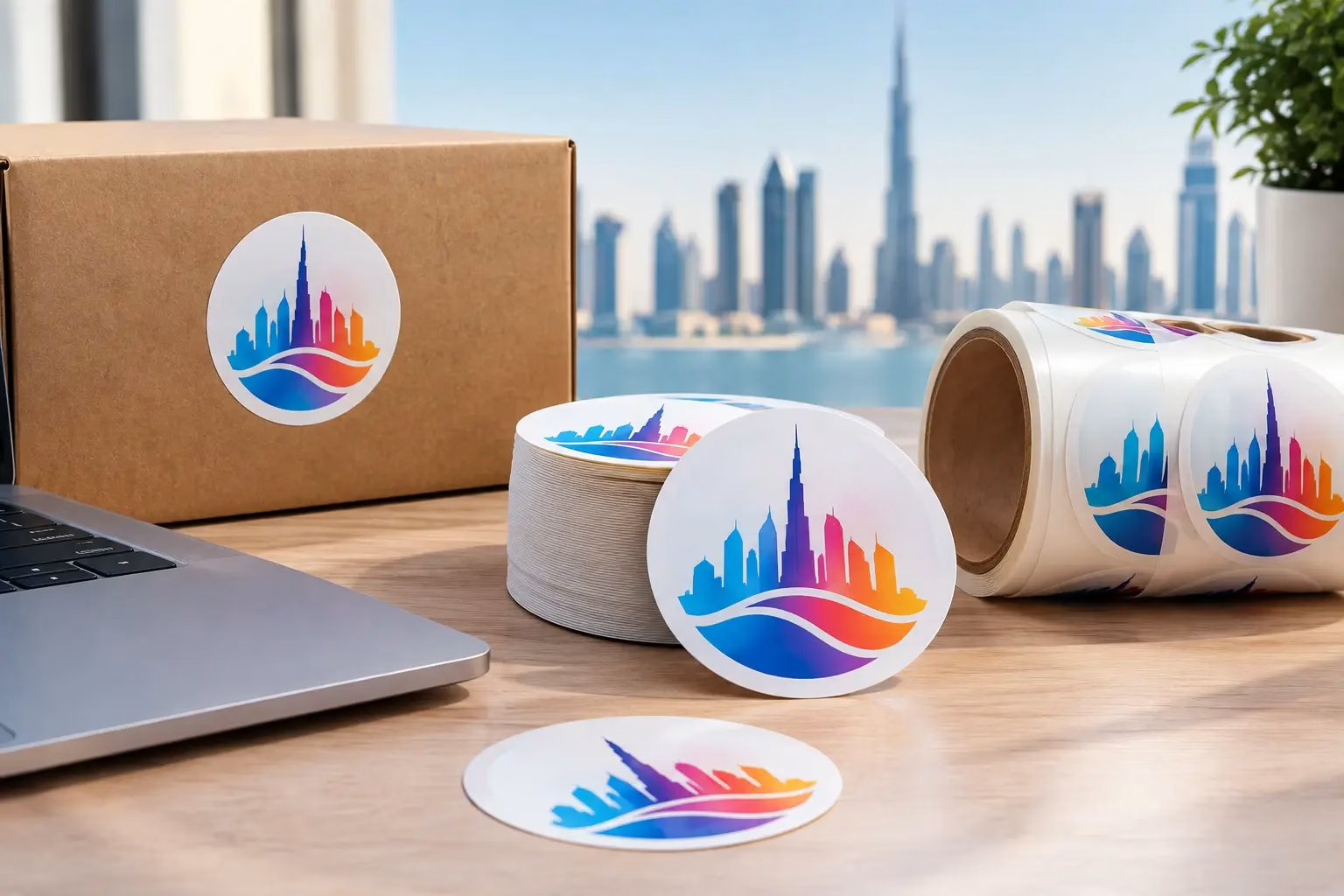
Get Round Sticker Printing in Dubai for product labels, events, and promotions. Choose durable materials, sharp color, custom sizes, and fast delivery.