
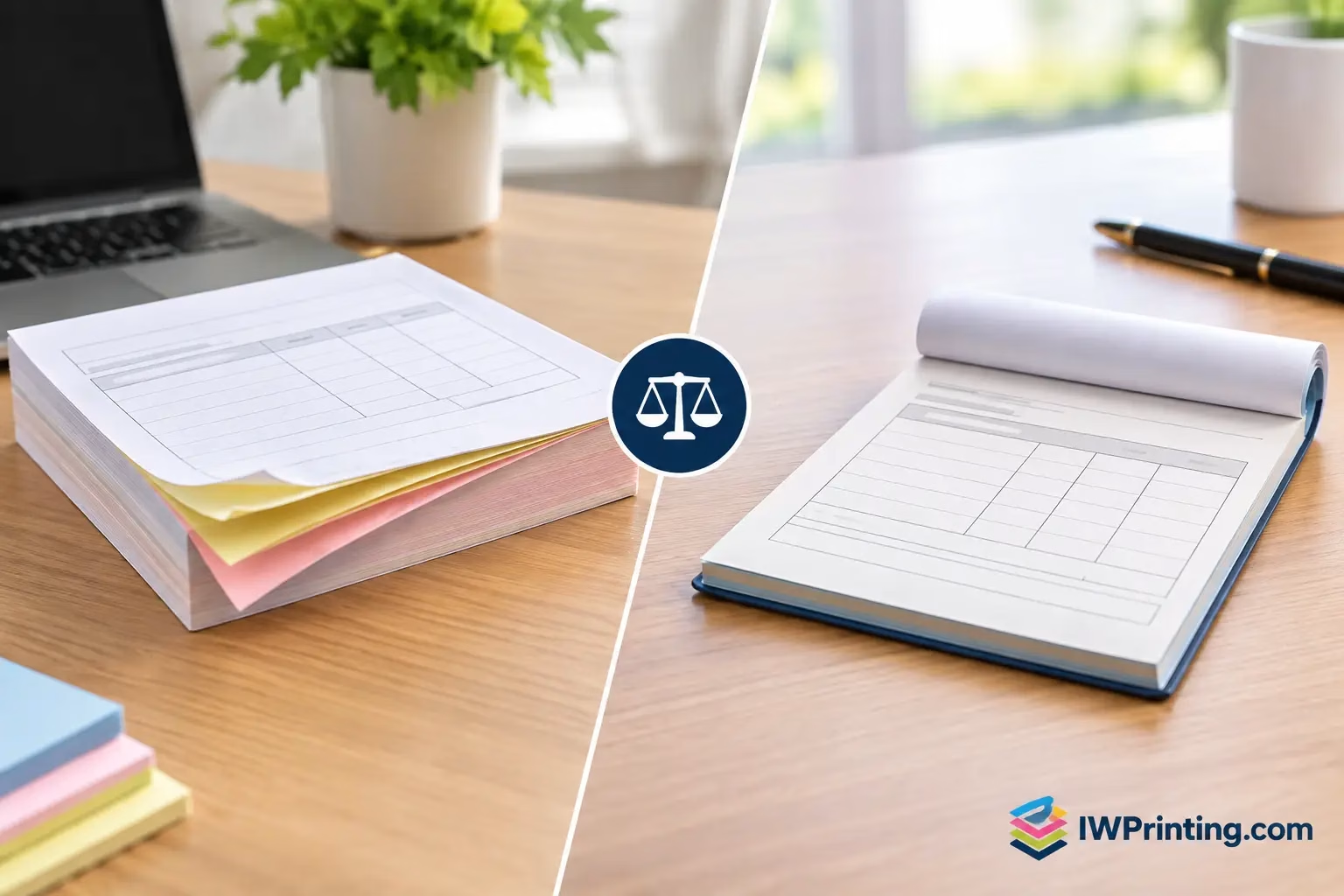
NCR Versus Receipt Books: Which Fits Your Business?
Compare NCR versus receipt books for invoices, orders, and payments. Choose the right format, copy count, and finish for clear daily business records.
A printing shop can do far more than put ink on paper. For a growing business, it is the production partner behind the business cards handed over after a meeting, the storefront sign that earns a first glance, the exhibition wall that stops visitors, and the packaging that makes an order feel worth opening. When these items look inconsistent, rushed, or cheaply made, customers notice. When they work together, they make a business look established and ready.
The right choice is not always the shop with the lowest unit price. It is the one that understands your objective, recommends the right material and finish, produces dependable quality, and gets the job delivered when you need it. Here is what businesses should look for before placing their next print order.
A flyer, an outdoor banner, a rigid sign, and a custom gift box may all carry the same logo, but they require very different production methods. Before requesting a quote, define where the item will be used, how long it needs to last, who will see it, and what action you want them to take.
For example, restaurant menus need finishes that can handle frequent handling and cleaning. Construction safety signs need high visibility, clear information, and materials that suit their environment. Exhibition graphics need to install quickly, travel well, and look sharp under bright venue lighting. A capable supplier should ask questions like these before simply sending a price.
This approach also prevents expensive reprints. Choosing paper weight based only on a sample image, or ordering a banner without confirming installation conditions, can create avoidable delays. Good print buying starts with the real-world use of the finished item.
Businesses often begin by ordering basic stationery and later need window graphics, event displays, branded uniforms, product labels, corporate gifts, or office signs. Working with separate suppliers for every category can create inconsistent colors, repeated artwork revisions, and more time spent chasing deliveries.
A full-service printing shop brings related work under one production process. That does not mean every project should be handled in exactly the same way. It means your branding can stay coordinated across print, signage, packaging, and promotional products while one team manages specifications, proofs, production, and delivery.
Business cards, letterheads, envelopes, brochures, folders, flyers, catalogs, menus, and presentation materials remain practical sales tools. The quality is in the details: accurate trimming, clean folds, readable small text, correct brand colors, and paper stock that feels appropriate for your business.
A premium uncoated card can work well for consultants and professional services because it feels understated and is easy to write on. A retail promotion may need a glossy flyer with bold color impact. Neither option is automatically better. The right choice depends on the message, budget, and use case.
Signage is a business investment, not a decorative afterthought. Indoor reception signs, acrylic logos, 3D letters, LED signs, wayfinding boards, window graphics, wall branding, and vehicle graphics all need materials selected for their location.
For outdoor signage, sun exposure, dust, wind, viewing distance, and mounting requirements matter. For indoor signs, lighting, wall surface, visitor flow, and brand presentation matter more. A supplier that can produce and install signage helps reduce the risk of ordering a beautiful sign that is unsuitable for the site.
Packaging has a practical role: it protects, organizes, and identifies your product. It also communicates value before the customer sees what is inside. Custom boxes, sleeves, paper cups, stickers, labels, hang tags, and branded tissue paper can turn a standard delivery into a more professional customer experience.
Small businesses do not always need the most complex packaging format. A well-designed label and branded sticker may be the smart starting point for a new product line. As order volume grows, custom packaging can become more cost-effective and more useful for brand recognition.
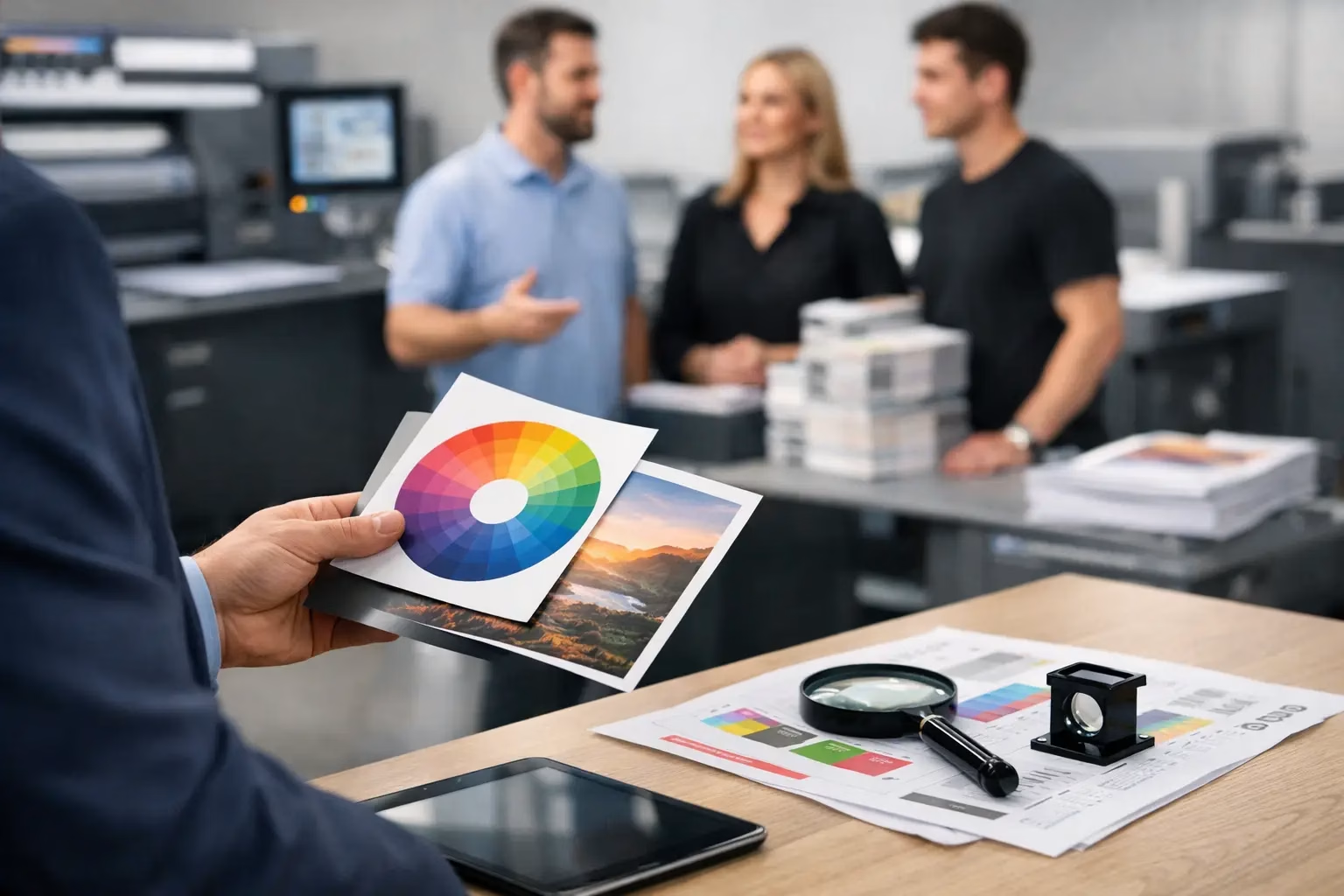
An online product image is helpful, but it cannot show every detail that affects quality. Ask about available materials, finishing options, color matching, and proofing for important jobs. If you are ordering a high-volume brochure, premium packaging, or branded display, a physical sample or approved proof can protect your budget.
Color requires particular attention. Screen colors are created with light, while most printed materials use ink. That means a bright digital blue may print differently on matte paper, glossy paper, fabric, vinyl, or acrylic. Brand-sensitive projects may require specific color references and a test output before full production.
Finishing also changes the result. Lamination can add durability and a polished appearance. Spot UV can highlight a logo or design element. Die-cutting can create distinctive shapes. Foil can add a premium touch. These options are useful when they support the product and audience, not when they are added simply because they sound impressive.
A low quote can be attractive until it excludes artwork checks, finishing, delivery, installation, or the material grade you assumed was included. Compare like for like. Confirm the quantity, size, stock or substrate, print sides, finishing, turnaround time, and whether delivery or installation is part of the price.
For repeat items, ask whether artwork can be saved for easy reordering. This is especially valuable for business cards, labels, menus, staff uniforms, certificates, and frequently used event materials. Easy reordering saves time and reduces the chance of old logos, incorrect phone numbers, or mismatched layouts returning to print.
Lead time is equally important. Fast turnaround is valuable, but only when it still allows for proof approval and proper production. A last-minute order may carry additional costs or limit material choices. Planning recurring campaigns, trade shows, store openings, and seasonal promotions in advance gives you more control over cost and quality.
Even a strong logo can lose impact when artwork is supplied in the wrong format. Low-resolution images can print blurry. Fine text can disappear on banners. Colors may shift when files are not prepared correctly. A professional graphic design review helps catch these issues before production begins.
Design should also match the format. A social media graphic is not automatically suitable for a billboard, window sticker, or brochure. Large-format printing needs high-resolution artwork and readable type at distance. Packaging artwork needs accurate dielines. A business card needs clear hierarchy so people can find contact details in seconds.
At IWPrinting.com, customers can order standard products online or request support for custom branding work that needs more detailed planning. This combination is useful when a project begins with a simple printed item and develops into a wider rollout across signage, displays, packaging, and promotional materials.
Production is only part of the job. A large sign still needs safe installation. Exhibition graphics must arrive before the event build-up. Corporate gifts may need to be packed, counted, and delivered to multiple offices. For businesses operating across Dubai, Abu Dhabi, Sharjah, and the wider UAE, dependable delivery and project coordination can be as important as the printed product itself.
Ask who is responsible if an item arrives damaged, if an installation surface creates an issue, or if a quantity needs to be checked before dispatch. Clear communication matters most when deadlines are tight. A dependable supplier provides realistic timelines, confirms specifications, and keeps the customer informed rather than making promises that production cannot support.
The best business printing becomes easier over time. Once your core materials, sizes, colors, finishes, and artwork are organized, each new campaign can move faster. Create a simple brand file folder with approved logos, fonts, color references, contact details, and previous print specifications. It gives your team and your printing partner a reliable starting point.
Then think beyond the immediate item. A new retail launch may need storefront signage, opening-day flyers, staff badges, product labels, shopping bags, and counter displays. Ordering these as one coordinated project can improve consistency and avoid the scramble of discovering missing pieces a day before launch.
Choose a printing partner that makes your brand easier to present, not harder to manage. When quality, speed, pricing, and service are handled with care, every printed item has a better chance of doing its job: helping people recognize your business, trust it, and remember it.
Compare NCR versus receipt books for invoices, orders, and payments. Choose the right format, copy count, and finish for clear daily business records.
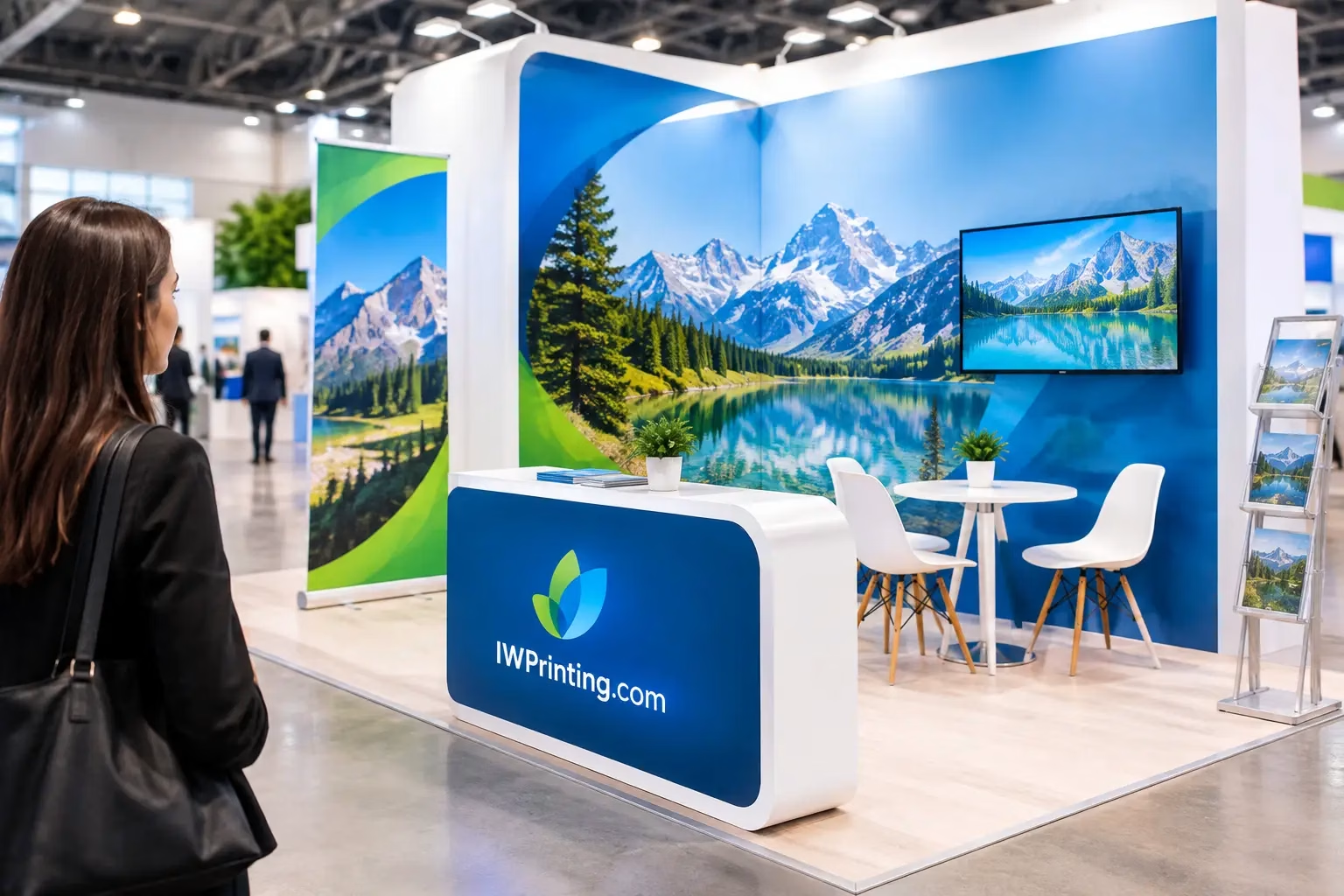
Learn how to plan exhibition signage that guides visitors, elevates your brand, and fits your booth, budget, timeline, and event goals with confidence.
WhatsApp us
Printing, corporate gifts and signage — tell us what you need and let AI help you find it.
Ask naturally. IWPrint AI can understand your product, quantity, budget and requirement.