

Shopping Bag Printing That Builds Brand Recall
Shopping bag Printing turns every purchase into brand exposure. Choose materials, sizes, finishes, and artwork that fit your product, budget, and customers.

A calendar earns its place in front of customers 365 days a year. Unlike a flyer that may be read once or a promotional item that may sit in a drawer, custom calendar printing keeps your name, colors, and message visible during daily planning. For businesses that want practical marketing with a long shelf life, it is one of the most cost-effective print products available.
The best results do not come from adding a logo to a generic template. A well-planned calendar should reflect how your audience works, where they will use it, and what action you want them to take. Whether you are preparing client gifts, retail promotions, staff planners, school calendars, or real estate marketing materials, format, paper, imagery, and finishing all influence the final impact.
Calendars solve a simple everyday need: keeping track of dates, appointments, deadlines, holidays, and events. That usefulness is exactly what makes them effective branding tools. Each time someone checks a date, your business has another opportunity to be seen.
For a restaurant, monthly pages can feature seasonal offers, signature dishes, or reservation details. A real estate company can include neighborhood photography and practical moving reminders. Healthcare providers may use calendars to share wellness messages, while schools and training centers can add term dates, registration periods, and key contacts. The content does not have to feel like an advertisement. In many cases, the most memorable calendars offer helpful information first and branding second.
Calendars are also easy to distribute. They work well as year-end gifts for customers, welcome items for new clients, additions to corporate gift packs, and giveaways at exhibitions or retail counters. Businesses can order larger quantities for broad campaigns or smaller runs for premium, personalized distribution.
The right format depends on where the calendar will live. A wall calendar creates a larger visual presence and gives you room for strong photography, product visuals, and promotional messaging. It suits offices, homes, retail back rooms, workshops, schools, and hospitality spaces.
Desk calendars are compact, practical, and ideal for reception desks, sales teams, office staff, and regular B2B customers. Tent-style formats remain visible without taking up much room, while flip desk calendars make it easy to move from month to month. They are a smart choice when your audience spends most of the day at a workstation.
Pocket calendars are the simplest option for high-volume handouts. They are affordable, easy to include with invoices or shopping bags, and useful for quick-reference contact details. However, they offer less space for storytelling and typically have a shorter perceived value than wall or desk formats.
Some organizations need a more specialized solution. An academic calendar may run from August to July rather than January to December. A shift-based business may require room for schedules and operational notes. A custom planner can include weekly layouts, notepaper, branded dividers, and useful company information. The format should serve the user before it serves the brand.
A clear monthly date grid is non-negotiable. If the calendar is difficult to read, the design has failed regardless of how attractive it looks. Use legible numbers, enough writing space where required, and clear differentiation between weekdays and weekends.
Beyond the grid, include your logo, company name, website, phone number, and relevant social media details without crowding every page. A small, consistent footer often works better than a large logo repeated aggressively. Add public holidays that matter to your recipients, especially when the calendar is intended for business use in the UAE or the wider GCC. If dates are subject to official confirmation, leave room for this in the planning process.
The monthly visual area is where the calendar becomes distinctive. Use professional product images, completed projects, customer-friendly tips, local landmarks, team photography, or illustrations that support your brand. A construction company might show finished developments. A corporate gifts supplier might present seasonal gifting ideas. A retailer may use each month to introduce a product category or promotion.
Avoid treating every page as a sales poster. Too much text, too many offers, and excessive contact information can make a calendar feel cluttered. The strongest designs balance brand presence with breathing room.
Paper selection affects both appearance and durability. Gloss-coated paper makes photographs and rich colors stand out, making it a popular choice for product-led or image-heavy calendars. Matte finishes create a more refined, low-glare look and are often easier to write on. For desk calendars with note sections, writable stock can be more practical than high-gloss paper.
Thicker paper gives the product a more premium feel and helps wall calendars remain flat over time. For cover pages, a heavier stock can add protection and improve presentation. Inside pages can be selected according to the intended budget, quantity, and finish. There is no single best option – a premium real estate gift and a large-scale retail giveaway should not necessarily be produced to the same specification.
Binding is equally important. Spiral binding is reliable, easy to turn, and well suited to wall and desk calendars. Wire-O binding offers a polished appearance and smooth page movement. Saddle stitching can work for simpler, lower-page-count formats, but may not provide the same long-term durability. For wall calendars, a hanging hole should be accurately positioned and reinforced by the overall binding structure.
Finishing details can raise perceived value without overcomplicating the order. A laminated cover helps protect against fingerprints and wear. Spot UV can highlight a logo or image on a premium cover, while rounded corners add a softer, more finished look to desk formats. These options should be selected based on the audience and distribution plan, not simply because they are available.
Calendar printing has a hard deadline: the start of the new year. Waiting until the last few weeks of December can limit material choices, approval time, and delivery flexibility. Businesses that use calendars as client gifts or campaign materials should begin planning well before the seasonal rush.
Start with the purpose. Is the calendar designed to thank existing customers, generate retail visits, support a sales team, or reinforce a corporate identity? Then decide on quantities, format, branding content, and distribution dates. This avoids a common problem: creating an impressive design that does not match the available budget or the way the calendar will be used.
Print-ready artwork should use high-resolution images, correctly sized pages, and suitable color settings for professional production. Logos should be supplied in clean vector files whenever possible. Check every date, holiday, contact number, offer, and spelling detail before approving the final proof. A calendar is designed to last all year, so even a minor error can remain visible for months.
If your internal team does not have a finished layout, professional design support can save time and prevent costly reprints. A production partner can help adapt your brand assets to the selected size, create a clear page hierarchy, and prepare artwork that prints accurately.
A calendar only delivers value when it reaches the right people early enough to be used. For B2B businesses, hand-delivering calendars to priority accounts can create a useful reason to reconnect before year-end. Retailers can offer them with qualifying purchases. Hospitality brands may place them in welcome packs, while event organizers can include them in sponsor or exhibitor kits.
Consider adding a simple response mechanism, such as a QR code leading to a seasonal offer, booking page, product catalog, or customer service channel. Keep it purposeful. If the calendar is a premium relationship-building gift, an intrusive call to action may reduce its appeal. If it supports a promotion, a trackable code can help measure engagement.
IWPrinting.com can support custom calendar projects from artwork preparation and material selection to production and reliable delivery. This is especially useful when calendars are part of a wider campaign that also includes corporate gifts, packaging, brochures, event materials, or branded stationery.
A good calendar does more than display dates. It becomes a quiet, useful reminder that your business is organized, professional, and ready to help – month after month.
Shopping bag Printing turns every purchase into brand exposure. Choose materials, sizes, finishes, and artwork that fit your product, budget, and customers.
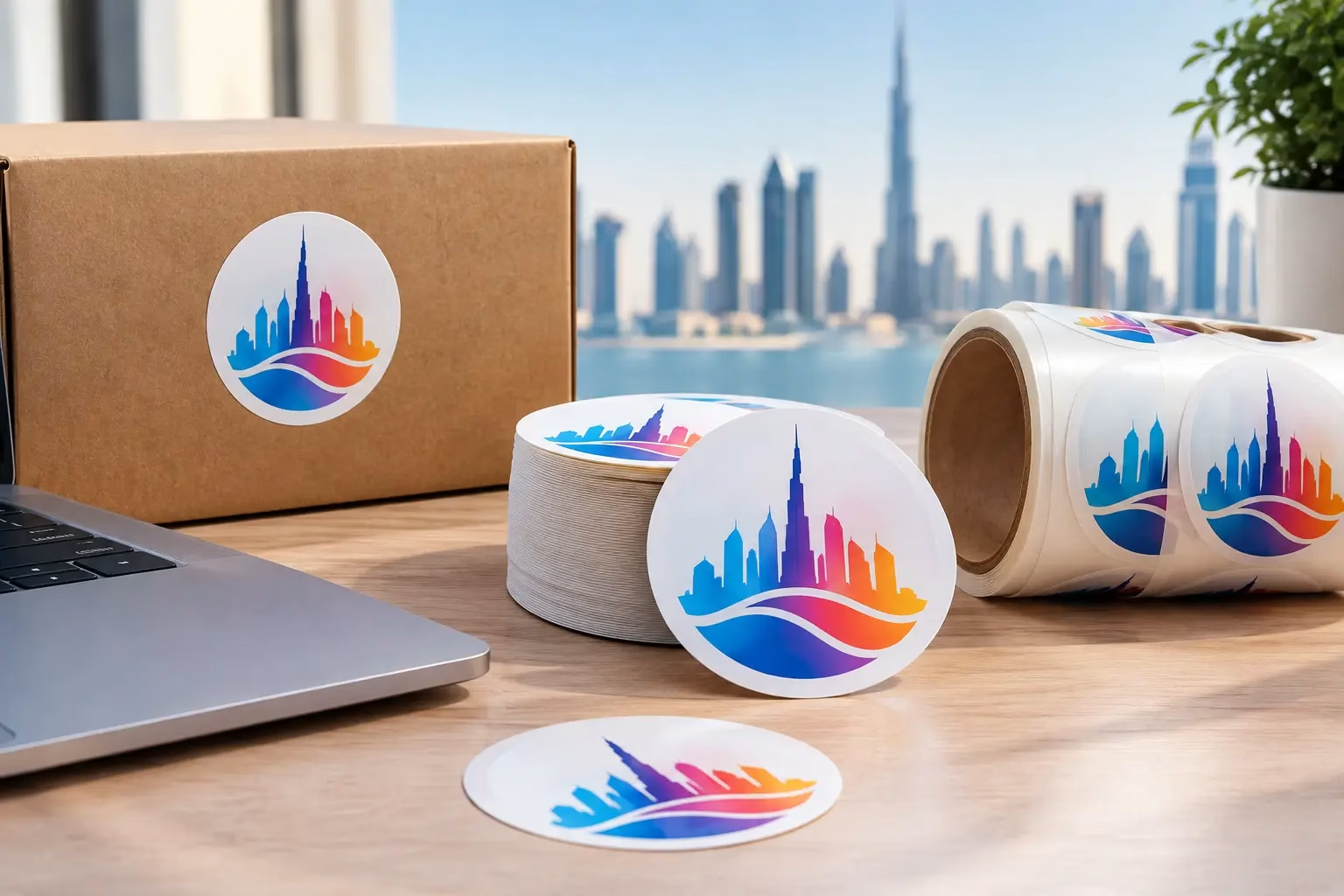
Get Round Sticker Printing in Dubai for product labels, events, and promotions. Choose durable materials, sharp color, custom sizes, and fast delivery.
WhatsApp us
Printing, corporate gifts and signage — tell us what you need and let AI help you find it.
Ask naturally. IWPrint AI can understand your product, quantity, budget and requirement.