
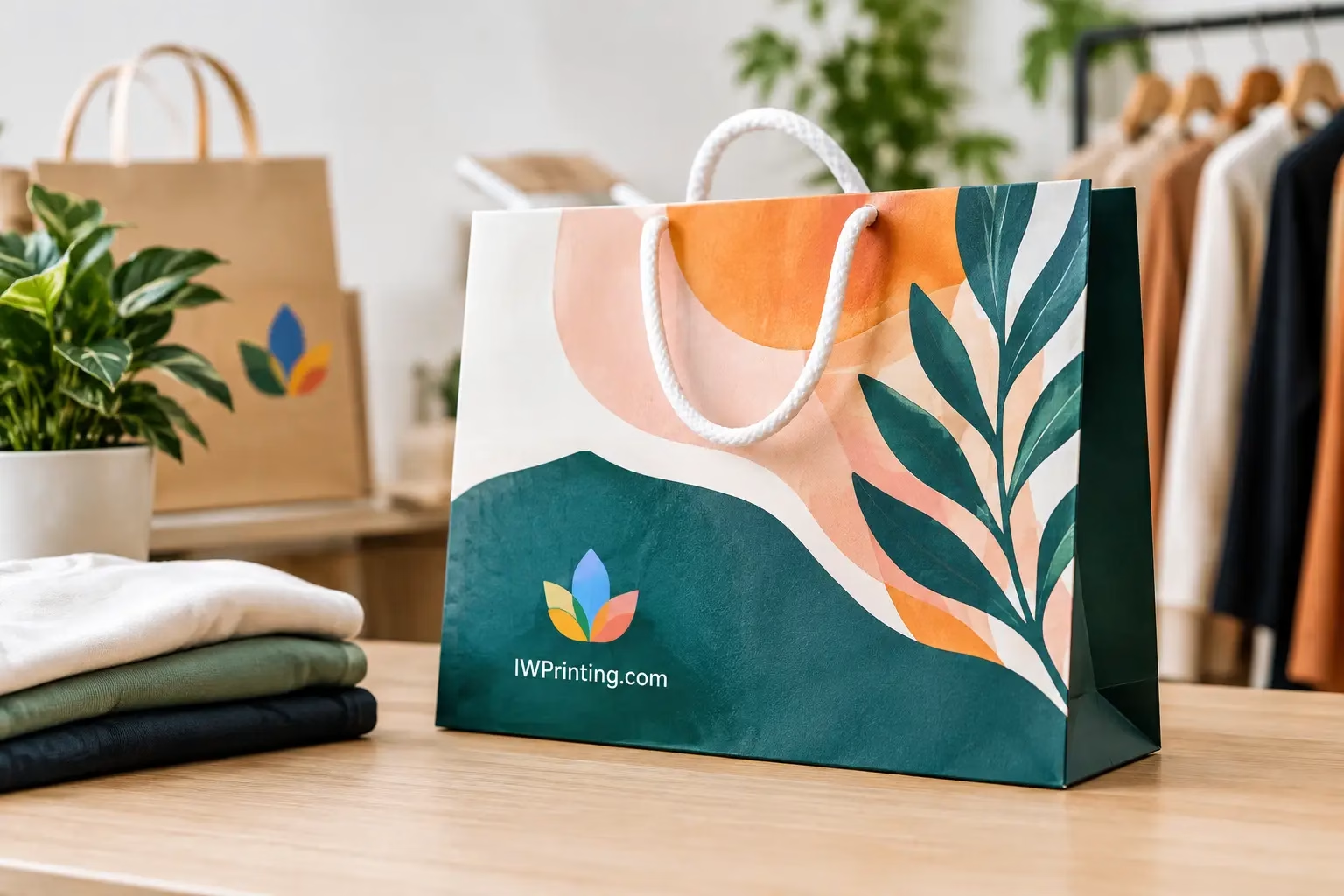
Shopping Bag Printing That Builds Brand Recall
Shopping bag Printing turns every purchase into brand exposure. Choose materials, sizes, finishes, and artwork that fit your product, budget, and customers.
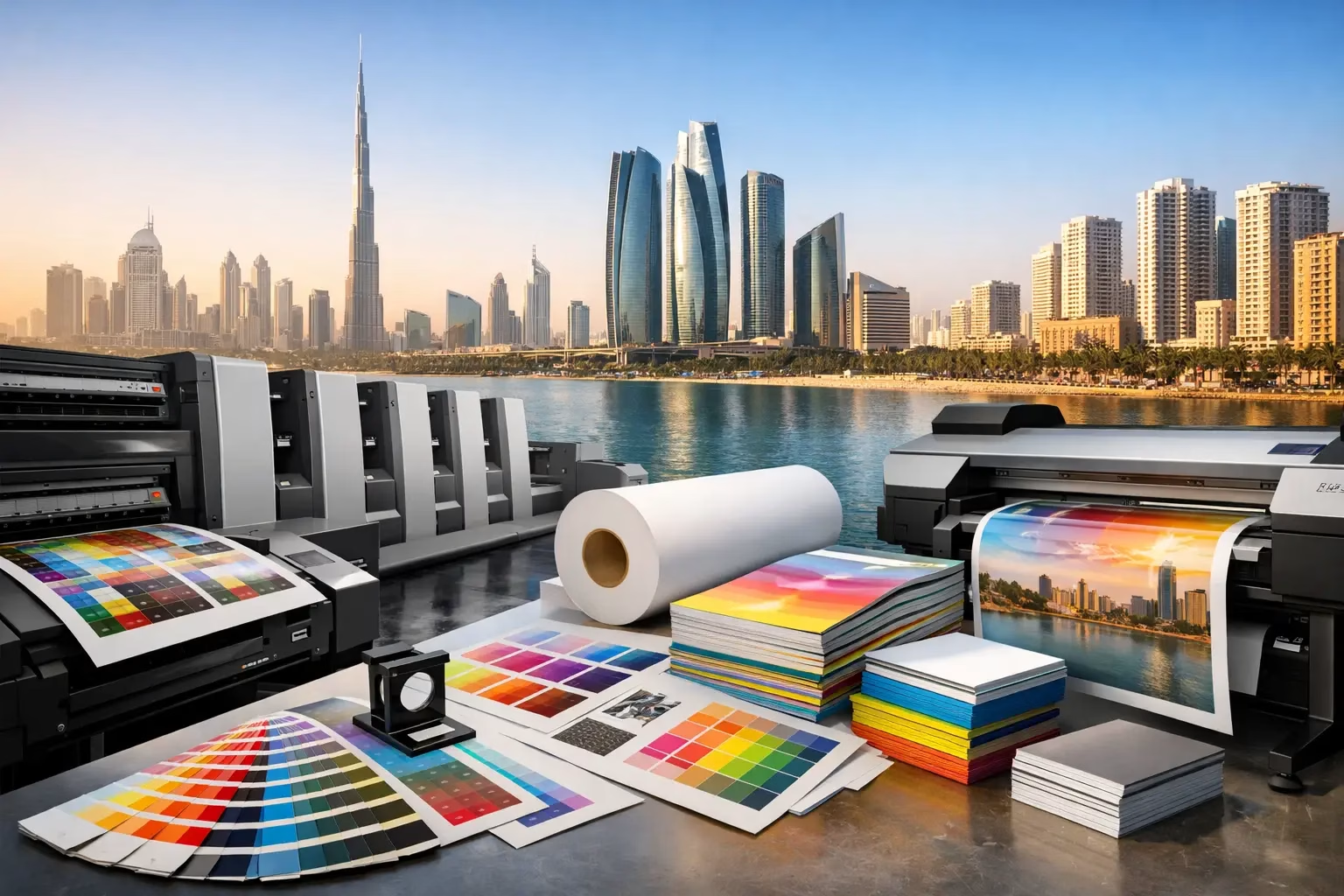
A restaurant in Dubai may need branded food packaging by Friday. A construction project in Abu Dhabi may need safety signs installed before handover. A retail launch in Sharjah may require window graphics, display stands, and staff uniforms at the same time. That is why printing services across Dubai, Abu Dhabi, Sharjah & UAE need to be more than a transaction. Businesses need a production partner that can manage different products, deadlines, locations, and specifications without creating extra work for their team.
For growing brands, printed materials are not separate purchases. A business card, storefront sign, event backdrop, product label, and corporate gift all shape how customers recognize and trust the company. The best results come from planning these touchpoints together while choosing materials and production methods that fit the job.
Price matters, but the lowest quote is rarely the full cost of a print project. A banner that fades quickly, a sign with weak mounting, labels that peel in chilled storage, or packaging that arrives late can cost far more than the initial savings. Reliable printing starts with clear specifications, suitable materials, accurate color production, and a realistic timeline.
Businesses operating across the Emirates also benefit from one point of contact for standard and custom requirements. Instead of coordinating separate suppliers for stationery, signage, promotional products, and exhibition graphics, they can keep brand colors, artwork, finishes, and delivery expectations consistent. This is particularly useful for companies opening multiple branches, running regional campaigns, or managing facilities in more than one city.
A capable provider should make routine orders easy while being ready for complex jobs. Reordering business cards or stickers should be straightforward. A custom acrylic reception sign, vehicle wrap, or exhibition booth should receive proper consultation, production planning, and installation support.
It is tempting to begin with a product name: brochures, flyers, banners, or signs. A stronger approach begins with the job the item needs to do. Is it meant to attract foot traffic, help a customer make a purchase, direct visitors safely, or keep your brand visible after an event?
For example, a menu handed to diners needs a finish that suits regular handling and possible spills. A short-term campaign poster can prioritize speed and cost. Outdoor signage needs weather-resistant materials, secure fabrication, and visibility at the intended viewing distance. The same design cannot simply be printed on every surface without considering where and how it will be used.
This thinking also helps control budgets. Use premium finishes where they will be noticed, such as presentation folders, invitation cards, luxury packaging, and reception signage. For high-volume promotional handouts, a practical stock and efficient size may provide a better return. The right choice depends on the audience, lifespan, location, and quantity.
Commercial print remains essential for organizations that want to look organized in every customer interaction. Business cards, letterheads, envelopes, company profiles, brochures, folders, notepads, certificates, forms, and catalogs give teams practical tools while reinforcing a consistent identity.
Paper choice and finishing deserve attention here. A thick business card can create a strong first impression, but it may not be necessary for a large networking event where volume is the priority. Matte lamination offers a refined look and reduces glare, while gloss can make photographs and bright colors stand out. Spot UV, embossing, and foil can add impact, though they increase production time and cost.
Before approving artwork, check trim size, bleed, safe margins, spelling, phone numbers, QR codes, and image resolution. A small proofreading step prevents expensive reprints and avoids a poor impression at the moment materials reach customers.
Signage is often the first physical interaction a customer has with a business. It must be clear before it is clever. Storefront signs, 3D letters, LED signs, acrylic displays, wall graphics, directional signs, roll-up banners, flags, and vehicle graphics all have different technical demands.
For indoor signs, appearance and finish may lead the decision. Acrylic, raised letters, frosted films, and wall graphics can create a polished office, clinic, or retail environment. For exterior signs, durability becomes equally important. Sun exposure, dust, wind, moisture, mounting surfaces, electrical requirements, and local approval processes can affect the recommended solution.
Viewing distance should guide text size and layout. A sign seen from a roadway needs fewer words and much larger lettering than a counter display viewed from a few feet away. Installation is also part of quality. Even a well-produced sign can look unprofessional if it is uneven, poorly secured, or placed without considering customer flow.
Product packaging has to work hard. It protects the item, communicates essential information, supports the brand, and influences the buying decision. For e-commerce sellers and retail brands, it can also turn delivery day into a repeat-purchase opportunity.
Custom boxes, paper bags, sleeves, labels, hang tags, and stickers can be tailored to product dimensions and order volume. Smaller quantities may favor digital print for speed and flexibility. Larger runs can make other production methods more economical, especially when the design stays consistent over time.
Labels need special care because their adhesive and material must match the surface and environment. A label for a cosmetic bottle, a refrigerated food container, a delivery carton, and an outdoor equipment tag will not have the same requirements. Share details about heat, moisture, friction, refrigeration, and handling before selecting a stock. This avoids problems after the products are already packed.
Events create compressed deadlines. A typical exhibition order may include a backdrop, booth graphics, counter wraps, brochures, branded giveaways, name badges, directional signs, and staff apparel. If these items are managed separately, one late piece can weaken the entire presentation.
Create a simple event production schedule that works backward from setup day. Finalize the booth dimensions first, then approve artwork, production files, fabrication, delivery, and installation. Leave time for revisions because venue requirements or brand approvals can change. It is also wise to carry a small set of spare printed materials, especially business cards, brochures, and labels.
For recurring exhibitions or corporate events, keep approved artwork and specifications organized. Easy reordering protects brand consistency and reduces the pressure of last-minute production.
When comparing printing services across Dubai, Abu Dhabi, Sharjah & UAE, ask whether the supplier can support the full scope of your requirement, not merely print one item. Their response should be specific about materials, sizes, finishing options, quantities, artwork requirements, production timing, and delivery or installation arrangements.
A dependable partner will also flag potential issues early. They may recommend a different material for an outdoor sign, adjust a design for a small-format label, or advise against an expensive finish that will not be visible in the final use. That guidance is valuable because it protects both the result and the budget.
For businesses that need a broad range of branded materials, IWPrinting.com brings commercial printing, signage, packaging, exhibition displays, corporate gifts, design support, installation, and nationwide delivery under one service-led process. This can simplify procurement for a one-time launch or an ongoing brand rollout.
Once a project is complete, save the approved files, material details, quantity, finish, and delivery notes. Record whether a sign used a specific acrylic thickness, whether a brochure had matte lamination, or whether a label was printed on a particular adhesive stock. These details make future orders faster and reduce variations between branches or campaigns.
It also helps to create a small brand print library with approved logos, color references, fonts, image assets, and layout templates. Teams can then order confidently while staying within brand guidelines. For franchises, multi-location retailers, and corporate groups, this discipline is often what separates a consistent brand experience from a collection of mismatched materials.
The most effective print projects begin with a clear objective, a usable timeline, and the right production advice. Whether you are preparing a single product launch or equipping locations across the UAE, choose materials and formats that will still represent your business well after the first customer sees them.
Shopping bag Printing turns every purchase into brand exposure. Choose materials, sizes, finishes, and artwork that fit your product, budget, and customers.
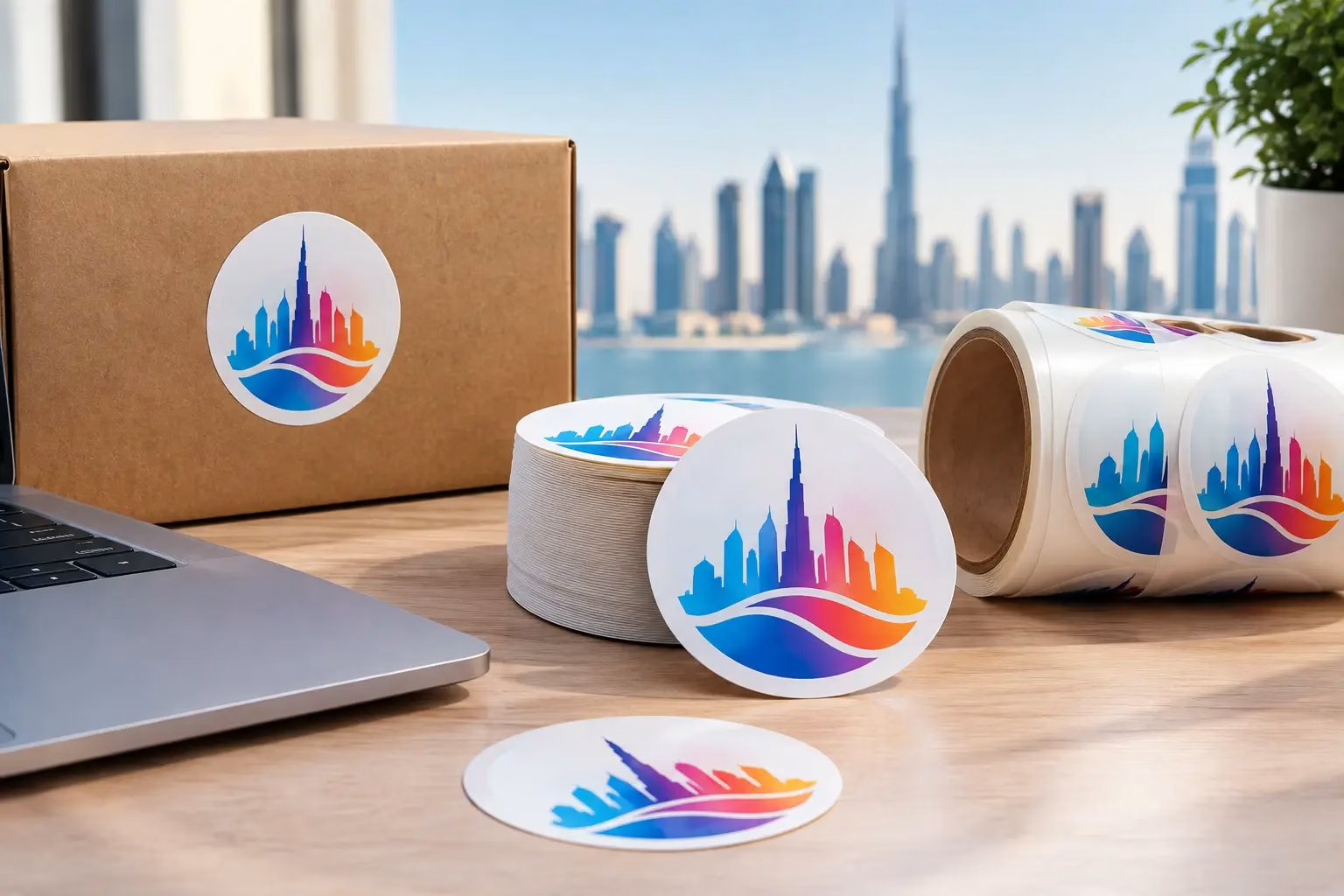
Get Round Sticker Printing in Dubai for product labels, events, and promotions. Choose durable materials, sharp color, custom sizes, and fast delivery.
WhatsApp us
Printing, corporate gifts and signage — tell us what you need and let AI help you find it.
Ask naturally. IWPrint AI can understand your product, quantity, budget and requirement.