
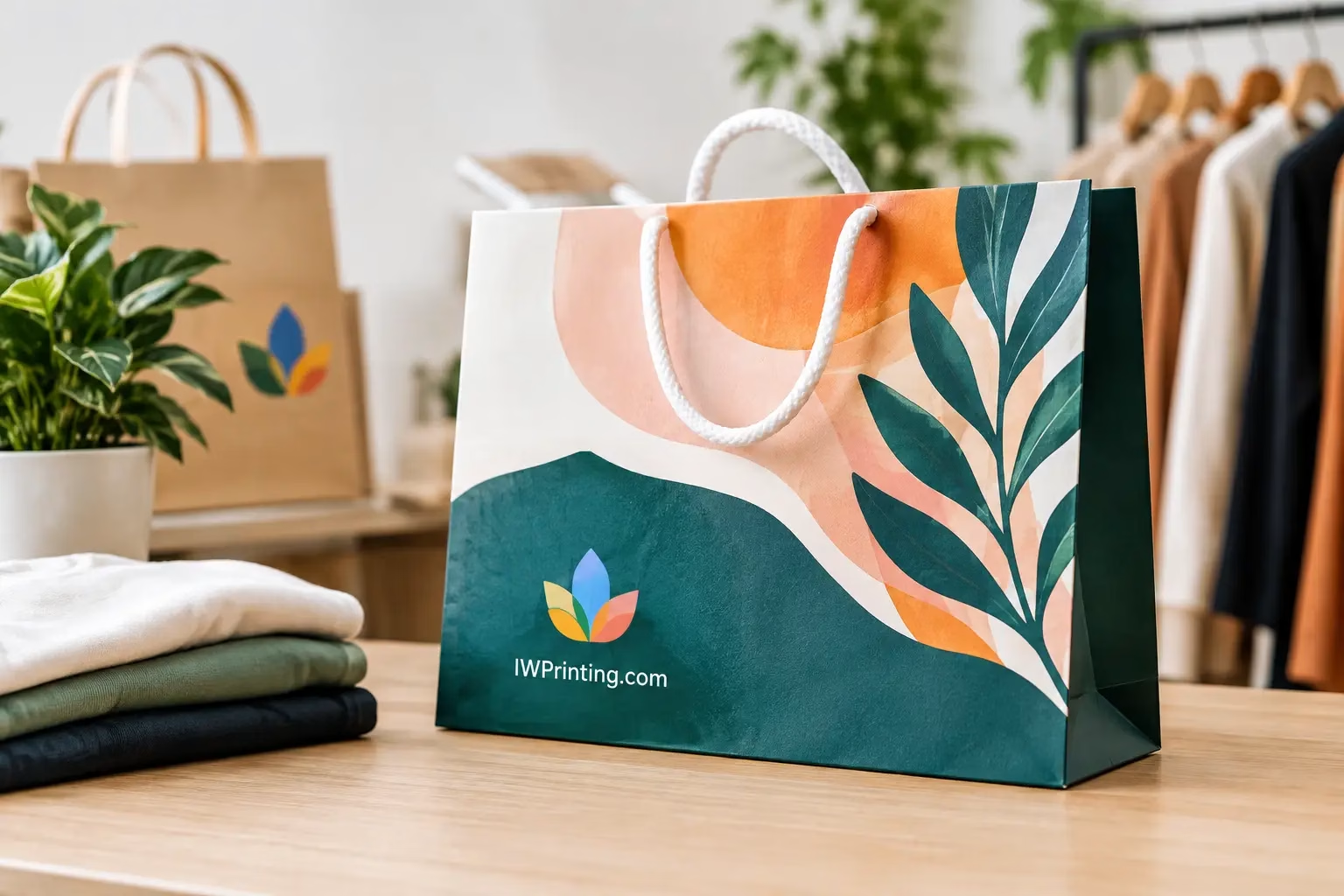
Shopping Bag Printing That Builds Brand Recall
Shopping bag Printing turns every purchase into brand exposure. Choose materials, sizes, finishes, and artwork that fit your product, budget, and customers.
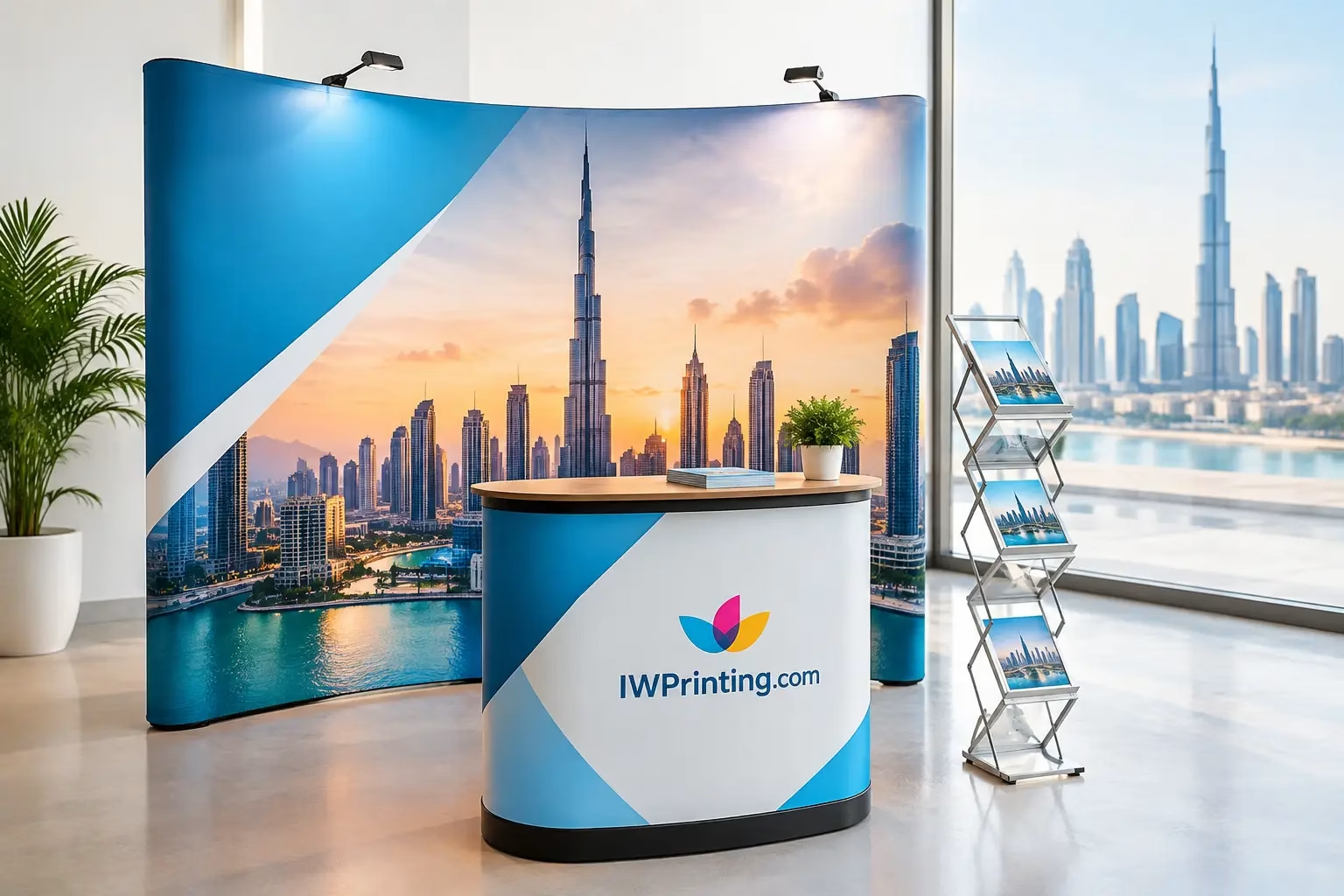
A busy exhibition hall gives visitors only a few seconds to decide which stand deserves their attention. Your display needs to make the brand, offer, and next step clear before a salesperson starts the conversation. That is why popup stand printing in Dubai is a practical choice for exhibitors, retailers, event teams, and corporate marketers who need a large branded backdrop that travels well and looks professional.
A popup stand is not simply a large printed panel. It is a portable display system made of a folding frame, printed graphic panels, magnetic bars or fittings, and often a carry case that can convert into a counter. The right specification can support repeated campaigns and events. The wrong one can create glare, weak branding, difficult transport, or artwork that is hard to read from a distance.
Popup stands give a compact booth an immediate visual center. They help businesses establish presence at trade shows, product launches, conferences, mall activations, school events, recruitment drives, and press backdrops without building a custom stand from scratch.
The main advantage is scale. A well-designed curved or straight popup stand creates a broad, uninterrupted brand area that is more visible than a single roll-up banner. It can frame a reception desk, support a product demonstration, or serve as the background for event photographs. For companies attending multiple events each year, the frame can often be retained while replacement graphics are produced for a new campaign.
That said, a popup system is best suited to indoor or covered environments. For outdoor campaigns, wind, uneven ground, and weather exposure call for a different display solution with stronger anchoring. Choosing the display based on the venue avoids paying for a format that does not match the job.
Start with the purpose of the display, not just the available wall space. A stand used behind a sales team at an exhibition needs a different message from one used as a branded photo wall at a corporate event.
For exhibitions, a medium or large curved backdrop can create a more welcoming booth area and soften the edges of the display. Straight popup stands are often preferred for presentation backdrops, partner walls, and retail promotions because they sit neatly against a wall or within a defined floor plan. If your booth includes a counter, product shelf, TV screen, or literature rack, account for those items before finalizing the width.
A small popup stand can be a smart choice for startups, internal events, or campaigns where storage space matters. Larger systems make sense when the display is the main visual element and must be readable across an aisle. Bigger is not always better, however. A backdrop that overwhelms a small booth can leave no comfortable space for visitors or staff.
Consider how often you will use it. A one-time event may prioritize speed and cost. A display for regular exhibitions should prioritize durable hardware, protected packing, and graphics that can be replaced without purchasing an entirely new system.
Straight frames provide clean lines and maximum usable graphic space. They work especially well when your design includes grids, product images, technical diagrams, or copy that needs to align precisely.
Curved frames have a more inviting, dimensional look and can make a compact stand feel less boxed in. They are effective for lifestyle imagery and bold campaign visuals. The trade-off is that small text and rigid geometric elements need careful positioning so they do not appear distorted along the curve.
Traditional popup displays use printed graphic panels attached to a collapsible frame with magnetic strips. They deliver a polished, structured finish and are a familiar option for exhibition branding. Panel systems can require more care during packing so edges stay protected.
Fabric popup displays use a stretch fabric graphic that fits over the frame. They are lighter to handle and can reduce setup time, particularly for teams moving between venues. The fabric must be printed at the correct scale and tensioned properly to avoid wrinkles. The best option depends on the finish you want, how frequently the stand will travel, and whether artwork changes often.
Large-format printing cannot rescue an overcrowded design. A popup stand should communicate the essential message from several steps away: who you are, what you offer, and why visitors should engage. Save detailed service lists, specifications, and long company descriptions for brochures, screens, or a conversation with your team.
Use a strong logo position, one clear headline, high-resolution images, and a focused call to action. For example, an event display might feature a product category, a QR code for lead capture, and a short statement such as “Custom Packaging for Retail Launches.” It does not need to display every service your business provides.
Keep key content away from panel joins, frame edges, and the lower area that may be hidden by furniture or visitors standing in front of it. A professional print partner should provide an artwork template or confirm the visible area before production. This is especially useful when a design includes faces, product packaging, small icons, or text near the edges.
Color consistency matters when the popup stand appears alongside brochures, counters, flags, vehicle graphics, or branded giveaways. Supply approved brand colors, logo files, and image assets wherever possible. Screens can make colors look brighter than their printed result, so a color check is worthwhile for brand-sensitive campaigns.
Event deadlines are fixed, and last-minute display orders leave little room for artwork revisions or production checks. Begin by confirming the event date, venue access time, booth dimensions, and whether your team will install the stand. This creates a realistic production schedule and helps avoid ordering a display that cannot be delivered or set up when needed.
When requesting a quotation, share the stand size, frame style, quantity, use case, artwork status, and required delivery date. If you need design support, provide your logo, brand guide, preferred copy, photos, and examples of the look you want. Clear input speeds up approval and reduces changes late in production.
Ask what is included. A complete order may cover the frame, printed panels or fabric graphic, carry case, lights, counter conversion kit, and delivery. These details affect the price and the practical value of the system. A lower initial price is not necessarily the better deal if essential hardware or protective packaging is excluded.
For businesses managing multiple branches or events across the UAE, repeatable specifications are valuable. Keeping approved artwork and display sizes on file makes reordering easier when a campaign moves from Dubai to Abu Dhabi, Sharjah, or another location.
A popup stand performs best when it is coordinated with the rest of the booth. Match it with a branded counter, roll-up banners, directional signs, flyers, product labels, uniforms, and promotional gifts. The goal is not to cover every surface with graphics. It is to create a consistent experience that makes the business look prepared and easy to remember.
Lighting deserves attention as well. Exhibition hall lighting can be uneven, and glossy surfaces may reflect overhead fixtures. Position lights to support the headline and main visual without creating glare. Before the doors open, step back into the aisle and check the view from the visitor’s perspective. If the logo is blocked by a monitor or the call to action is hidden behind a counter, make the adjustment early.
IWPrinting.com can support popup stand projects from artwork preparation and printing through production, delivery, and related event branding, helping teams keep the order process straightforward when deadlines are close.
A popup stand should earn its space by making the next conversation easier. Choose a size that fits the venue, use artwork built for distance, and order early enough to check every detail. When visitors can understand your brand before they reach your booth, your display is already doing useful work.
Shopping bag Printing turns every purchase into brand exposure. Choose materials, sizes, finishes, and artwork that fit your product, budget, and customers.
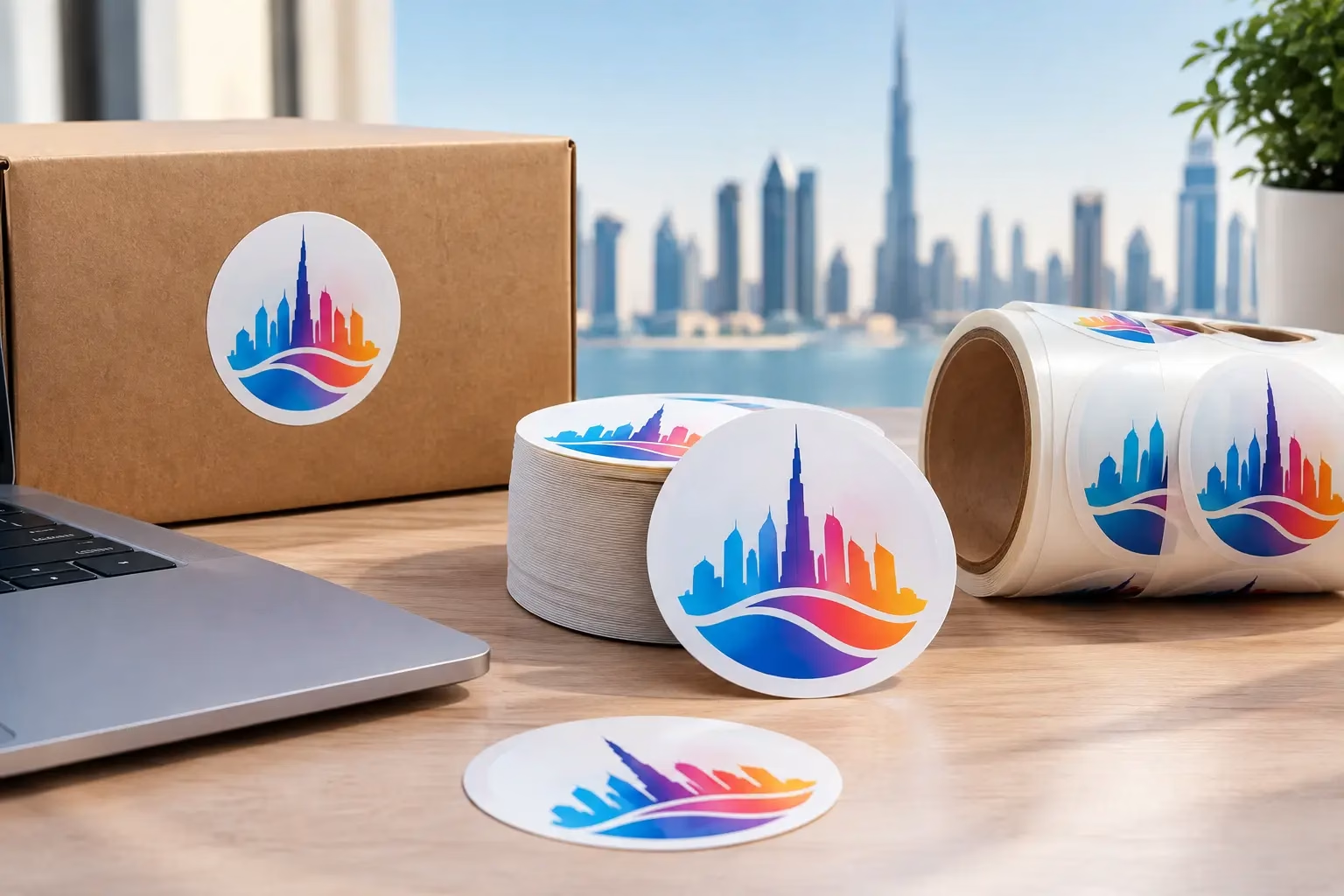
Get Round Sticker Printing in Dubai for product labels, events, and promotions. Choose durable materials, sharp color, custom sizes, and fast delivery.
WhatsApp us
Printing, corporate gifts and signage — tell us what you need and let AI help you find it.
Ask naturally. IWPrint AI can understand your product, quantity, budget and requirement.