
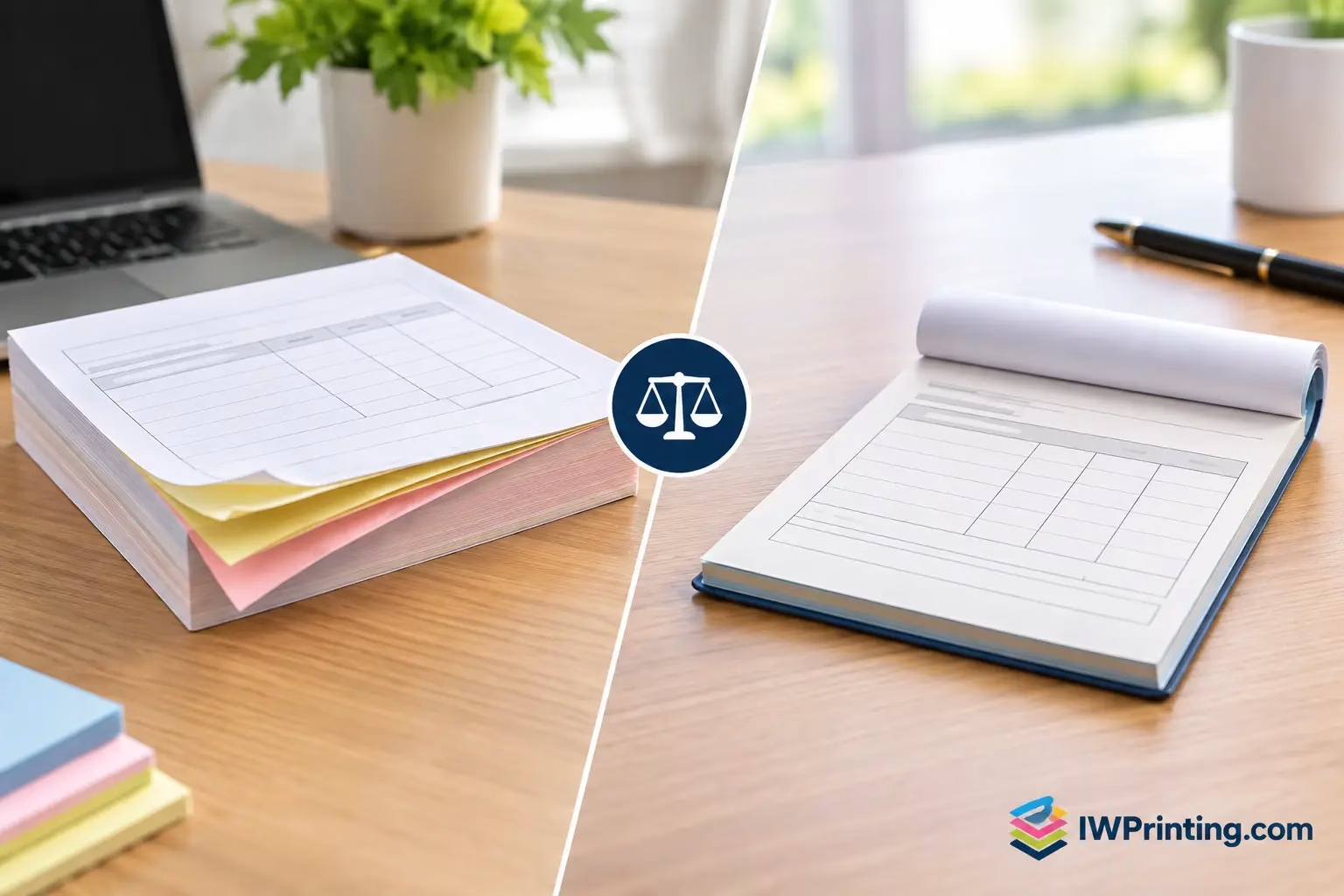
NCR Versus Receipt Books: Which Fits Your Business?
Compare NCR versus receipt books for invoices, orders, and payments. Choose the right format, copy count, and finish for clear daily business records.
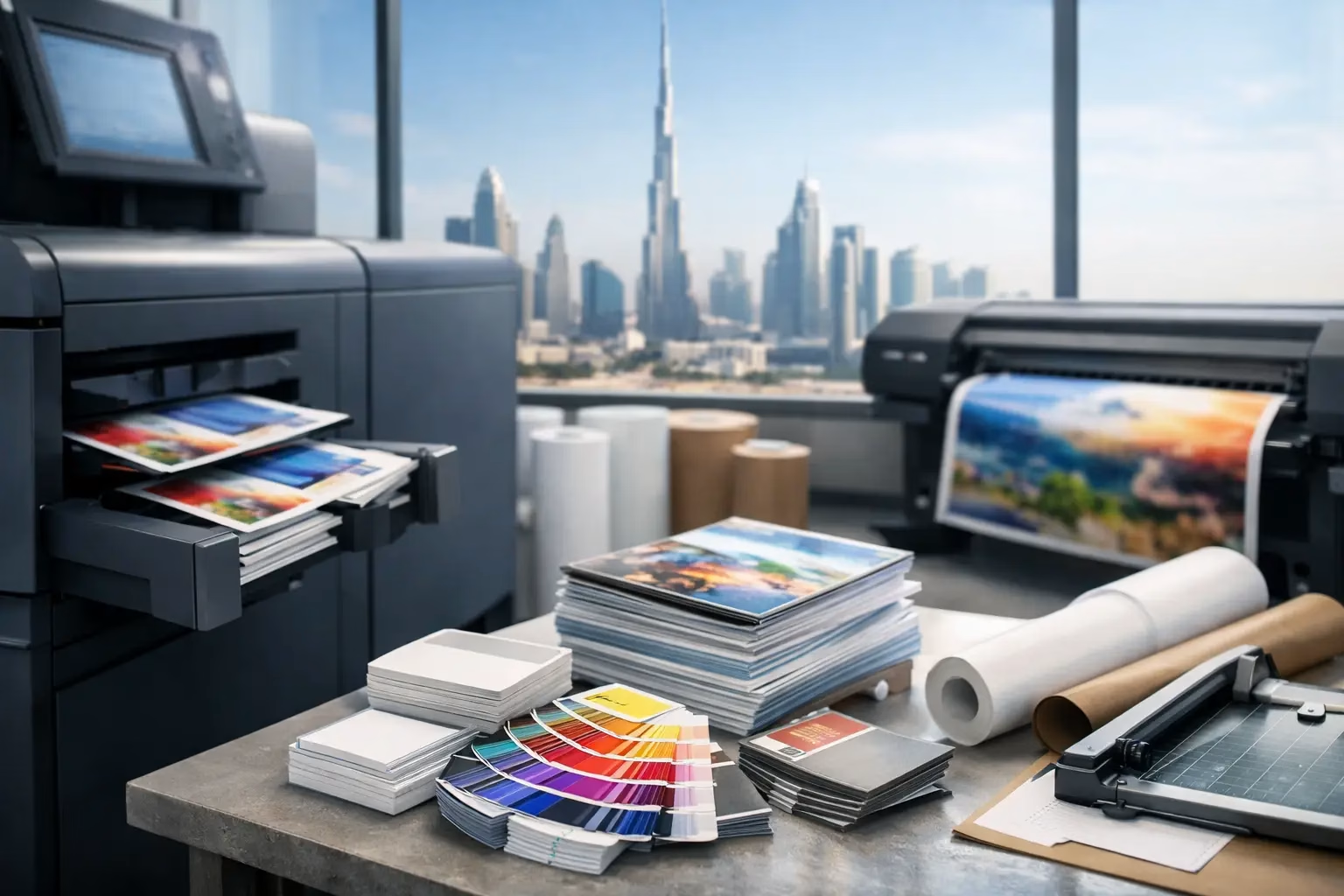
A printed item has one job: make your business look ready. A business card should feel credible in a prospect’s hand. A storefront sign should be readable before a customer reaches the door. Event graphics should hold up under bright lights, busy foot traffic, and tight deadlines. That is why choosing printing services in Dubai is not simply about finding the lowest unit price. It is about getting the right material, finish, color, production method, and delivery plan for the work in front of you.
For businesses that need to move quickly, a single dependable production partner can remove a surprising amount of friction. Instead of splitting business stationery, signage, packaging, exhibition graphics, and promotional products across multiple vendors, teams can manage their visual communication with clearer specifications and fewer handovers.
A capable print provider should support both the everyday materials that keep operations moving and the high-visibility pieces that help a brand get noticed. The mix matters because a company may need 500 letterheads one week, window graphics for a retail launch the next, and a fully branded exhibition stand shortly after that.
Commercial printing usually starts with business essentials: business cards, letterheads, envelopes, folders, brochures, flyers, menus, catalogs, vouchers, notepads, and presentation materials. These products may look straightforward, but details affect the result. Paper thickness changes how a card feels. Lamination protects frequently handled menus. Spot UV, foil, embossing, and die-cutting can add impact, though they also affect budget and production timing.
Large-format printing handles the work that must be seen from a distance or across a room. This includes banners, roll-up stands, posters, wall graphics, window stickers, floor decals, vehicle graphics, hoarding panels, backdrops, flags, and point-of-sale displays. Indoor graphics can prioritize sharp detail and finish, while outdoor applications need weather-resistant inks, suitable substrates, and installation methods designed for heat, dust, and exposure.
Signage deserves its own conversation. Acrylic signs, 3D letters, LED signs, directional signs, safety boards, reception signs, and retail displays all need more than a good-looking file. They require accurate site measurements, practical mounting choices, electrical planning where illumination is involved, and professional installation. A sign that is beautifully made but poorly positioned will not do its job.
Packaging and branded merchandise complete the customer experience. Custom boxes, paper bags, labels, stickers, sleeves, paper cups, apparel, corporate gifts, trophies, and awards give businesses more ways to remain memorable after a meeting, purchase, or event. The best choice depends on use. A luxury gift box may need rigid board and a premium finish, while a high-volume takeaway package may need efficient, food-safe, cost-conscious production.
Buyers often begin with a request such as “we need flyers” or “we need a sign.” A stronger brief starts with what the item needs to achieve. Is the flyer intended to drive walk-ins for a limited-time offer? Is the sign helping visitors find departments in a large office? Is the packaging meant to protect a product during delivery, create a premium unboxing moment, or both?
This approach makes specifications easier to decide. A short-term promotion may work well with economical paper stock and standard finishing. A sales kit handed to senior clients may justify a heavier stock, custom folder, and carefully matched brand colors. For event materials, lightweight and quick assembly can matter more than a complex finish, especially when the team is traveling or working to a fixed setup schedule.
It also helps to define quantity honestly. Ordering too few items can create repeat setup costs and last-minute deliveries. Ordering too many can leave a business with outdated stock after a price change, rebrand, or campaign revision. The right quantity is usually a balance between unit cost, storage space, how quickly information changes, and the value of having materials available when needed.
Fast turnaround begins before the order enters production. Clear artwork reduces revision cycles, avoids preventable delays, and gives the print team a better chance of delivering exactly what was expected.
Use high-resolution logos and images, ideally in print-ready formats. Confirm final dimensions before designing, including bleed and safe margins for printed pieces. Keep important text away from trim lines, folds, holes, or curved edges. For signage and exhibition graphics, review the design at real viewing distance. Small text may look sharp on a laptop screen but disappear from three meters away.
Color needs practical expectations. Screen colors and printed colors are not identical, particularly when a design uses bright RGB shades or when the same artwork is produced on paper, fabric, vinyl, acrylic, and other materials. If brand color accuracy is critical, provide approved color references and ask for a proof or sample where timing allows. This is especially valuable for retail rollouts, corporate identity materials, and packaging that must match existing products.
A professional graphic design service is useful when the artwork is incomplete, supplied in a low-quality format, or needs adapting across multiple sizes. Rebuilding a logo, creating a print layout, or resizing a campaign for banners, stickers, and social-ready assets may appear minor, but getting it right early protects the production schedule later.
Price matters, particularly for recurring marketing materials and large campaigns. But comparing quotes only by the headline AED amount can lead to uneven results. Check whether the quote clearly states the material, thickness, size, print sides, finishing, quantity, artwork support, installation, and delivery. Two products with the same name can be very different once those details are specified.
For example, a vinyl banner quote may or may not include hems, eyelets, a stand, installation, or a suitable frame. A business card price may change with paper weight, matte or gloss lamination, rounded corners, foil, and delivery timing. A signage quote can vary significantly based on acrylic thickness, letter depth, lighting components, access requirements, and site installation.
Turnaround should be discussed in terms of the final approved artwork, not the first inquiry. Production cannot reliably start while files, quantities, finishes, or installation details are still changing. If a deadline is fixed, share it at the beginning. A good provider can recommend options that fit the available time rather than promising a finish that needs longer than the schedule permits.
Signage, office branding, retail fit-outs, and exhibition work need project thinking. They combine design, fabrication, logistics, and installation, often with site rules or limited access windows. Treating them like a standard print order can create avoidable surprises.
Before confirming production, establish the installation location, exact measurements, wall or surface type, access conditions, required permits, power availability for illuminated signs, and completion deadline. For exhibitions, confirm organizer regulations, booth dimensions, loading times, height limits, and whether graphics must be reusable for future events.
There is also a trade-off between custom impact and future flexibility. A fully fabricated display can create a strong premium presence, while modular backdrops, roll-up banners, and portable counters are easier to store, transport, and reuse. Neither option is automatically better. The right choice depends on how often the brand exhibits, the size of the space, and the intended lifespan of the display.
Once a business has approved its essential items, consistency becomes more valuable than repeated reinvention. Keep final artwork, approved specifications, quantities, finishing notes, and delivery details organized. This makes it easier for marketing teams, office managers, procurement staff, and branch managers to reorder without guessing which paper, size, or version was used last time.
For multi-location brands, standardization protects the customer experience. The same reception sign style, menu format, packaging label, staff badge, or promotional gift should represent the business consistently whether it is used in a Dubai showroom, an Abu Dhabi office, or at an event elsewhere in the UAE. Centralized production also gives teams greater control over brand files and quality checks.
IWPrinting.com supports this kind of end-to-end work with online ordering for standard products and tailored quotations for custom printing, signage, packaging, exhibition, and installation projects. That combination is useful when a business needs routine items quickly but also wants one experienced partner for more complex brand rollouts.
The next time a print requirement lands on your desk, begin with the customer moment it needs to create. Then choose the format, material, quantity, and finishing that make that moment clear, durable, and worth remembering.
Compare NCR versus receipt books for invoices, orders, and payments. Choose the right format, copy count, and finish for clear daily business records.
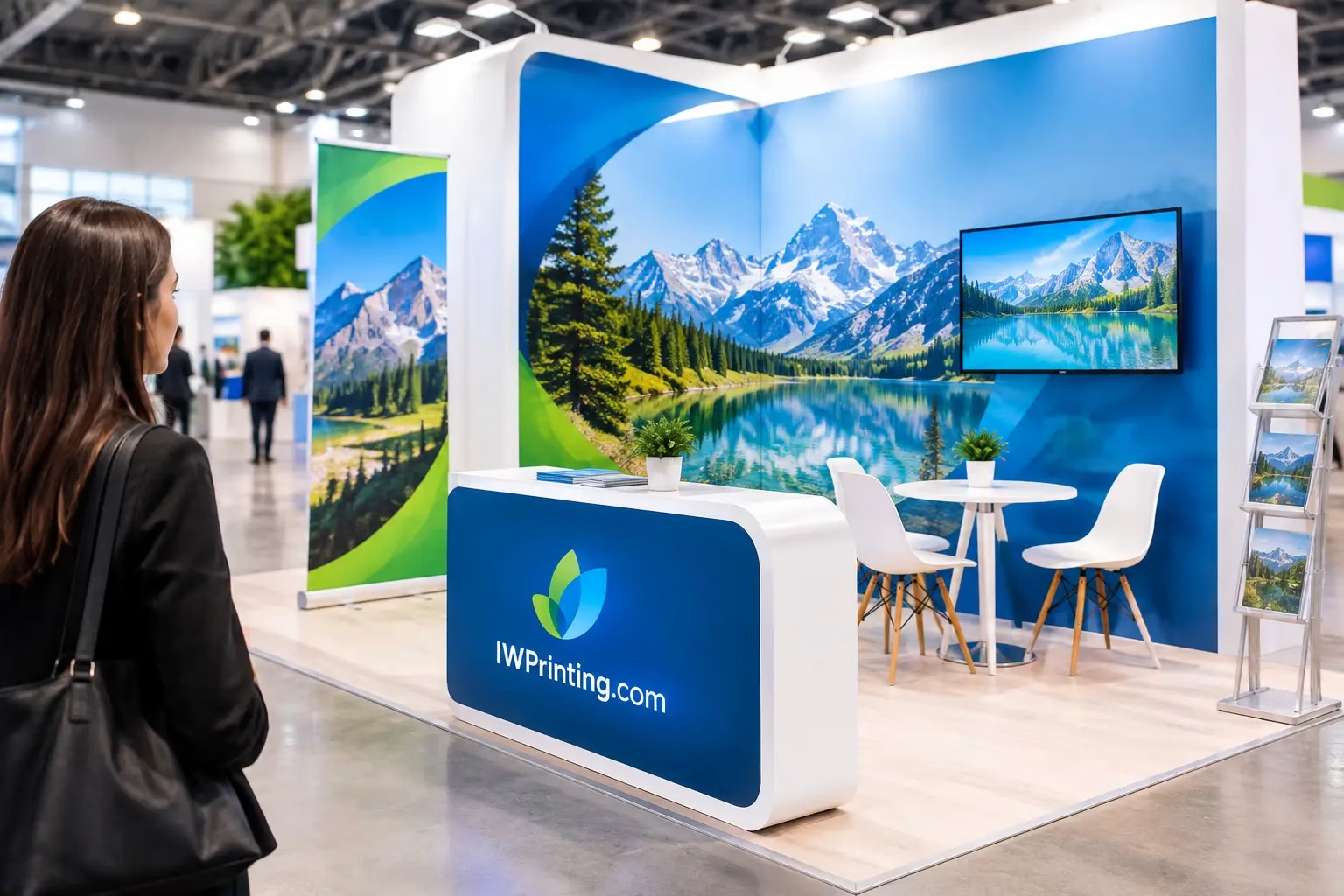
Learn how to plan exhibition signage that guides visitors, elevates your brand, and fits your booth, budget, timeline, and event goals with confidence.
WhatsApp us
Printing, corporate gifts and signage — tell us what you need and let AI help you find it.
Ask naturally. IWPrint AI can understand your product, quantity, budget and requirement.