
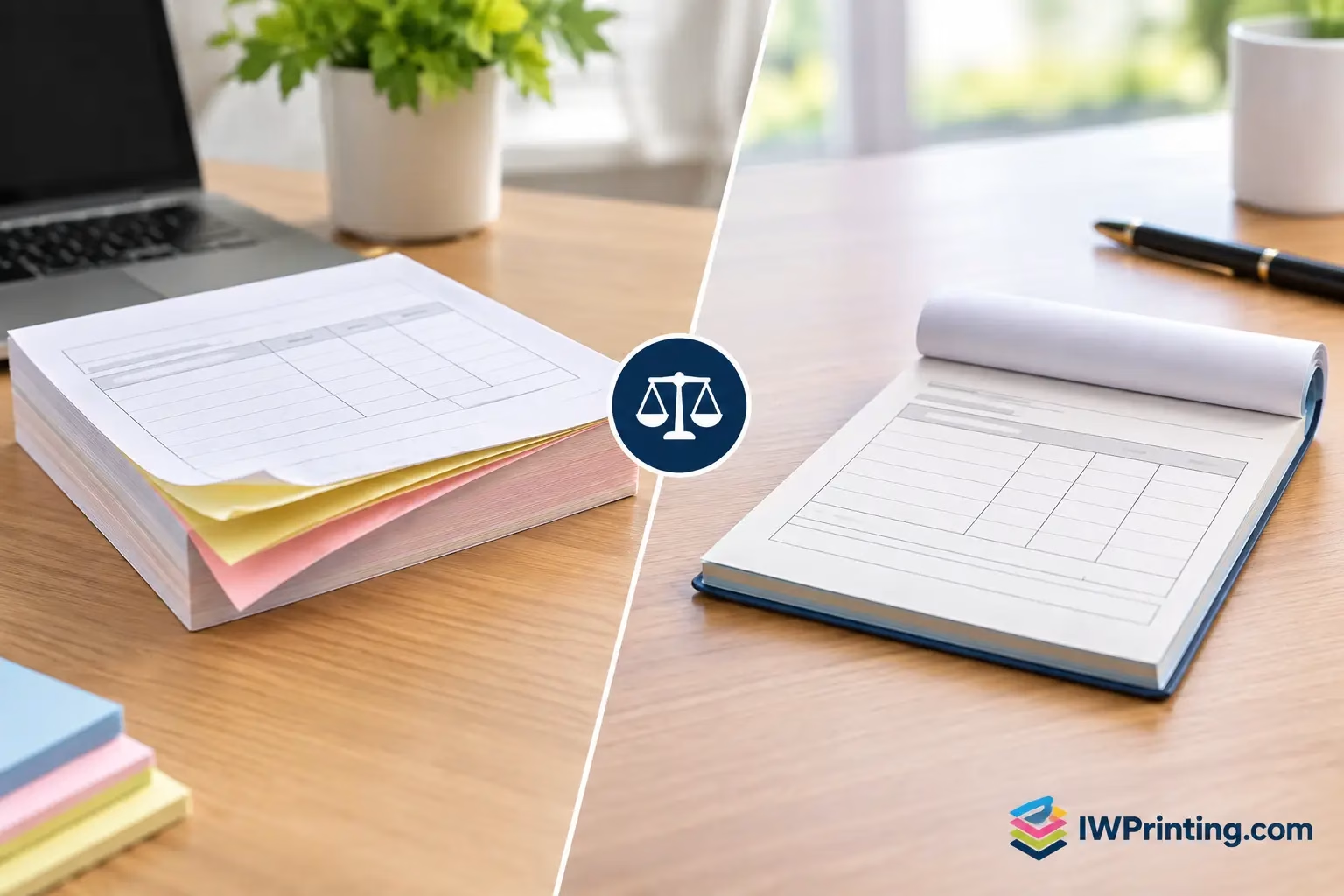
NCR Versus Receipt Books: Which Fits Your Business?
Compare NCR versus receipt books for invoices, orders, and payments. Choose the right format, copy count, and finish for clear daily business records.
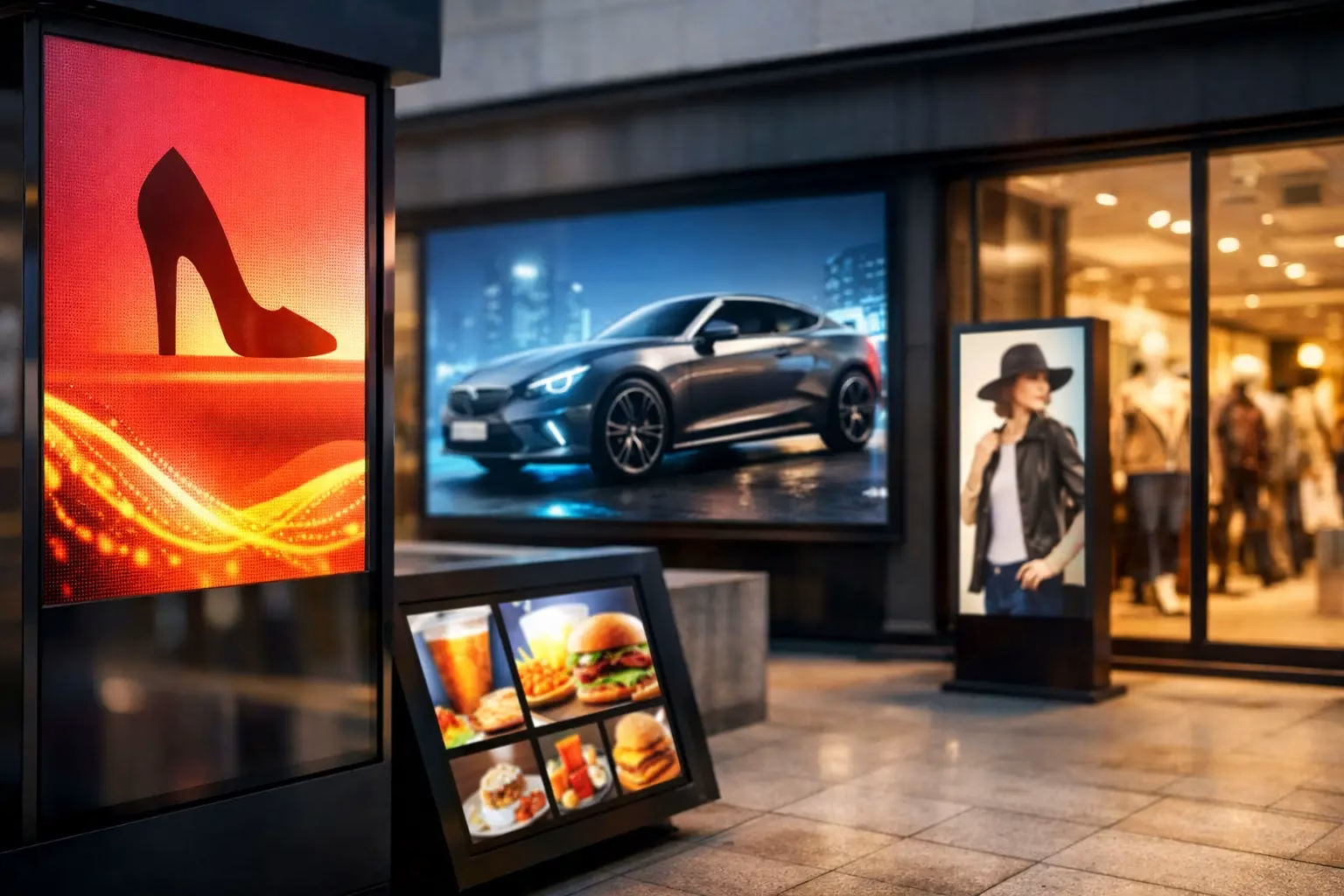
A storefront can have the right location, strong products, and helpful staff, yet still lose passing customers if its message is hard to see. LED signage & digital display solutions give businesses a practical way to stay visible after dark, promote changing offers, guide visitors, and present a more professional brand experience. The best result is not simply the brightest screen or largest sign. It is the display that works for the location, audience, message, and operating hours.
For a retail store, that may mean an illuminated 3D logo above the entrance and a window-facing screen for daily promotions. For a clinic, it may mean clear reception displays, wayfinding screens, and readable information that reduces confusion. For event organizers, it can mean high-impact LED walls that keep schedules, sponsors, and live content visible from a distance.
Before choosing screen size, pixel pitch, or sign materials, decide what the display needs to achieve. A sign intended to build brand recognition has different requirements from one designed to share live promotions or direct people through a facility.
Permanent brand signage needs consistency. Illuminated channel letters, acrylic signs with LED lighting, and fabricated logo signs are strong choices when the message will remain in place for years. The focus should be on legibility, weather resistance, color accuracy, and a finish that matches the business environment.
Digital displays are better when content changes often. Restaurants can update menu specials, retailers can feature new collections, real estate teams can rotate property listings, and corporate offices can share visitor information or internal announcements. The ability to change a message quickly adds value, but only when someone has a clear process for updating content.
It also helps to separate a display’s primary task from its secondary task. A reception screen may welcome visitors first and promote services second. A roadside LED sign must be readable first and visually impressive second. When every message competes for attention, none of them performs well.
Location determines much of the specification. Indoor displays do not need the same brightness, protection, or viewing distance as outdoor signs. Buying based on appearance alone can lead to poor readability, unnecessary cost, or a display that does not last in local conditions.
Outdoor LED signage must compete with sunlight, vehicle movement, dust, heat, and changing weather. Brightness is essential, but so is the sign’s construction. A properly built outdoor display needs a suitable weather-protection rating, secure mounting, protected wiring, and a maintenance plan that allows safe access when service is needed.
Viewing distance should guide the size of text and graphics. A sign seen from a moving vehicle needs short messages, large letters, high contrast, and limited animation. A busy visual with too many product images may look attractive up close but become unreadable from the road.
For many businesses, a combination works best: permanent illuminated logo signage establishes the location, while an LED display handles offers, operating hours, launches, or campaign messages. This approach gives the site a stable identity without making every update a production project.
Inside a mall, showroom, restaurant, hotel, or service center, displays are viewed at closer range. That makes image quality and content design more important. Fine text, product photography, menus, and motion graphics can work well, provided the screen resolution suits the viewing distance.
A high-resolution indoor screen costs more than a display meant to be viewed from far away. It is worth the investment near counters, waiting areas, menu boards, and product displays, where people stand close enough to notice detail. For a large feature wall viewed from across a lobby, a lower-resolution option may be more cost-effective without reducing impact.
Glare is another common issue. Screens placed opposite glass walls or strong downlights may need repositioning, brightness adjustment, or a different finish. A site survey before production prevents expensive changes after installation.
In functional environments, clarity matters more than visual effects. Digital directories, queue displays, room signs, safety notices, and information screens should use large type, plain language, and clear color contrast. The goal is to help people move confidently through the space.
Healthcare and education sites also need content governance. Assign responsibility for updating messages, checking schedules, and removing expired notices. A display with outdated information can damage trust faster than no display at all.
Digital display specifications can sound complicated, but a few factors have the greatest effect on performance and budget. Pixel pitch refers to the distance between LED pixels. A smaller pixel pitch creates a sharper image at close viewing distances, while a larger pitch can be appropriate for a display viewed from farther away.
Brightness should match the environment. Indoor screens generally need controlled brightness so they remain comfortable to view. Outdoor signs need much higher brightness to remain visible in daylight. More brightness is not automatically better, especially if it causes glare at night or affects nearby residents, drivers, or neighboring businesses.
Screen size should be based on the wall, viewing distance, and content format. A wide landscape screen is useful for menus, promotions, and video. A tall portrait display can suit mall entrances, elevator areas, and retail campaigns. LED walls can be built to custom dimensions, which is useful for unusual architectural spaces, but custom fabrication requires accurate measurements and installation planning.
Do not overlook the content player, power access, network connection, and control method. Ask how content will be uploaded, whether multiple screens can be managed from one place, and what happens if the internet connection drops. A reliable system should be straightforward for staff to operate without requiring technical expertise for routine updates.
A digital sign is not a brochure. People often see it while walking, waiting, driving, or deciding where to go next. Keep the message direct: one main idea per screen, a clear call to action, and enough display time to read it.
Use your brand colors, but prioritize contrast. Light text on a light background or thin lettering over a busy image will fail even on an excellent screen. Product images should be high resolution and cropped for the display’s orientation. If a campaign is designed for social media, it may need reformatting before it works on a large digital sign.
Motion should support the message rather than distract from it. Simple transitions, short product clips, and animated price highlights can draw attention. Fast flashing effects, tiny moving text, and constant visual changes usually reduce comprehension. For roadside applications, keep movement especially restrained and follow local requirements.
Plan a content calendar before installation. Decide which messages will run in the morning, during peak traffic, at weekends, or around seasonal campaigns. This turns the display into an active sales tool rather than a costly screen showing the same graphic for months.
The purchase price is only one part of LED signage. A realistic project budget includes design, fabrication, mounting structure, electrical work, installation access, content setup, permits where required, and future maintenance. An inexpensive display can become costly if it is difficult to service or installed without proper site preparation.
Quality components matter most when the display will operate for long hours or sit outdoors. Ask about the cabinet construction, power supply, cooling approach, warranty coverage, and availability of replacement parts. For illuminated letters and signage, also confirm the material thickness, lighting method, face finish, and mounting details.
There is no single best solution for every budget. A startup may get stronger returns from a well-designed illuminated storefront sign and one indoor promotional screen. A multi-location retailer may benefit more from centrally managed displays that keep campaigns consistent across branches. The right scope is the one that supports the business goal without adding technology that will not be used.
Installation quality affects safety, appearance, and long-term reliability. Cables should be concealed where possible, mounting should suit the wall or structural surface, and screens should sit at a useful height and angle. A beautiful display placed behind a queue barrier, too high above eye level, or in direct glare will not deliver its potential.
For larger projects, coordinate signage installation with fit-out work, electrical planning, and opening schedules. This reduces rework and helps ensure the finished space looks intentional from day one. Businesses in Dubai and across the UAE can also benefit from working with one production partner that handles design, fabrication, installation, and delivery, rather than coordinating separate suppliers.
IWPrinting.com helps businesses turn a signage requirement into a practical, professionally installed visual communication project. The most effective display is the one customers notice, understand, and remember – then gives your team an easy way to keep the message current.
Compare NCR versus receipt books for invoices, orders, and payments. Choose the right format, copy count, and finish for clear daily business records.
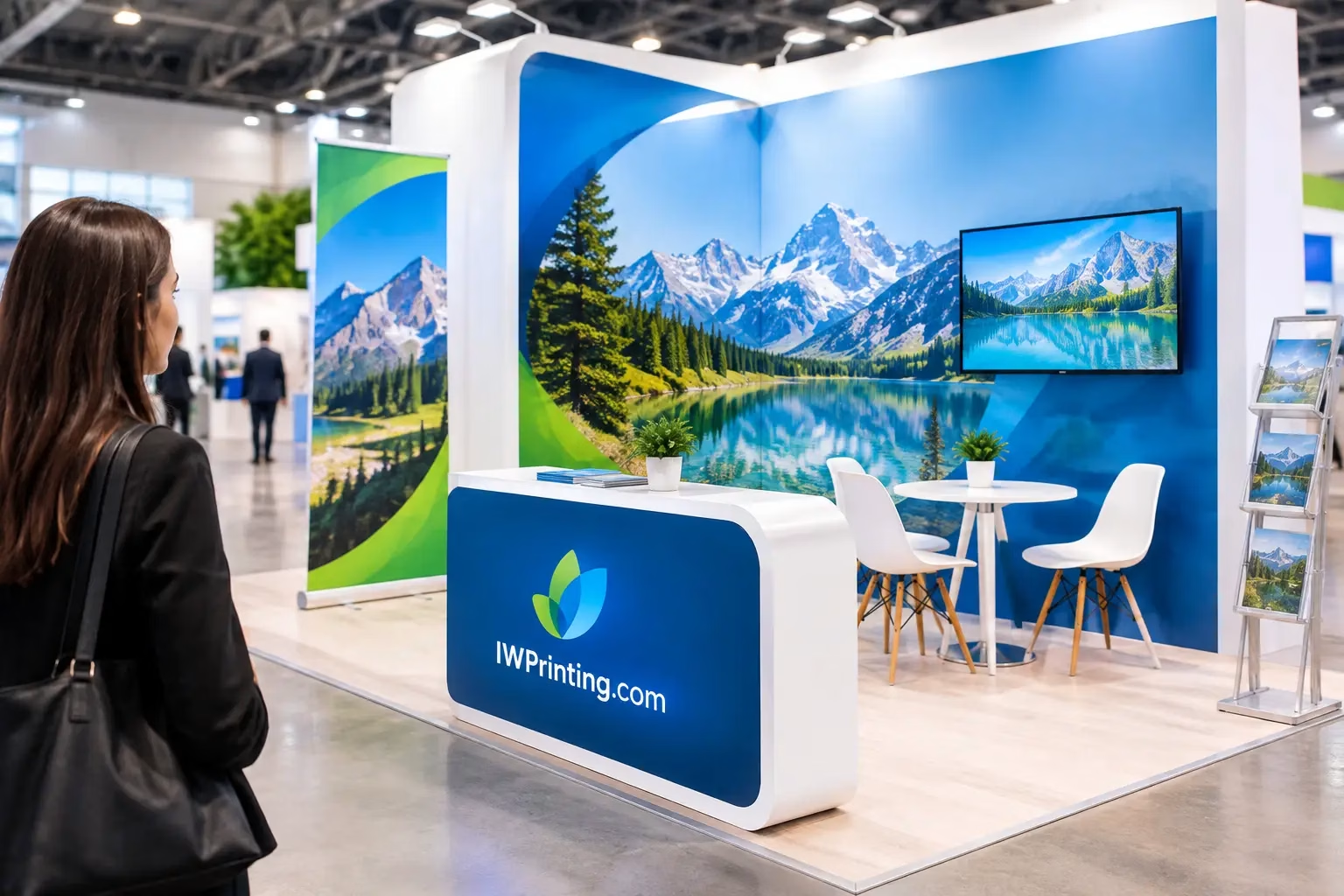
Learn how to plan exhibition signage that guides visitors, elevates your brand, and fits your booth, budget, timeline, and event goals with confidence.
WhatsApp us
Printing, corporate gifts and signage — tell us what you need and let AI help you find it.
Ask naturally. IWPrint AI can understand your product, quantity, budget and requirement.