
NCR Versus Receipt Books: Which Fits Your Business?
Compare NCR versus receipt books for invoices, orders, and payments. Choose the right format, copy count, and finish for clear daily business records.
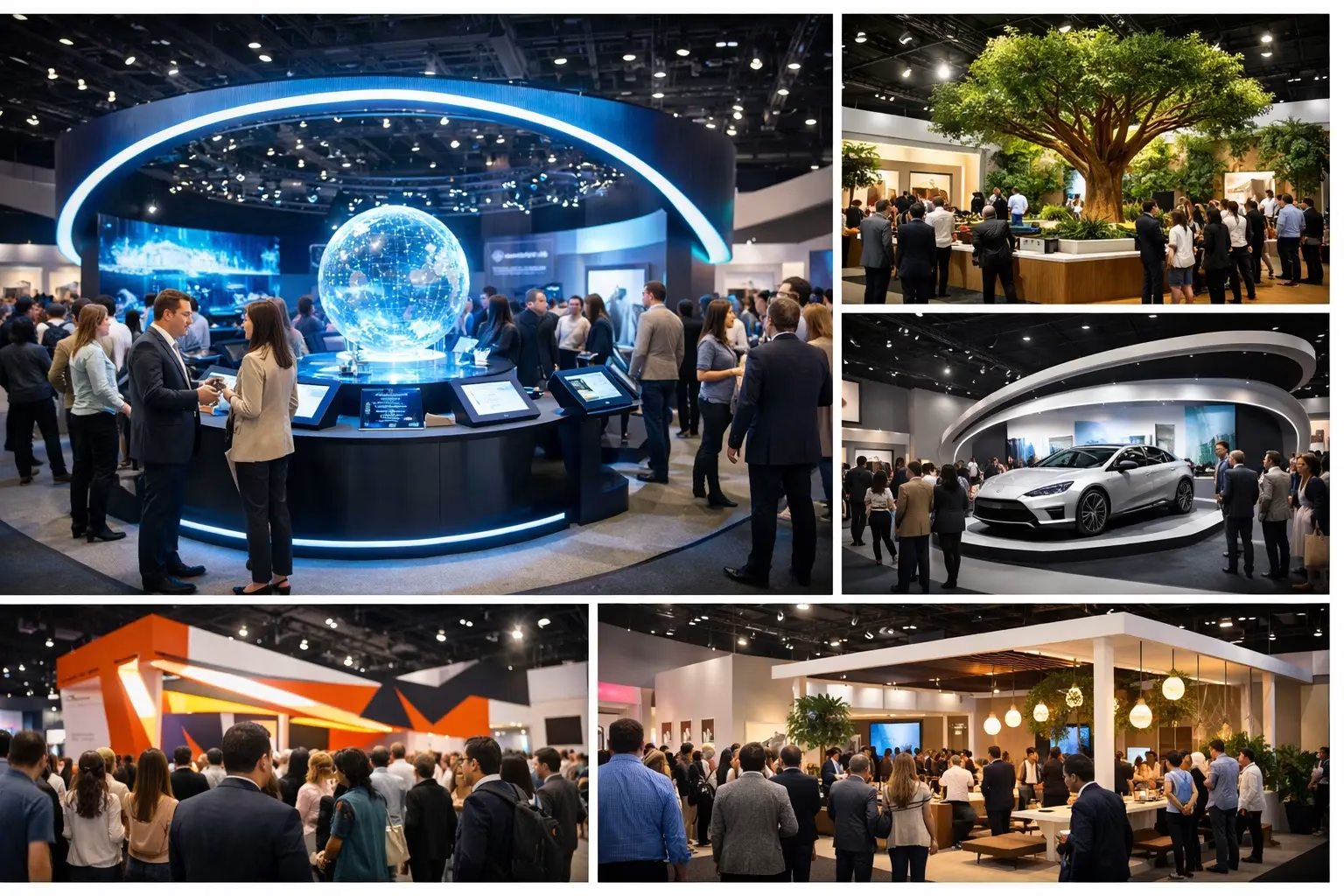
A busy exhibition floor gives visitors only a few seconds to decide where to stop. The best exhibition booth examples do not rely on decoration alone. They use clear messaging, strong visual hierarchy, practical display choices, and branded print materials that make it easy for people to understand what the business offers.
For a startup with one product, a compact branded counter may be enough. For a developer, retailer, manufacturer, or government organization, the right setup may need meeting space, product displays, digital screens, and large-format graphics. The goal is the same: create a professional space that starts conversations and supports measurable business results.
A pop-up booth is one of the most effective choices for businesses that need a smart presence without the cost or logistics of a custom-built stand. It usually combines a printed fabric backdrop with a branded counter, roll-up banners, and a brochure holder.
This format works well for service businesses, education providers, consultants, and companies attending smaller events. Keep the backdrop focused on one promise, not a full company profile. Add your logo, a short benefit statement, and high-quality images that show the result customers can expect.
The trade-off is limited space. A pop-up booth cannot display a large product range or seat multiple visitors comfortably. It is, however, easy to transport, quick to set up, and ideal when fast turnaround and budget control matter.
If customers need to see, touch, test, or compare what you sell, build the booth around a live demonstration. This is a strong choice for technology companies, consumer products, beauty brands, kitchen suppliers, equipment providers, and manufacturers.
Use a clear demo counter as the center point, with products arranged at reachable height. Back-wall graphics should answer the questions staff hear most often: what the product does, who it is for, and why it is different. Printed feature cards, price sheets, and QR codes can help visitors take the next step without relying on memory.
Avoid placing every product on the counter. Too many items make the space look like storage rather than a professional display. Show the best sellers or newest launch products, then keep catalogs or samples available for deeper conversations.
An open-corner booth has two exposed sides, making it easier to attract visitors moving through different aisles. These exhibition booth examples are especially useful when your location has good foot traffic and your team is ready to engage people from more than one direction.
A corner layout benefits from tall visuals that can be seen above surrounding booths. Use a large back wall for your main message, then place smaller branded elements on the open sides. Modular display systems, acrylic sign panels, lightboxes, flags, and freestanding 3D letters can give the booth greater visibility without filling the floor space.
The main planning consideration is visitor flow. Do not block either entrance with a table, product rack, or oversized counter. Leave room for people to enter, look around, and exit naturally.
Some exhibitions are less about instant retail sales and more about building high-value business relationships. Real estate firms, B2B suppliers, finance companies, healthcare providers, and corporate service brands often need a booth that makes meetings feel private and credible.
This setup typically includes a reception point, a visible branded wall, a semi-private seating area, and a compact refreshment or storage section. Frosted acrylic panels, partition walls, branded window graphics, and soft lighting can create separation without making the stand feel closed off.
Printed materials should be selective. A well-designed company profile, proposal folder, notepad, and branded giveaway can support a serious conversation better than a crowded rack of flyers. If visitor data is a priority, give the reception team a simple method to register leads before they move into the meeting area.
A retail-style booth brings the visual discipline of a store into an exhibition hall. It is a natural fit for apparel, food and beverage, cosmetics, accessories, electronics, home products, and gift brands.
Use shelving, display plinths, product risers, and clear category signage to create an organized shopping experience. Product packaging should be part of the visual story, especially when the packaging carries strong colors, quality finishes, or useful information. A branded checkout-style counter can also work as a sampling point or lead collection desk.
Lighting matters more here than in most booth formats. Products need to look accurate and appealing, while reflective materials such as acrylic, metal, and gloss packaging need careful positioning to prevent glare. Test the visual balance before production, particularly for small text and product labels.
When a brand needs visibility across a major trade show, large-format graphics can turn a standard booth space into a strong visual landmark. Think printed fabric walls, oversized panels, floor graphics, hanging signs where permitted, illuminated lightboxes, and high-impact campaign photography.
This option is effective for product launches, major corporate announcements, hospitality brands, automotive companies, and businesses entering a competitive category. The key is not simply printing bigger graphics. The message must remain simple enough to read while walking past.
Choose one main statement and repeat the visual identity across every surface. Matching counters, banners, staff apparel, brochures, and digital screens make the stand feel planned rather than assembled from separate items. High-resolution artwork is essential, since enlarged low-quality images can weaken an otherwise premium presentation.
A booth with an interactive element gives visitors a reason to stop beyond receiving a brochure. This could be a touchscreen product selector, a prize wheel, a quick branded photo moment, a short quiz, a sample customization station, or a digital registration screen.
The interaction should connect directly to your sales objective. A prize draw may increase foot traffic, but it can also attract people with no interest in your service. A product finder or consultation quiz usually produces more useful leads because it helps visitors identify a real need.
Make the process quick. If it takes longer than a few minutes, visitors may walk away before staff can begin a conversation. Use branded signage to explain the activity from a distance, and prepare practical takeaways such as vouchers, product cards, or printed follow-up information.
Businesses with clear environmental commitments can reflect those values through reusable and considered exhibition materials. Modular frames, fabric graphics, reusable counters, recyclable printed pieces, and durable signage components are usually more practical than producing a completely new stand for every event.
Sustainability claims should be specific and honest. If elements are reusable, say so. If printed handouts are reduced in favor of digital follow-up, explain the visitor benefit as well as the environmental choice. The booth should still look polished – sustainable does not mean unfinished or plain.
This approach can reduce long-term event costs, particularly for brands that exhibit several times a year. It requires better upfront planning, since reusable systems need artwork and dimensions that can adapt to different venues.
Not every event provides a full exhibition space. Career fairs, community events, school open days, networking sessions, and small conferences may offer only a table. A table-top display can still look credible when the visual essentials are handled properly.
Start with a fitted tablecloth or table runner, then add a small backdrop, a branded pull-up banner, business cards, brochures, and one strong display item. A small product sample, award, tablet screen, or tabletop sign can provide a conversation starter.
The common mistake is treating the table as a place to spread every printed item. Keep materials tidy and refill them as needed. A clean table signals confidence and makes it easier for visitors to find the information they need.
For a flagship event, custom fabrication offers the freedom to create shapes, structures, and finishes that standard display systems cannot provide. Curved walls, built-in shelves, 3D logos, illuminated signage, custom counters, and branded architectural elements can make a booth feel like a temporary showroom.
This is best suited to businesses with a clear event strategy and enough time for design, production, transport, and installation. It can deliver a major brand impact, but it also requires careful budgeting and venue approval. A custom booth should be designed around visitor behavior, staff needs, storage, electrical access, and setup time, not only appearance.
Start with the action you want visitors to take. If you need product trials, choose a demonstration layout. If you need qualified appointments, prioritize meeting space. If brand awareness is the main goal, invest in visible graphics and an open layout that can be understood at a glance.
Then consider your event frequency, booth size, target audience, transport requirements, and budget. Reusable modular systems are often the sensible choice for recurring exhibitions, while custom fabrication can be worth the investment for a major launch or high-profile industry event. The right option depends on what the booth must achieve after the crowds have gone home.
A professional exhibition presence is built before event day – through accurate artwork, durable materials, clear production timelines, and installation planning. IWPrinting.com can help businesses turn a practical booth concept into printed displays, signage, branded materials, and event visuals that are ready to perform when visitors arrive.
Compare NCR versus receipt books for invoices, orders, and payments. Choose the right format, copy count, and finish for clear daily business records.
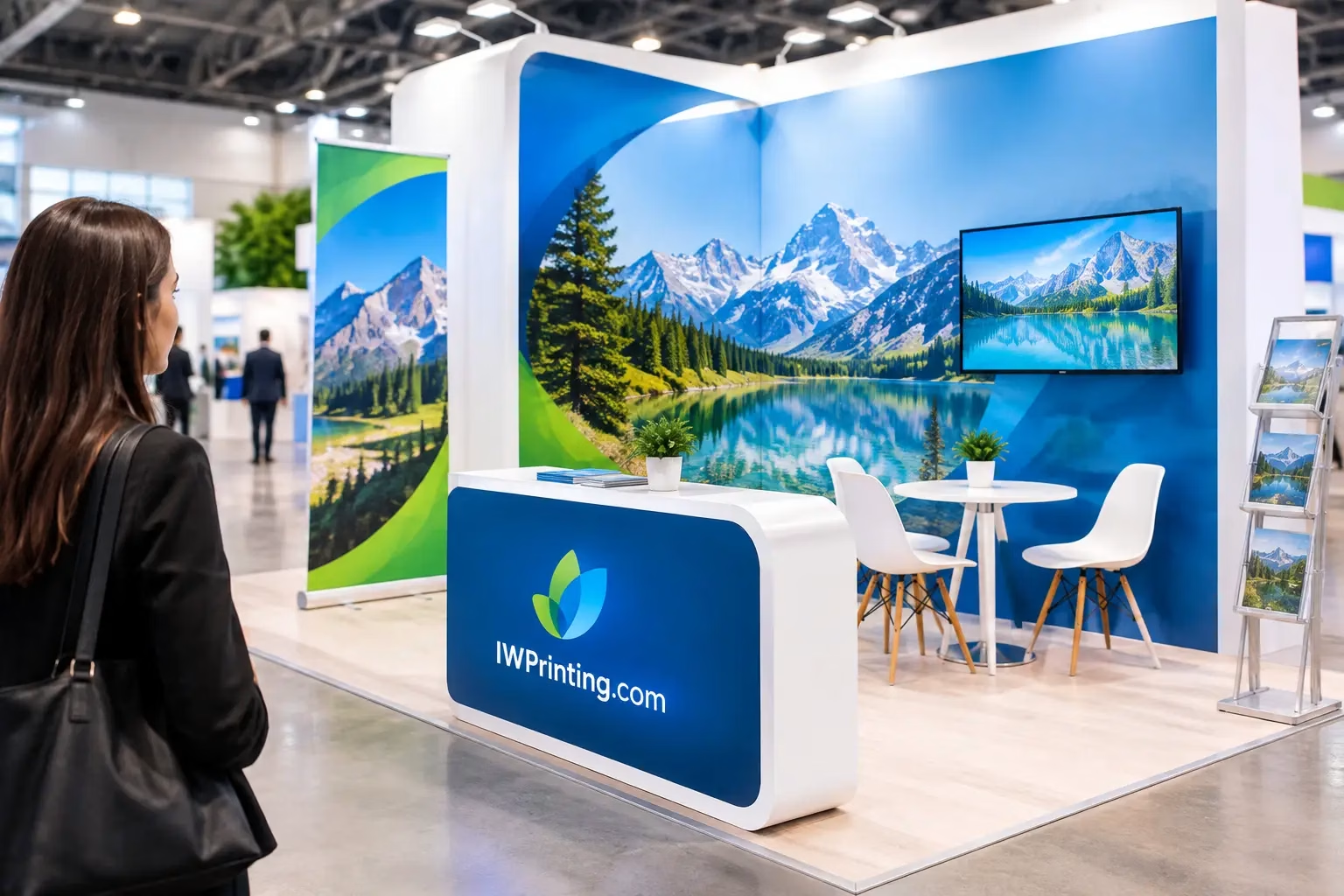
Learn how to plan exhibition signage that guides visitors, elevates your brand, and fits your booth, budget, timeline, and event goals with confidence.
WhatsApp us
Printing, corporate gifts and signage — tell us what you need and let AI help you find it.
Ask naturally. IWPrint AI can understand your product, quantity, budget and requirement.