
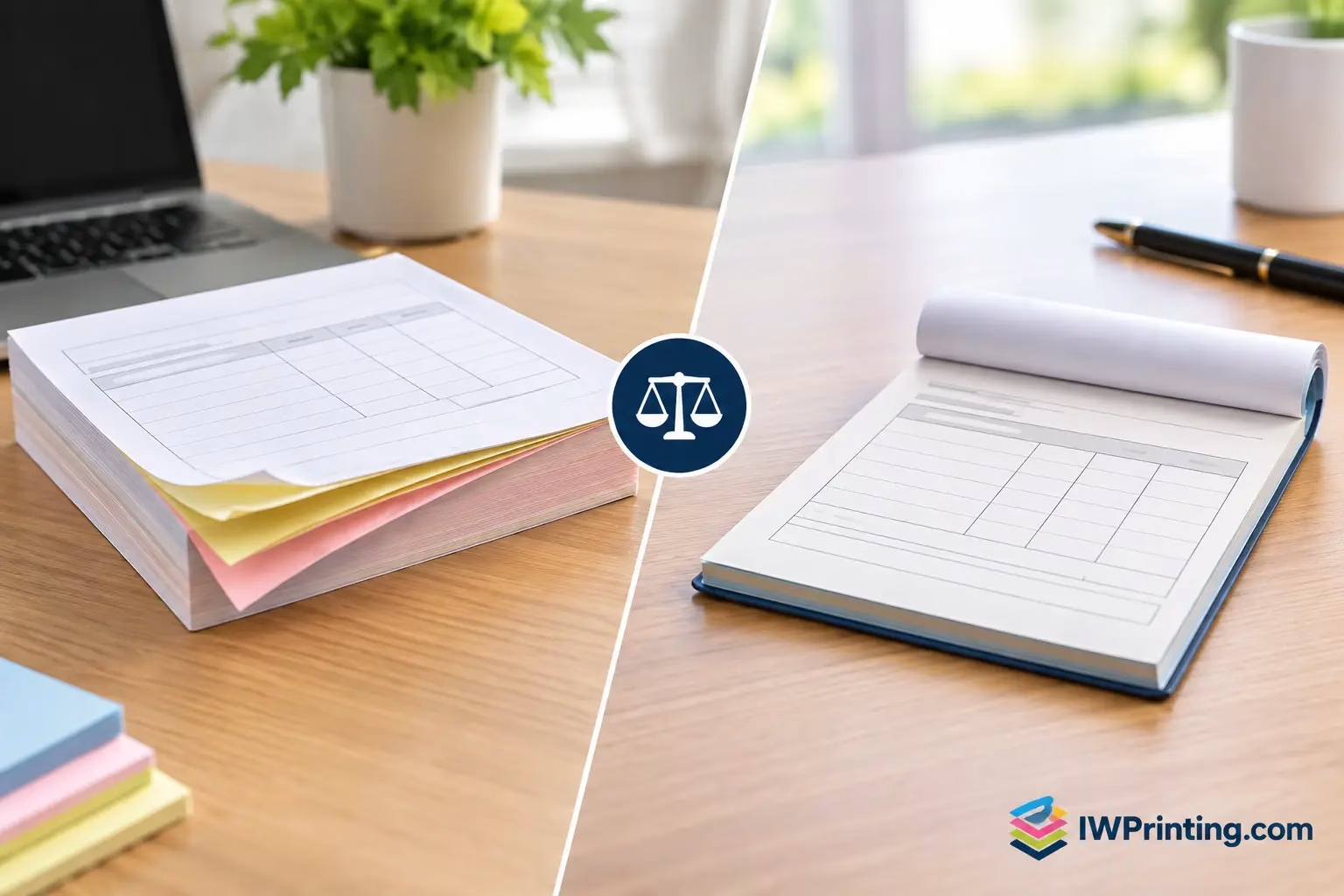
NCR Versus Receipt Books: Which Fits Your Business?
Compare NCR versus receipt books for invoices, orders, and payments. Choose the right format, copy count, and finish for clear daily business records.
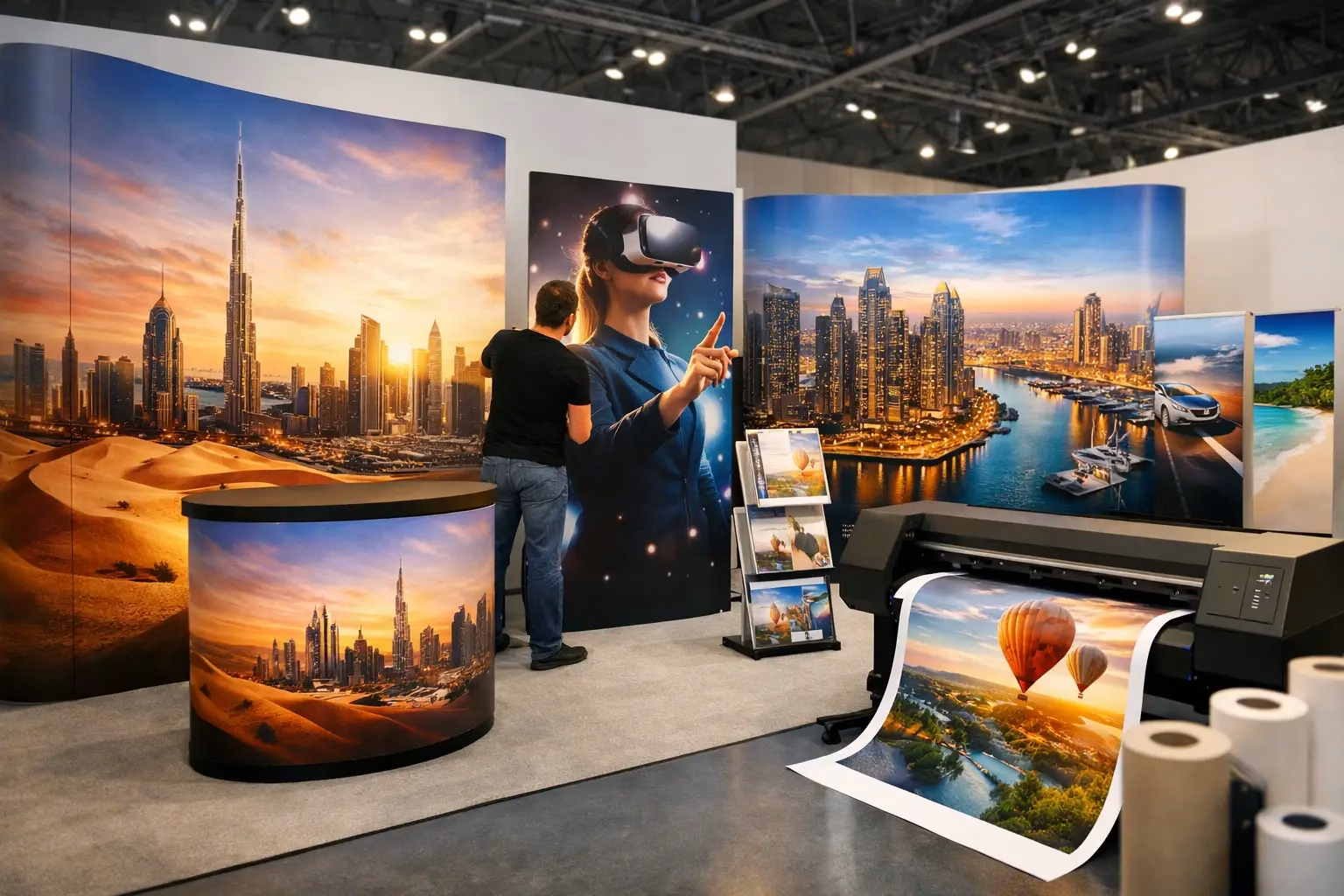
A busy exhibition hall gives visitors only a few seconds to decide whether your stand is worth a closer look. That is why choosing the best exhibition printing UAE providers can directly affect foot traffic, lead quality, and how professionally your business is remembered. A sharp booth backdrop, readable messaging, and well-produced handouts do more than fill a space. They give your sales team a credible platform to start conversations.
For businesses exhibiting in Dubai, Abu Dhabi, or elsewhere in the UAE, the right print plan should balance visual impact with practical factors: venue rules, stand size, setup time, transport, durability, and budget. The best choice is not always the largest banner or the most expensive material. It is the combination of exhibition products that makes your message easy to see, easy to understand, and easy to take home.
Exhibition printing works best when every item has a job. Large-format graphics should attract attention from across the aisle. Counter displays and product boards should explain your offer once visitors arrive. Brochures, catalogs, and business cards should give prospects something useful to keep after the event.
Start with the customer action you want from the stand. A new product launch may need a large product image, clear specifications, and a QR code for demonstrations. A service business may need bold benefit-led messaging, client logos, and a simple consultation or quotation prompt. If you are recruiting, employee stories and a clear application route may matter more than product photography.
The strongest exhibition stands usually follow a simple visual hierarchy. Your brand name and main message should be visible from a distance. Supporting points belong closer to eye level. Smaller details, including contact information, technical specifications, and QR codes, should be placed where visitors can comfortably read them. Trying to put every detail on one backdrop often produces the opposite result: people see nothing clearly.
A practical exhibition setup has three zones: stop, engage, and follow up. At the edge of the stand, flags, pop-up backdrops, fabric displays, and large banners help people notice you. Inside the stand, branded counters, roll-up banners, display boards, and wall graphics give your team a focused space to present products or services. For follow-up, printed brochures, folders, flyers, catalogs, and business cards help prospects remember the conversation.
This approach prevents a common problem: ordering individual print items without considering how they will work together. A premium exhibition counter can look disconnected beside a low-resolution backdrop. Likewise, a well-designed stand can lose impact if the brochures use different colors, outdated logo files, or inconsistent messaging.
Before approving artwork, check that the same logo version, color palette, typography, and campaign message appear across the full set of materials. Consistency builds trust quickly, particularly when visitors are comparing several suppliers in the same category.
Portable systems are a sensible choice for brands attending frequent events, roadshows, or smaller conferences. Roll-up banners, lightweight fabric backdrops, branded table covers, and modular displays pack down efficiently and can be reused when the message remains relevant. They are cost-effective over multiple events and easier for small teams to manage.
Custom-built stands and fabricated features make more sense when the exhibition is a major sales opportunity, the floor space is substantial, or the brand needs a high-end retail-style presence. These may include dimensional lettering, illuminated signage, acrylic product displays, custom counters, shelving, and large wall structures. They create a stronger physical presence, but require more planning for venue approvals, installation, storage, and removal.
There is also a middle ground. A clean modular backdrop paired with custom graphics, a branded counter, and well-designed printed collateral can deliver a polished result without the expense of a fully bespoke structure. For many small and medium-sized businesses, that is the most efficient route.
Print quality is not only about color. It is also about selecting a material that performs well under exhibition lighting, repeated handling, air-conditioning, and transport. A display that looks good in a proof can crease, reflect glare, or lose tension if the material is not suited to its application.
Fabric graphics are popular for backdrops because they offer a softer, more premium finish and usually photograph well. They are especially useful for step-and-repeat walls, photo areas, and tension-fabric systems. PVC and vinyl graphics offer durability and strong color density for many indoor and outdoor display applications. Foam board, forex, acrylic, and other rigid substrates are useful for product information panels, directional signs, pricing boards, and countertop displays.
Finish is another decision with commercial value. Gloss finishes can make colors appear vivid but may create reflections under spotlights. Matte finishes reduce glare and are usually easier to photograph. If your stand will be filmed, photographed, or located beneath strong exhibition lighting, request guidance on the finish before production.
For materials that will be reused, ask about cleaning, replacement graphics, carry cases, and expected lifespan. Saving money on a display that lasts one event can be a false economy if you exhibit several times a year.
Exhibition printing has tight timelines, and last-minute artwork changes can affect both cost and installation schedules. Supply print-ready files whenever possible, using the correct size, resolution, bleed, and color settings. Images that look fine on a phone or laptop may become pixelated when printed across a three-meter wall.
A professional pre-production check should confirm dimensions, panel joins, safe areas, text readability, and color expectations. This is particularly important for backlit graphics, curved displays, and large-format wall panels. Keep important text away from edges, frames, zip sections, and overlap points.
QR codes deserve special attention. Print them large enough to scan from a comfortable distance, test them on multiple phones, and ensure they lead to a mobile-friendly page. A code that directs visitors to a slow or confusing destination wastes a valuable chance to capture interest.
If you need design support, provide the essentials early: brand guidelines, logos in vector format, approved copy, product photos, exhibition stand drawings, and any required venue specifications. Fast production depends on fast, accurate approvals.
The most reliable event printing projects begin with the venue deadline, not the day you want to place the order. Exhibition organizers may have rules covering height limits, fire-rated materials, loading access, electrical connections, rigging, and installation hours. Some venues require contractor paperwork or delivery booking slots well before the show opens.
Allow time for artwork review, production, finishing, quality checks, packing, delivery, and installation. Larger custom projects need more lead time than standard banners or printed brochures. If your campaign includes items from different categories, such as signage, packaging samples, promotional gifts, apparel, and brochures, coordinating them through one production partner can reduce mismatched finishes and delivery complications.
It is also wise to order a small contingency set. Extra business cards, flyers, and product sheets are inexpensive compared with missing opportunities on a busy day. For display graphics, keep a digital copy of final artwork and production specifications. That makes reprints or replacements much easier if something is damaged in transit.
A limited budget does not require a weak exhibition presence. Invest first in the surfaces visitors see from a distance: the main backdrop, headline, logo, and product visuals. Then make sure the handouts are accurate, useful, and professionally finished. A simple brochure with a clear offer and quality print often performs better than an oversized catalog full of generic copy.
Avoid spending heavily on items that do not support the sales conversation. Excessive decorative panels, tiny unreadable text, and giveaway products with no connection to your audience can consume budget without improving results. Instead, use branded giveaways selectively. Items such as notebooks, tote bags, pens, drinkware, or apparel work well when they are practical, aligned with your audience, and easy to carry around the event.
For exhibitors that need printing, signage, fabrication, and nationwide delivery coordinated under one roof, IWPrinting.com can help turn stand requirements into a clear production plan. The practical advantage is fewer handoffs between suppliers and more control over visual consistency, deadlines, and installation readiness.
Walk through the stand as a visitor would. Can you identify what the business offers from several steps away? Can someone read the main message without approaching the counter? Are brochures easy to pick up, and does every QR code scan? Check lighting, cables, panel alignment, and the condition of every visible surface.
The best exhibition display is not the one with the most printed material. It is the one that makes a worthwhile conversation feel easy to begin – then gives the right prospect a clear reason to continue it after the event.
Compare NCR versus receipt books for invoices, orders, and payments. Choose the right format, copy count, and finish for clear daily business records.
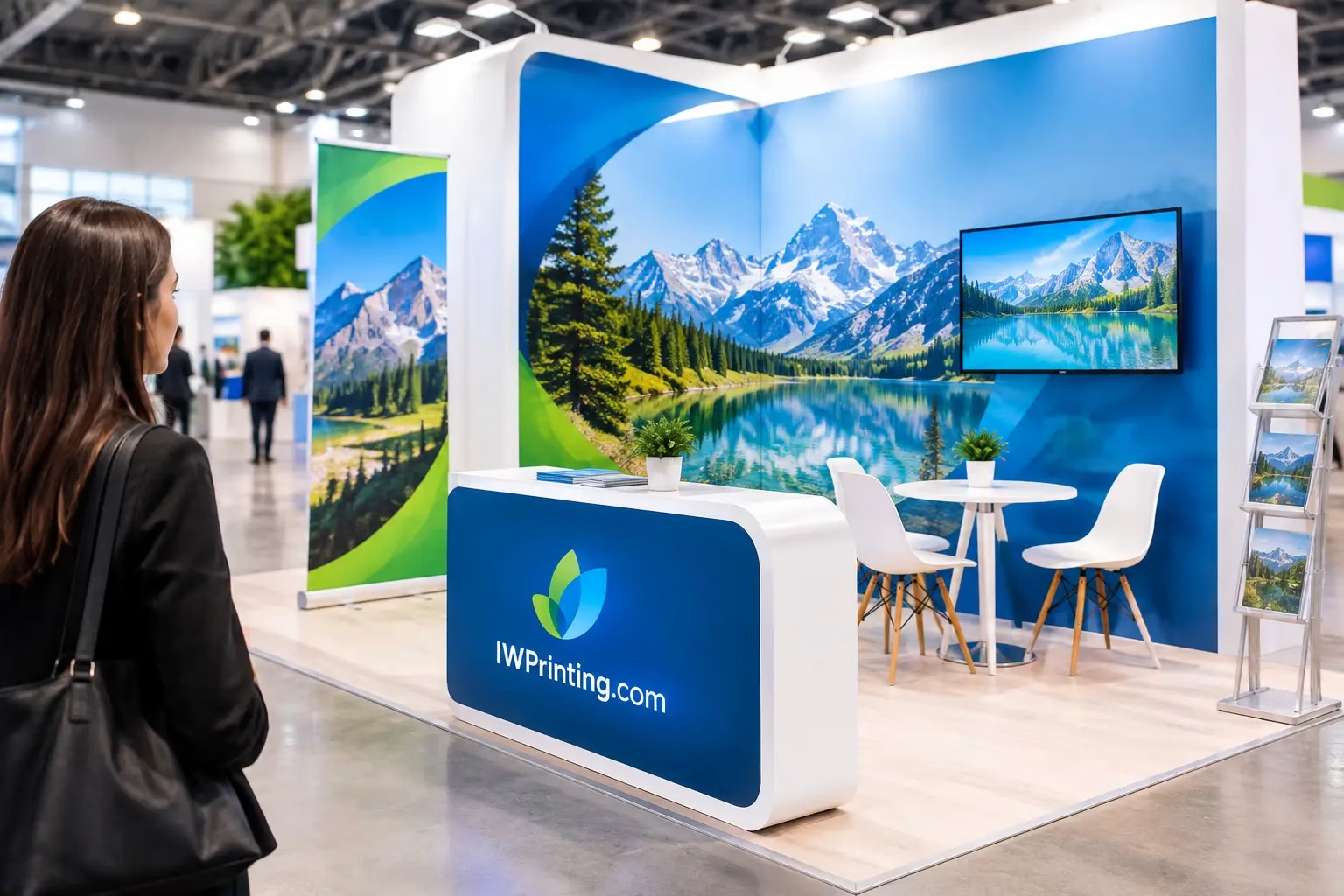
Learn how to plan exhibition signage that guides visitors, elevates your brand, and fits your booth, budget, timeline, and event goals with confidence.
WhatsApp us
Printing, corporate gifts and signage — tell us what you need and let AI help you find it.
Ask naturally. IWPrint AI can understand your product, quantity, budget and requirement.