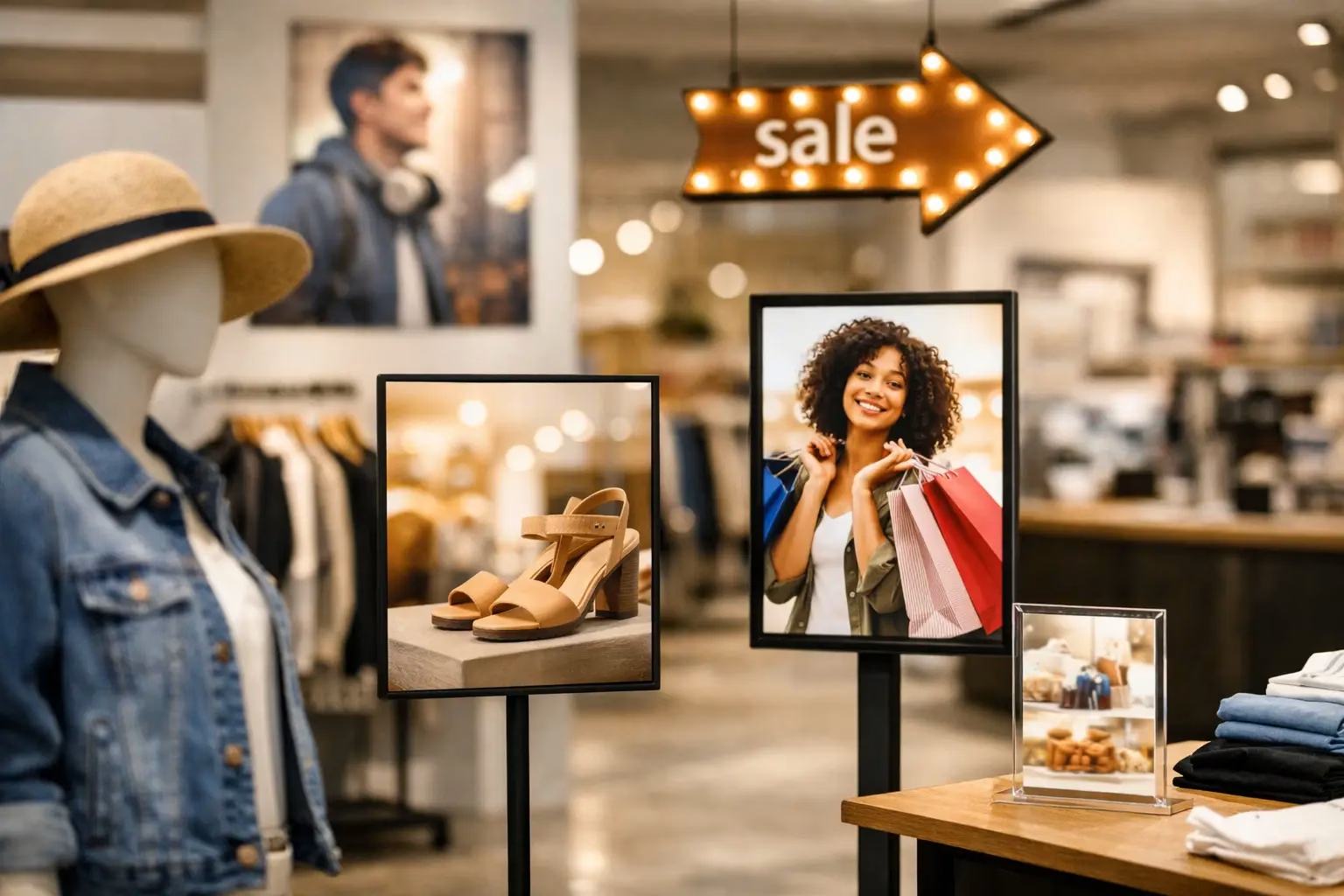
A useful retail signage example does more than display a logo or price. It gives a shopper a reason to stop, look closer, find the right product, or complete a purchase. In a busy store, customers make quick decisions. Clear, well-placed signs reduce hesitation and make the shopping experience easier.
For independent retailers, mall stores, supermarkets, pop-up shops, pharmacies, and showroom brands, signage is one of the most visible parts of the customer journey. The right mix of window graphics, promotional displays, shelf labels, directional signs, and branded fixtures can turn an ordinary sales floor into a space that works harder for the business.
10 Retail Signage Example Ideas for Better Store Sales
1. Window graphics that create a reason to enter
Your storefront has only a few seconds to earn attention. Window graphics are especially effective when they communicate one clear reason to visit: a seasonal offer, new collection, opening promotion, limited-time campaign, or a product category shoppers may not expect to find inside.
A fashion retailer might use full-color window vinyl to promote a new summer collection. A beauty store could feature a simple message such as “Buy 2, Get 1 Free” with product imagery. For a cafe or specialty food shop, frosted window graphics can add privacy while retaining a clean, branded appearance.
Avoid filling every available inch of glass. A crowded window can hide the offer instead of selling it. Use high-contrast colors, large type, and a message that is readable from the normal walking distance outside the store.
2. Storefront signs that make the brand easy to recognize
A storefront sign needs to work in daylight, after dark, and from different viewing angles. Acrylic letters, 3D letters, illuminated signs, LED channel letters, and fabricated logo signs are common choices because they create a professional, permanent presence.
The best option depends on the location. A high-street retailer may need an illuminated sign for evening visibility, while a boutique inside a shopping center may benefit from polished acrylic lettering and a projecting blade sign. Material quality matters here. Faded vinyl, weak lighting, or poorly finished letters can make even a premium store feel temporary.
Keep brand colors accurate and confirm the available facade space, landlord requirements, mounting method, and electrical needs before production. Those details prevent expensive revisions during installation.
3. Floor decals that guide customer movement
Floor graphics are practical when shoppers need direction or when a promotion should be noticed in a high-traffic aisle. They can point customers toward a checkout counter, new arrivals section, fitting room, click-and-collect desk, or limited-time display.
For example, a grocery retailer can use printed floor decals reading “Fresh Deals This Way” leading to a promotional endcap. A cosmetics store can guide visitors to a makeup consultation area. In larger stores, branded footprints or arrows can help customers navigate without adding more hanging signs.
Use slip-resistant, durable floor vinyl designed for retail foot traffic. Placement is as important as print quality: decals should support the route customers naturally take, not interrupt it.
4. Shelf talkers that make product benefits visible
Products often lose attention when every shelf looks the same. Shelf talkers are small signs attached to shelving that highlight a specific product, feature, price, or promotion. They are particularly useful for products that need explanation, such as electronics, skincare, health products, specialty foods, or eco-friendly alternatives.
A strong shelf talker answers one quick question: Why should I choose this? “New,” “Best Seller,” “Staff Pick,” “Made for Sensitive Skin,” or “Save 20% Today” gives the shopper a clear cue. Keep the message short enough to read while standing in the aisle.
This retail signage example works best when used selectively. If every item is labeled as a best seller, none of the messages feel credible. Reserve shelf talkers for priority products, profitable add-ons, new launches, or genuine promotions.
5. Endcap displays that turn offers into focal points
Endcaps sit at the ends of store aisles, where customers naturally look as they move through the space. A branded header board, large-format poster, product display, and clear price sign can make an endcap one of the highest-impact promotional areas in the store.
A home goods retailer may build an endcap around a holiday table setting. A convenience store can promote snack and beverage combinations. A technology shop can use a display to show compatible accessories next to a featured device.
The key is focus. One promotion, one product story, and one clear call to action usually outperform a display carrying too many unrelated items. Refresh endcaps regularly so repeat customers continue to notice them.
6. Hanging signs that make large stores easier to shop
Ceiling-hung signs help customers find departments before they need to ask for assistance. They are useful in supermarkets, hardware stores, bookstores, department stores, pharmacies, and warehouse-style retail locations.
Use them for broad categories such as “Home Decor,” “Personal Care,” “Checkout,” or “Customer Service.” Large lettering and simple color coding help customers identify each section from a distance. Double-sided signs are often the practical choice because shoppers approach from different directions.
Hanging signs should support, not replace, a complete wayfinding system. A shopper should be able to move from the entrance to a department, then to a more specific aisle or service point through consistent visual cues.
7. Point-of-sale signs that encourage last-minute purchases
The checkout area is where small, useful products can generate additional sales. Countertop displays, tent cards, mini standees, and acrylic sign holders work well for highlighting add-ons, gift cards, impulse products, loyalty programs, or payment options.
A simple sign reading “Add a Gift Bag for $2” can increase attachment sales at a gift store. A mobile accessories retailer may promote charging cables or screen protectors beside the payment terminal. The offer should be quick to understand because customers are already focused on completing the transaction.
Keep countertop signage neat. Too many signs around the register can feel chaotic and make staff interaction more difficult. Choose one or two messages that match the current sales priority.
8. Wall graphics that extend the brand beyond the product display
Blank walls are an opportunity to reinforce brand identity and create a more memorable store environment. Printed wall murals, cut vinyl lettering, framed posters, and dimensional logo elements can communicate brand values, product stories, social proof, or campaign imagery.
A sportswear store might use action photography and motivational phrases. A bakery could feature an illustrated ingredient wall that supports its handmade positioning. A children’s retailer can use bright, playful graphics to make the space feel welcoming for families.
Wall graphics are worth planning as part of the overall interior, not as decoration added at the end. They should match the store’s colors, customer profile, lighting, and display fixtures. Washable materials are a sensible choice for high-touch areas.
9. Promotional standees for launches and seasonal campaigns
Freestanding standees and display boards bring a campaign into the customer’s path without requiring permanent construction. They are ideal for product launches, Ramadan promotions, back-to-school offers, clearance events, beauty demonstrations, and in-store activations.
Because they are temporary, standees allow retailers to be more campaign-led and responsive. They can be moved to test different areas of the store, placed near entrances, or positioned beside related products. A sturdy base and quality print finish are essential, particularly in busy shopping locations.
Make sure the standee does not block walkways, product access, or sightlines. The purpose is to attract attention while keeping the store easy and safe to navigate.
10. QR code signs that connect physical shopping with digital content
A QR code can add useful information without overcrowding a sign. Retailers use QR signage for product specifications, video demonstrations, size guides, loyalty registration, online reviews, social campaigns, and reorder pages.
This works best when the customer gets a real benefit from scanning. A furniture retailer can link to assembly details. A skincare brand can share ingredient information. A store selling customizable products can lead shoppers to a digital catalog or request form.
Test every code before printing, and give shoppers a reason to scan with a short instruction such as “Scan for colors and sizes” or “Scan to join and save.” The code should be large enough to scan comfortably from the intended distance.
How to Choose the Right Retail Signage Mix
Start with the business goal rather than the product type. If you need more foot traffic, prioritize storefront signage and window graphics. If customers struggle to find products, invest in directional signs and aisle markers. If the goal is to increase basket value, focus on shelf talkers, endcaps, and checkout displays.
Then consider how often the message will change. Permanent brand signs need durable materials such as acrylic, metal, 3D letters, or long-life vinyl. Short campaigns can use posters, foam boards, roll-up displays, removable stickers, or standees. Choosing the right format keeps costs controlled without sacrificing presentation.
Consistency matters across every sign. Use the same logo rules, core colors, type styles, and tone of voice so shoppers recognize the brand from the entrance through to checkout. But consistency does not mean every sign should look identical. Directional signs should be easy to scan, while promotional signs can be more energetic and product-led.
A professional printing and signage partner can help assess measurements, visibility, materials, installation conditions, and print finishes before production. IWPrinting.com supports custom retail signage from design and large-format printing to fabrication and installation, helping businesses create displays that look professional and arrive ready for use.
The strongest retail signs respect the shopper’s time. Give people the information they need at the moment they need it, keep the message clear, and let every sign earn its place in the store.