
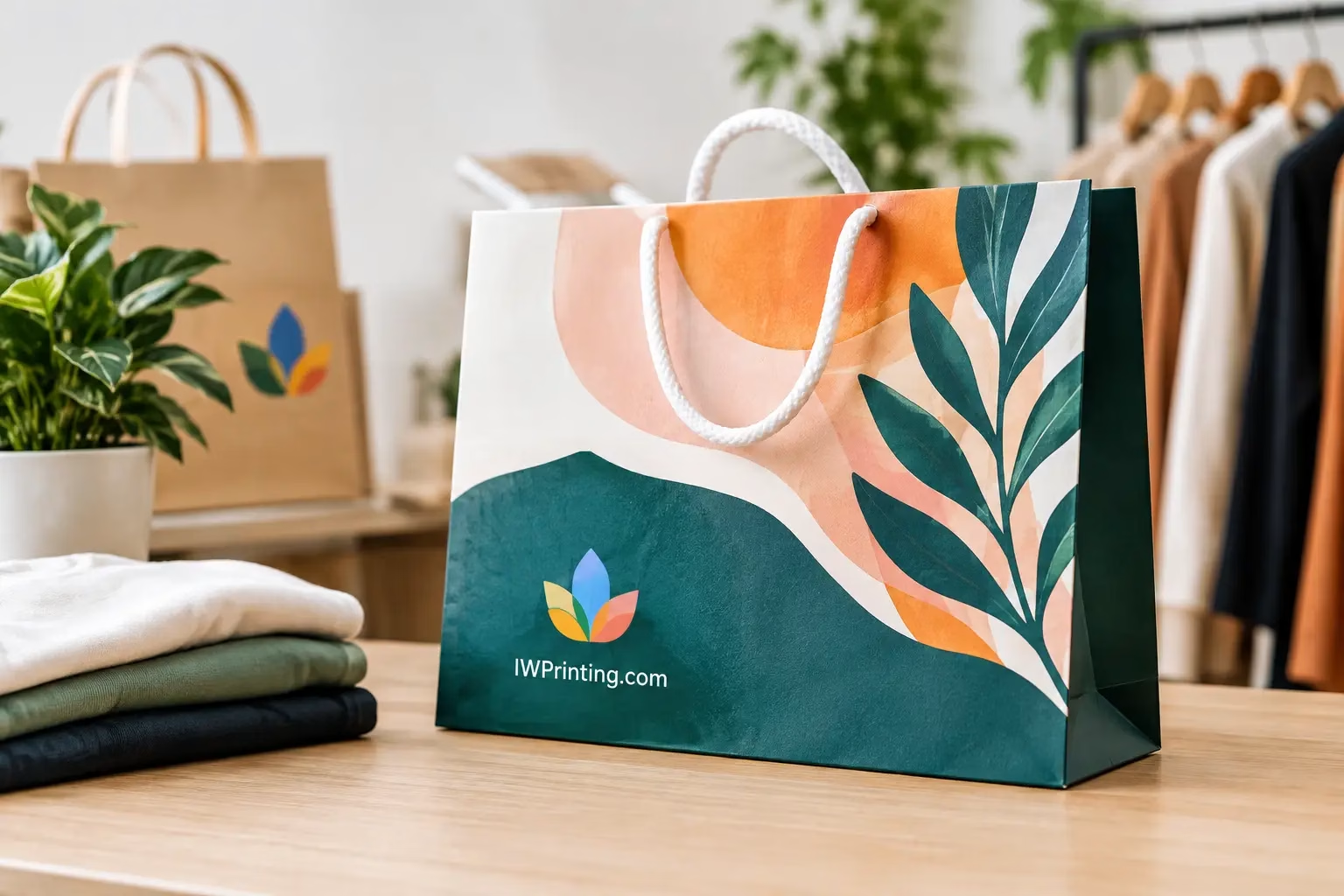
Shopping Bag Printing That Builds Brand Recall
Shopping bag Printing turns every purchase into brand exposure. Choose materials, sizes, finishes, and artwork that fit your product, budget, and customers.
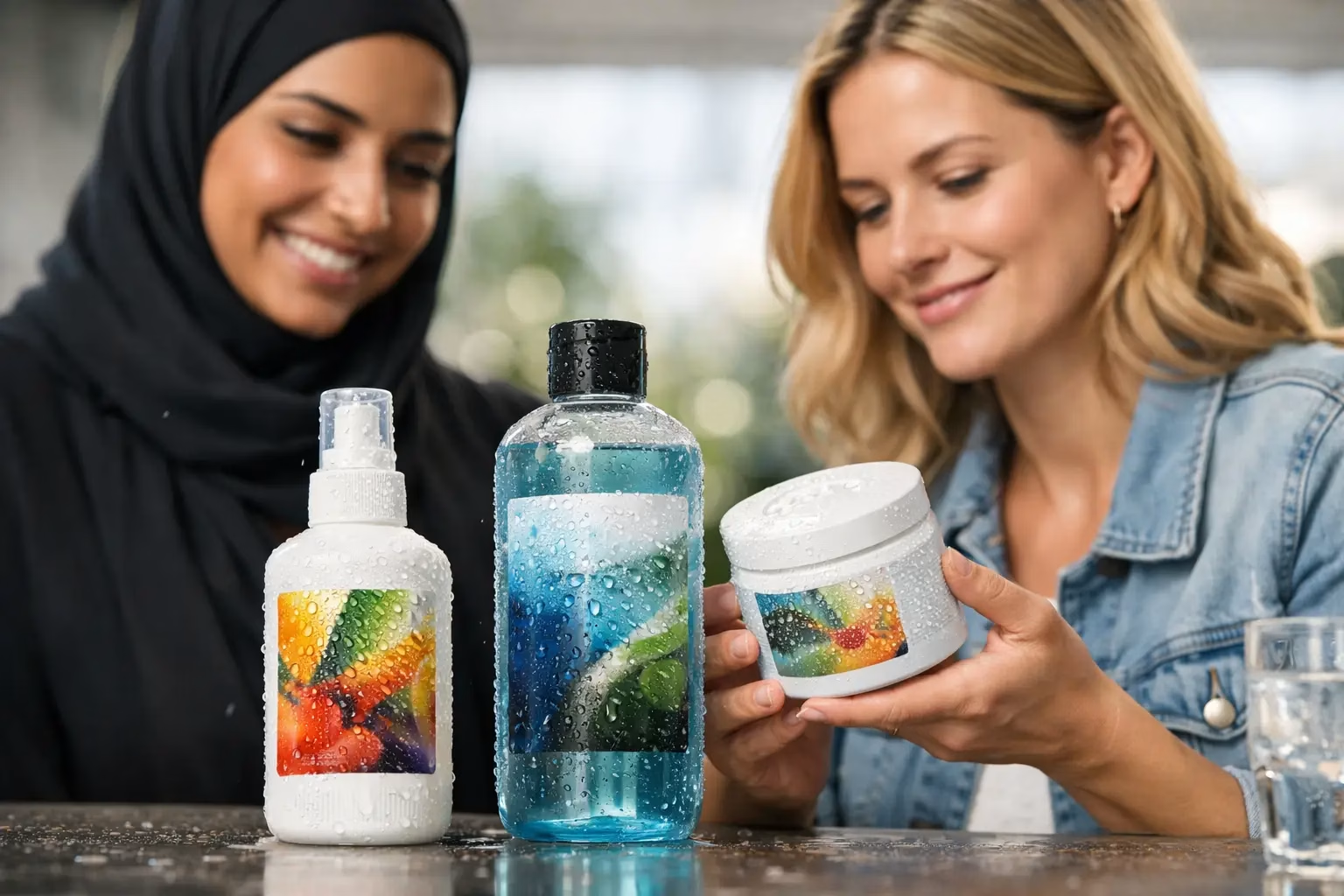
A label can look excellent when it leaves the printer and still fail before the customer gets home. Condensation on a cold bottle, oil in a kitchen, humidity in a bathroom, or repeated handling in a warehouse can make ordinary paper labels wrinkle, peel, or lose their print. Waterproof product label printing is designed to prevent that problem, helping UAE businesses keep product information, branding, and compliance details clear through real use.
For food brands, cosmetics sellers, cleaning-product suppliers, retailers, and event businesses, the right label is not a small finishing detail. It protects the product presentation customers see first. It also helps ensure batch details, instructions, ingredients, barcodes, and contact information remain readable when conditions are less than perfect.
A waterproof label is not simply a paper sticker with a coating. Its performance depends on the full construction: the face material, printed ink or toner, protective finish, and adhesive. If one part is unsuitable for the product environment, the label may still fail.
Synthetic materials are usually the starting point. Vinyl and polypropylene labels resist moisture far better than standard paper, and they do not absorb water in the same way. They are commonly used for bottles, jars, containers, personal-care products, chilled goods, and items that may be wiped down or stored in humid spaces.
A protective laminate can add another layer of defense. It helps protect the printed surface from splashes, scuffs, and regular handling. Lamination is especially useful when labels include dark colors, fine text, QR codes, or detailed product graphics that must stay sharp. For certain applications, a gloss finish makes colors appear more vivid, while a matte finish gives a cleaner, more premium look and can reduce glare.
Waterproof does not always mean suitable for every outdoor or industrial condition. A label exposed to direct UAE sun, chemical cleaners, freezer temperatures, or constant abrasion may need a more specialized material and adhesive. The product’s journey matters as much as the product itself.
The best label choice starts with a practical question: where will this product be stored, handled, and sold?
For bottled beverages, sauces, and refrigerated food, labels need to handle condensation and cold surfaces. Polypropylene is often a strong choice because it stays stable around moisture and gives a clean, professional finish on bottles and containers. If labels will be applied after bottles are chilled, the adhesive requires extra attention. A standard adhesive may not bond properly to a wet or cold surface.
For cosmetics, soaps, shampoos, and skincare products, water resistance is only one consideration. Labels may also encounter oils, creams, and frequent contact in bathrooms. A laminated synthetic label is often the safer option, particularly for products with small ingredient lists or usage instructions that cannot fade or rub away.
For cleaning products, detergents, and chemical containers, resistance to moisture alone may not be enough. Test whether the label will be exposed to its own contents, cleaning sprays, or harsh storage conditions. The label material, ink protection, and adhesive should be selected as a set.
For retail packaging and gift products, the requirement can be simpler. A waterproof label may be needed mainly to withstand handling, occasional splashes, and delivery conditions while preserving a polished appearance. This can allow more flexibility in finish and budget.
Many label issues are adhesive issues. A waterproof surface will not help if the sticker lifts at the edges or slides off the packaging.
Glass, plastic, cardboard, metal, curved jars, textured pouches, and flexible packaging all behave differently. Some plastics have low surface energy, which means adhesives have a harder time bonding to them. Curved containers also place constant tension on a label, especially if the label is too thick or the application area is too small.
Tell your print supplier what material the product container is made from and whether the label will be applied in a cold, warm, dry, or damp setting. This simple detail can prevent an expensive reprint after packaging has already been filled.
Waterproof product label printing should protect more than a logo. A well-designed label helps customers understand the product quickly, whether it is sitting on a supermarket shelf, in a restaurant kitchen, or inside a delivery package.
Start with the information that cannot be missed: product name, key benefit, size or volume, required ingredients or warnings, barcode, and contact details where applicable. Keep this information clear at the final printed size. A label can look readable on a large computer screen but become difficult to use when printed on a small bottle or jar.
Contrast matters. Light text over a busy image may look stylish in a digital mockup but become hard to read under retail lighting. Use clear color contrast for small text, batch numbers, instructions, and QR codes. If a label must be scanned, leave enough clear space around the barcode and avoid placing it on a highly curved section of the container.
Finish also affects the customer experience. Gloss labels can make product colors stand out and work well for beverages, cosmetics, and promotional packaging. Matte labels feel more understated and suit premium food products, natural skincare, and minimalist brand identities. Neither option is automatically better. The choice depends on the product category, label colors, and expected handling.
A waterproof label is most cost-effective when its size and shape fit the packaging efficiently. Standard rectangles, circles, and squares are often practical for a wide range of products. Custom shapes can create stronger shelf appeal, but they may increase production time and cost because of the required cutting setup.
Before placing a bulk order, measure the usable labeling area on the actual container. Check for curves, seams, ridges, caps, and areas that may be covered by shrink wrap. It is better to test one physical sample than to rely only on a supplier image or packaging specification.
Quantity also changes the unit price. Larger runs usually reduce the cost per label, which is helpful for businesses with stable packaging and repeat orders. However, ordering too many labels before finalizing a recipe, product size, legal information, or brand design can create waste. For a new product launch, a smaller initial run can be the smarter business decision. Once the packaging is proven, reorder at a higher quantity for better pricing.
The most common mistake is choosing a label based only on appearance. A glossy paper label may be attractive and affordable, but it is not the right option for a bottle that sweats in a refrigerator. Another frequent issue is applying labels to dusty, oily, wet, or cold containers. Even the right adhesive performs poorly on an unprepared surface.
Businesses also underestimate friction. Products may be packed tightly in cartons, stacked in storage, moved through delivery, and handled by multiple customers. If the label carries essential product information, a protective finish is often worth the added cost.
Finally, avoid treating all waterproof labels as identical. A label for a café cold-drink bottle is different from one for a detergent container, outdoor equipment case, or frozen-food package. Share real conditions early so the production specification matches the job.
An efficient order starts with a clear brief: label size, shape, quantity, container material, where the product will be used, and whether it faces moisture, cold, oils, sunlight, or chemical exposure. Include your artwork in high resolution and check all product information before production. A final proof review is the best time to catch spelling errors, incorrect quantities, and unreadable small text.
IWPrinting.com can help businesses bring together the practical details of material, finish, sizing, and quantity so labels support both product protection and brand presentation. With online ordering, repeatable specifications, and delivery to your doorstep, managing regular label requirements becomes easier as your product range grows. Marketing agency in Ajman
Your packaging has to work after the sale, not only at the point of print. Choose a label built for the conditions your customers actually create, and it will keep your brand looking professional with every bottle, jar, pouch, and package handled.
Shopping bag Printing turns every purchase into brand exposure. Choose materials, sizes, finishes, and artwork that fit your product, budget, and customers.
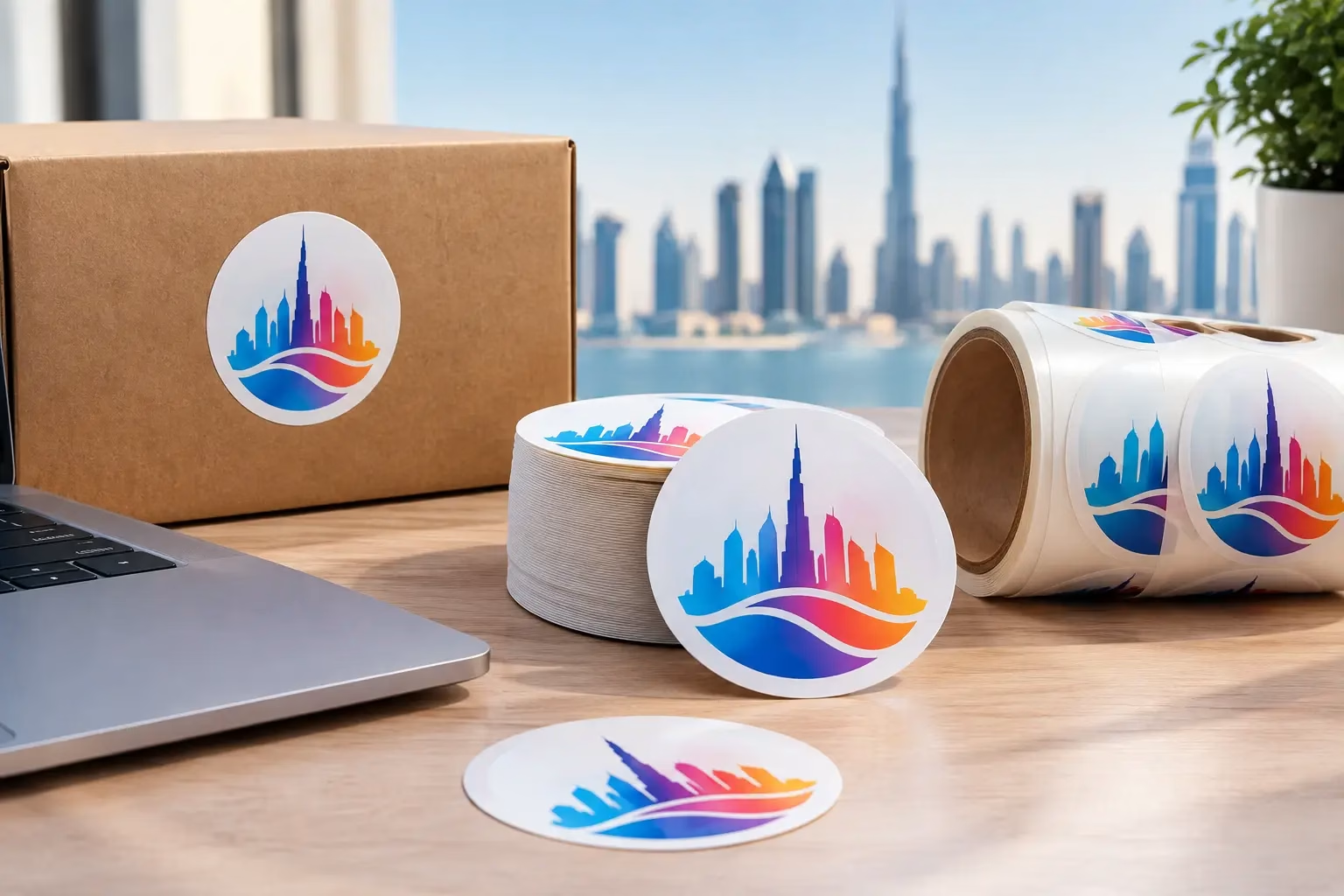
Get Round Sticker Printing in Dubai for product labels, events, and promotions. Choose durable materials, sharp color, custom sizes, and fast delivery.
WhatsApp us
Printing, corporate gifts and signage — tell us what you need and let AI help you find it.
Ask naturally. IWPrint AI can understand your product, quantity, budget and requirement.