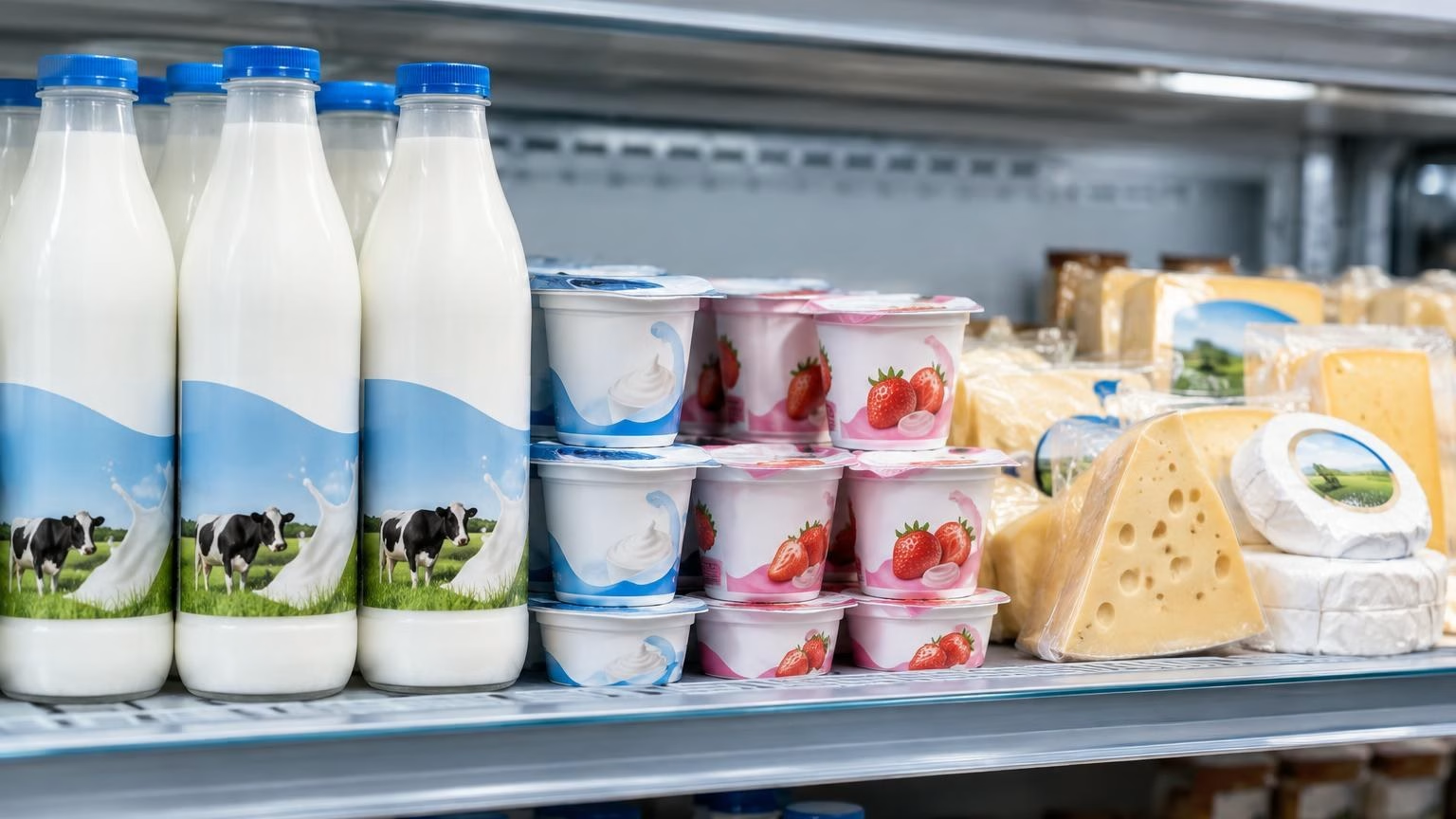
Choosing dairy packaging printing in the UAE starts with the product and its journey: how it is filled, stored, transported, displayed and used. Milk, yoghurt and cheese do not automatically suit the same package. Match the format to the product first, then select a printing approach that presents the brand and required product information clearly.
For buyers in Dubai and across the UAE, the key is to confirm packaging suitability with the relevant packaging supplier. The material, print method and label or pack design must work together under the product’s actual storage and handling conditions. Do not assume that a print option suitable for a dry retail box is suitable for refrigerated dairy packaging.
Key takeaways
- Choose a format according to the dairy product, portion, use and distribution journey.
- Separate primary packaging, which holds the product, from secondary packaging, which groups or presents packs.
- Confirm that the packaging and any label or print option suit the intended food-contact and refrigerated environment.
- Plan artwork around readable product information, branding, pack dimensions and the intended audience.
- Ask suppliers to confirm available formats, print methods, material suitability and artwork requirements before placing an order.
Start with the packaging role and product
Dairy packaging has two practical jobs: it must suit the product and communicate useful information to the buyer. Primary packaging directly contains the dairy product. Secondary packaging can group, protect or present individual packs, for example in a multipack or delivery carton. Each layer may have different material and printing requirements.
Before comparing designs, write down the product type, serving or pack size, how it will be stored, where it will be sold and how customers will handle it. These details help suppliers assess the right format and whether direct printing, a label or another branding approach is feasible.
Compare formats for milk, yoghurt and cheese
The following are common format categories to discuss with a packaging supplier, not a guarantee that every material or printing method is suitable for every product.
| Product |
Formats to discuss |
Printing and design questions |
| Milk |
Bottle or carton formats, depending on the product and distribution plan. |
Can the brand and product information be presented clearly on the selected pack? Is a separate label being considered, and is it suitable for refrigerated storage and handling? |
| Yoghurt |
Cup or tub formats, including individual portions or grouped packs. |
How will the design work across the container and any lid or outer pack? Will key information remain legible at the chosen size? |
| Cheese |
Packaging suited to the product type, such as blocks, slices or portions, with an outer sleeve or label considered where appropriate. |
What area is available for branding and product information? Could the pack or label face moisture or frequent handling? |
Use this comparison to shape an enquiry, then ask the supplier which formats and printing options they can support for your specific product. For label-focused projects, IWPrinting’s sticker, label and packaging printing page provides an overview of its related printing category; confirm project-specific options directly.
Choose a print approach that fits the pack
Printing may be applied directly to packaging or supplied as a separate label, depending on the format, material and supplier capabilities. A label can offer a flexible branding area, while direct printing may form part of the pack design. Neither option should be selected without checking material compatibility, use conditions and the supplier’s available process.
Check the use environment
Refrigerated storage, condensation, transport and repeated handling can affect packaging and printed elements. Describe these conditions when requesting advice. Ask whether the proposed material, adhesive, ink or finish is appropriate for the intended application. IWPrinting’s guide to waterproof product label printing explains why exposure to water and handling are worth considering for product labels, but the right choice for a dairy pack needs project-specific confirmation.
Distinguish packaging from food-contact components
Branding suitability is not the same as food-contact suitability. Confirm with the packaging supplier which components contact the product and whether the selected materials and printing are appropriate for that use. Do not assume that an outer label, ink or finish is suitable for direct contact just because it is used on packaging.
Plan artwork and product information before design approval
Good dairy packaging artwork makes the brand easy to recognise without crowding the information a shopper needs. Begin with the available print area and the final pack dimensions, then develop the layout around the product name, brand identity and required product details.
- Confirm the copy: Check product names, ingredients and other required information with the appropriate product and compliance teams. Requirements can vary by product and market, so verify applicable UAE rules with the relevant authorities or a qualified adviser.
- Plan languages: Consider whether English and Arabic content is appropriate for the intended audience or required for the product. Allow enough room for both if needed.
- Prioritise readability: Small containers have limited space. Review text size, contrast and placement at the actual pack scale.
- Prepare accurate files: Ask the printer or packaging supplier about accepted artwork formats, dielines, colour setup and proofing before finalising the design.
- Review every pack version: Check names, flavours, sizes and other variable details across all designs before approval.
For broader material-selection considerations, see Sustainable Packaging That Works for Your Brand. The right choice should suit the product and practical packaging needs; avoid making environmental claims unless they can be substantiated for the specific material and pack.
How to choose a format for a UAE dairy product
A short decision process helps buyers turn a packaging idea into a clear supplier brief.
- Describe the product: Identify whether it is milk, yoghurt or cheese, and note its format, portion and intended use.
- Map its journey: Explain storage, refrigeration, transport, retail display and handling conditions.
- Select a packaging role: Decide what the primary pack must do and whether a label, sleeve, multipack or outer carton is also needed.
- Set branding priorities: Identify the essential logo, product information and visual elements, while leaving room for readable copy.
- Ask for confirmation: Request advice on available formats, print options, materials, food-contact suitability, artwork setup and any proofing steps.
- Plan quantities and variants: List the expected pack versions and quantities for each. Ask the supplier how these affect the project rather than assuming a minimum or production arrangement.
If packaging will also be used for food delivery or takeaway, IWPrinting’s restaurant packaging design guide offers additional considerations for packaging design and product journeys. Dairy packaging still needs to be assessed for its own product, storage and supplier requirements.
Questions to settle before requesting a quote
A clear enquiry helps suppliers assess whether the proposed format and printing approach suit the job. Include the product type, target market, preferred pack format, storage conditions, dimensions if available, artwork status and number of designs or variants. Ask which specifications are confirmed and which require testing or supplier approval.
Also establish who will verify product copy and applicable labelling requirements, who supplies dielines or artwork guidance, and what review steps are available. These details are more useful than choosing a design before the packaging format and production constraints are known.
Frequently asked questions
What should I consider when choosing dairy packaging in the UAE?
Start with the product, its storage and distribution conditions, and how customers will use it. Then compare suitable primary and secondary packaging formats, available print options, artwork requirements and how product information will be presented. Confirm food-contact suitability and any applicable labelling requirements with the relevant packaging supplier and authorities.
Can the same packaging format work for milk, yoghurt and cheese?
Not necessarily. These products differ in consistency, serving size, handling and storage needs. Milk may need a bottle or carton format, yoghurt is often portioned into cups or tubs, and cheese formats depend on whether the product is a block, slices or portions. The selected packaging must suit the product and its intended use.
Can I print branding directly on dairy packaging?
That depends on the packaging material, format and printing capabilities available for the project. Branding may be printed on a pack or applied through a label, but the suitable method must be confirmed with the packaging and printing suppliers. Ask how the chosen option performs in the product’s storage and handling conditions.
What artwork should I prepare for a dairy packaging print enquiry?
Prepare the logo, brand colours, product name, pack format and dimensions if known, plus the product information that needs to appear. Consider whether English and Arabic content is appropriate for your audience or required for your product. Confirm final wording, legibility, file setup and placement with your packaging supplier before production.
Does dairy packaging need to be tested for refrigeration and condensation?
If the pack will be refrigerated or exposed to moisture, discuss those conditions with the supplier before choosing a material, label or print finish. Ask them to confirm suitability for the intended environment, including how the packaging and printed information may respond to cold, condensation and handling.
Discuss your dairy packaging print brief
Have a milk, yoghurt or cheese packaging project in mind? Contact IWPrinting about sticker, label and packaging printing with your product format, artwork and intended use so the available options can be confirmed for your requirements.