
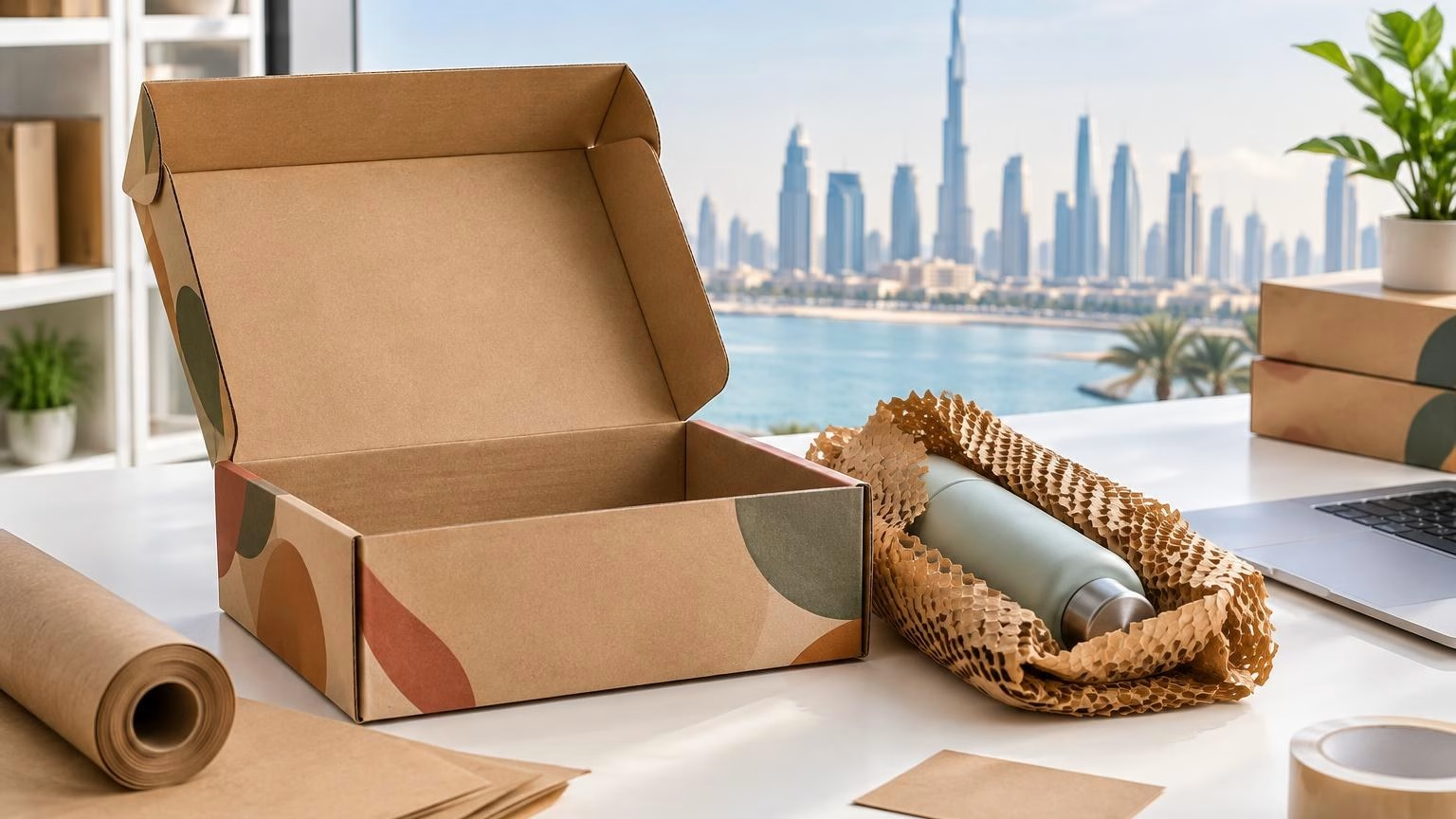
How to Choose Custom E-commerce Mailer Boxes in the UAE
A practical guide to selecting e-commerce mailer boxes for your product, delivery journey and brand, with key questions to settle before requesting a quote.
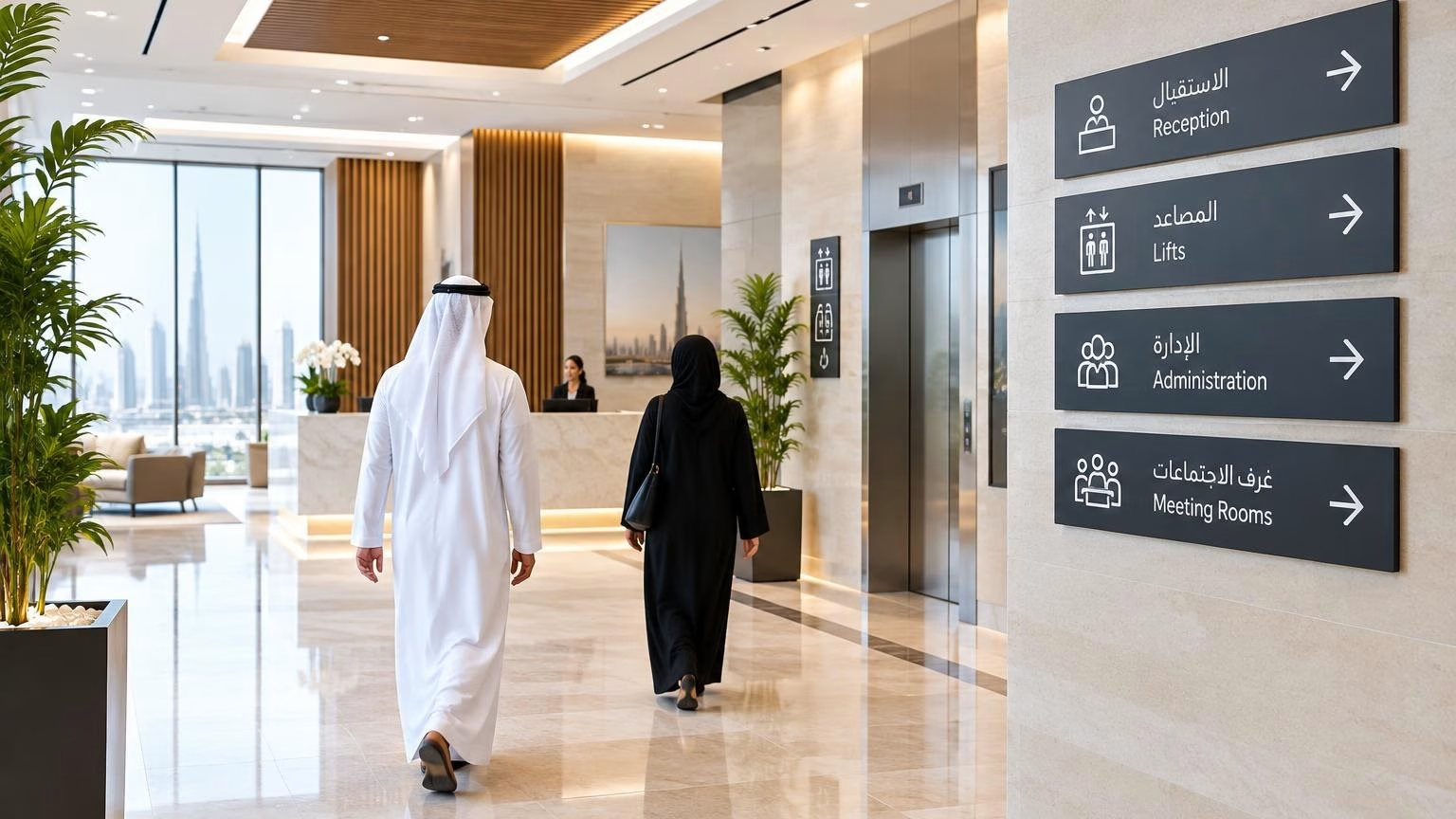
Bilingual wayfinding signage in the UAE should make indoor routes understandable in both Arabic and English. Start by mapping where visitors enter, where they need to go and where they must make a decision; then plan a consistent set of signs that gives clear directions at those points.
For a Dubai office, retail space, clinic, venue or other indoor environment, the best sign system is not necessarily the one with the most information. It is the one that helps people identify the next step without confusion, with language, arrows and destination names presented consistently.
Bilingual wayfinding signage is a coordinated set of signs that helps people navigate an indoor space using two languages. It may direct visitors from an entrance to reception, from a lobby to lifts, or from a corridor to a named department or room. It can also identify destinations once visitors arrive.
The system works best when signs use the same names for the same destinations. If a directory calls a place “Customer Service” but a corridor sign uses a different label, visitors may hesitate even when both signs are readable. Agree on destination names before preparing artwork.
A route plan shows where a person needs guidance, rather than simply where a sign could be installed. Walk through the space from the perspective of a first-time visitor: where do they enter, what can they see, and where might they choose the wrong corridor or lift?
Make a simple inventory of entrances, reception areas, floors, departments, facilities and other destinations visitors need to find. Mark the places where someone must turn, choose between routes or identify a doorway. These are likely locations for directional or identification information.
For larger sites, ask the facilities or operations team to check the route plan against how the building is actually used. Consider whether visitor routes differ from staff routes, and whether access restrictions or changing room names affect the directions.
Use a sign to answer the question a visitor has at that location. An entrance sign may orient people to a reception or directory; a corridor sign may identify the next turn; a room sign may confirm that they have arrived. Avoid adding unrelated messages that compete with the direction.
Indoor wayfinding may use wall-mounted signs, directories, hanging signs, door identification or floor-level direction cues. These are general format categories, not a specification for every site. The appropriate choice depends on sightlines, available surfaces, traffic flow, installation conditions and the building’s appearance.
| Sign purpose | Typical use | Planning question |
|---|---|---|
| Orientation or directory | Helping visitors understand the layout near an entrance or lobby | Can visitors see and read it before choosing a route? |
| Directional | Showing the next turn or route choice in a corridor or shared area | Is the arrow unambiguous from the visitor’s approach? |
| Identification | Confirming a room, department or destination at the point of arrival | Does the wording match the name used elsewhere? |
| Overhead or suspended | Indicating destinations across open areas where wall signs may be less visible | Are sightlines, mounting conditions and building approvals suitable? |
Think about branding, too. Signs should fit the environment without making the directional information harder to notice. For broader material considerations, see IWPrinting’s signage material guide. For ideas on signs in a retail setting, browse these retail signage examples.
Bilingual design is more than translating a line of English. Arabic reads from right to left, so the layout needs to account for Arabic directionality while keeping both languages easy to scan. Use a clear, consistent language order and give each language enough space to remain legible.
Do not assume that placing an English arrow beside Arabic text will automatically make its meaning clear. Check the whole sign from the direction a visitor will approach it. If translations, building terminology or required language order are uncertain, resolve those questions before artwork approval.
Material selection depends on where a sign will be used and how it needs to perform. Consider the mounting surface, expected contact, cleaning routine, exposure to moisture or heat, desired appearance and how frequently the information may change. A sign in a quiet office corridor may face different conditions from one in a busy shared area.
Check the material and format against the actual installation location rather than choosing on appearance alone. Confirm dimensions, mounting approach and site constraints with the relevant building or facilities contact. If the signs will sit alongside wall graphics or other branded elements, consider how the complete environment will look; IWPrinting’s guide to office wall branding offers related planning context.
Accurate artwork starts with an agreed source of truth: a current floor plan and a verified list of destinations. Decide how names, floor numbers and directional terms will appear in both languages, then use those approved versions across every sign.
Before final approval, check:
Proof the sign set as a system, not only one design at a time. A route walkthrough can reveal inconsistent names, missing directions or a sign that appears too late to help. If the project is part of a larger visitor or event environment, IWPrinting’s guide to planning exhibition signage also covers visitor guidance considerations.
Estimate quantities from the route plan: count the sign locations, identify whether any location needs more than one sign and keep a record of the approved wording and placement. Do not order from an old floor plan if departments, tenants or room names have changed.
Consider whether information is permanent or likely to change. Frequently updated details may need a different approach from fixed room identification. Discuss the intended use, artwork and suitable format with the print provider, and confirm project-specific options and requirements before proceeding. For dimensional sign projects, review the relevant 3D signage board guide if that format is being considered.
Use these questions to compare options and brief a signage provider clearly:
When requesting project guidance, provide the floor plan or route sketch, sign locations, draft destination list, language requirements and any site restrictions. Ask the provider to confirm which materials and formats are suitable for your specific application; do not assume a format or specification without checking.
Arabic-English signage can help a wider range of visitors understand where to go in offices, retail spaces, clinics, venues and other indoor environments. A consistent bilingual system also makes directions easier to follow across entrances, corridors and destinations.
Choose a consistent language order that suits your audience and project requirements, then apply it across the sign system. Arabic is read from right to left and English from left to right, so check layout, alignment and arrow placement in context. Confirm any applicable authority, landlord or sector requirements before approving artwork.
Include only the direction or destination information needed at that decision point, such as a department name, floor, room or arrow. Use the same destination names and terminology throughout the building so visitors can match signs to directories, maps and staff instructions.
The right material depends on the surface, location, expected handling, cleaning routine, appearance and project requirements. Ask for options suited to the specific indoor environment and review how the sign will be mounted. IWPrinting’s signage material guide can help structure that discussion.
Review Arabic spelling and directionality with a qualified Arabic reader, check the English wording, confirm arrows and destination names, and proof every sign against a floor plan. Also verify sign dimensions, placement, mounting needs and any site or building requirements before approving the final artwork.
Clear bilingual directions begin with a current route plan, approved Arabic and English wording, and formats suited to the actual space. Contact IWPrinting to discuss your signage brief and confirm suitable options for your project.
A practical guide to selecting e-commerce mailer boxes for your product, delivery journey and brand, with key questions to settle before requesting a quote.

A practical guide to choosing employee onboarding gifts in the UAE, from useful welcome kit items and branded bags to artwork, quantities and ordering considerations.
WhatsApp us
Printing, corporate gifts and signage — tell us what you need and let AI help you find it.
Ask naturally. IWPrint AI can understand your product, quantity, budget and requirement.